TLDR;
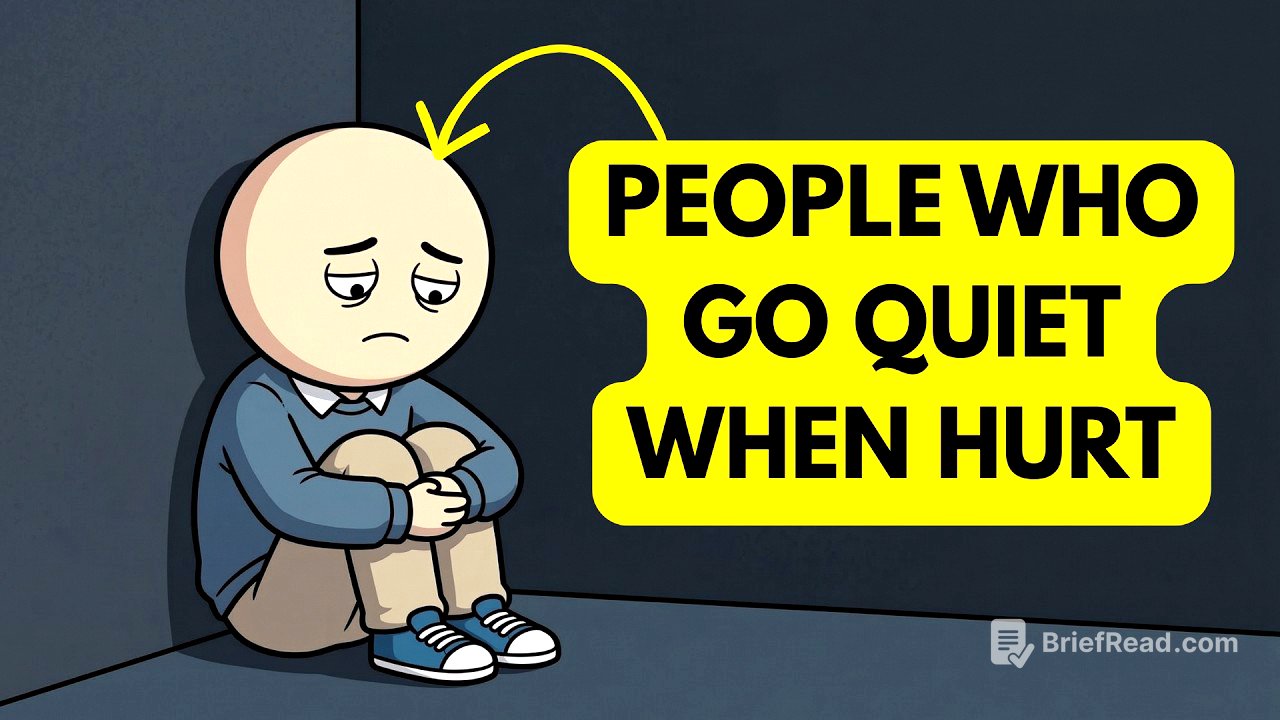
This video explores the psychology behind why some people go quiet when they're hurt, challenging the common misconception that it's a deliberate act of shutting others out. It explains that this silence is often a survival mechanism developed in response to past experiences where expressing vulnerability led to negative consequences. The video also highlights the intense mental processing occurring during this quiet period and emphasizes the value of the thoughtful communication that eventually emerges. The key takeaways are:
- Silence is often a protective response, not a deliberate act of exclusion.
- It stems from past experiences where vulnerability was punished.
- Intense mental processing and self-reflection occur during the quiet period.
- The communication that follows is often thoughtful, accurate, and meaningful.
- Patience and trust are essential for supporting individuals who process emotions inwardly.
Misconceptions About Silence [1:01]
People often misinterpret silence as a conscious decision to shut others out, viewing it as calculated or a power move. However, this couldn't be further from the truth. When someone is hurt, their body undergoes a shift, making it difficult to access words and express their feelings. This isn't a sign of being difficult but rather the nervous system's natural response to protect itself. Dr. Peter Lavine's research supports this, highlighting the freeze response as a hardwired mechanism akin to fight or flight. During emotional distress, the brain region responsible for language production actually becomes less active, making verbal communication even more challenging.
The Origins of Silence [2:35]
This behavior isn't innate; it's learned. Children initially express pain openly until experiences teach them to suppress it. These experiences might include growing up in environments where emotions were dismissed, being ridiculed or minimized when opening up, or facing negative consequences for expressing hurt. As a result, individuals adapt by becoming quiet, not because they stop feeling, but because expressing those feelings outwardly becomes associated with pain. Psychologist John Bulby's work emphasizes that early relationships shape how we handle emotional pain, and negative experiences with vulnerability can lead the nervous system to adopt silence as a protective mechanism.
The Activity Beneath the Stillness [4:08]
While others perceive stillness, the brain is actively engaged in deep processing. Research indicates that regions associated with self-reflection, memory, and future planning are more active in individuals who go quiet under stress. This silence involves internal questioning, analysis of the situation, and consideration of potential outcomes. Rather than avoiding the problem, these individuals are carefully evaluating every aspect before speaking, as they recognize the risk of speaking without fully understanding their emotions.
Silence as Protection [5:28]
Silence can also be a way to protect loved ones. Individuals who go quiet are often aware of the intensity of their emotions and the potential for unfiltered pain to damage relationships. They choose to wait and process their feelings before speaking to avoid saying something they might regret. This aligns with the concept of the "window of tolerance," where effective communication is only possible within a specific emotional range. By waiting, these individuals ensure they can communicate constructively and protect their relationships.
The Need for Patience and Trust [6:44]
The irony is that the support these individuals need most – patience without pressure – is often the opposite of what they receive. When pushed to speak before they're ready, it reinforces the belief that their way of processing emotions is invalid. Research shows that when individuals who process emotions inwardly feel safe and unpressured, they are more likely to open up. It's about trusting that the silence isn't abandonment but a necessary part of their process.
The Value of Considered Communication [7:59]
Because these individuals take the time to process their emotions thoroughly, their words carry significant weight when they finally speak. They carefully consider their words for accuracy, fairness, and truth, avoiding impulsive reactions or emotional weaponization. When they express their feelings, it's a conclusion, not just a reaction. In a world of immediate and often insincere communication, their thoughtful approach is rare and valuable. Those who are patient enough to wait for them to speak understand that their words are genuine and meaningful.
Conclusion [8:57]
Going quiet when hurt is a protective mechanism rooted in past experiences, deep processing, and a desire to protect relationships. It's not a sign of being cold, manipulative, or broken, but rather a reflection of feeling things deeply and taking the time to understand them. While this approach may be misunderstood by some, the right people will appreciate the depth and integrity behind the silence, recognizing it as a form of presence. Healing involves finding the safety to open up without needing the silence quite so much, a journey that begins with self-understanding.