TLDR;
This YouTube video discusses the diverging paths of China and the United States in the AI era, highlighting key decisions and their potential consequences. It examines the implications of China's decision not to purchase H200 chips, the withdrawal of foreign capital from Chinese data centers, and the impact of these factors on China's AI development. The video also draws parallels with Japan's economic stagnation in the 1980s and contrasts China's current approach with the innovative, market-driven strategies of the United States. Additionally, it touches on the potential for AI to drive economic prosperity and address debt issues, using examples from South Korea and Taiwan.
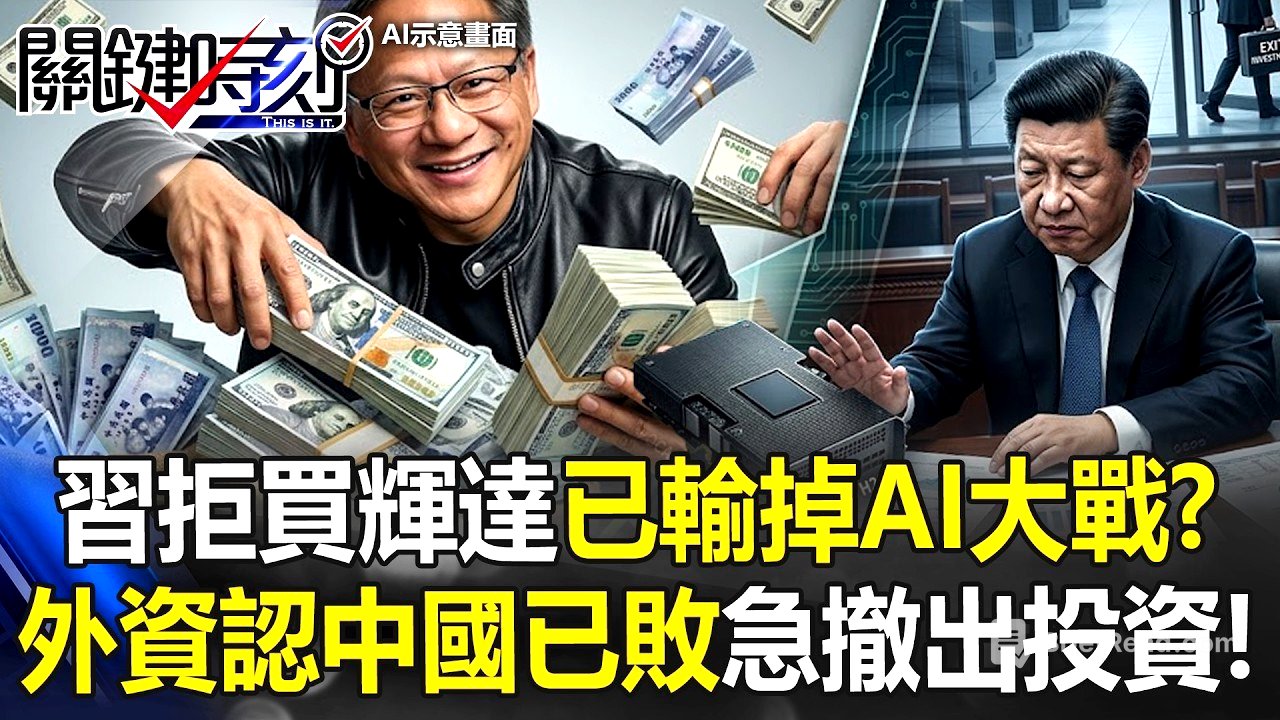
- China's AI development is hindered by its decision not to purchase H200 chips and the subsequent withdrawal of foreign capital.
- The United States is accelerating its AI development, potentially widening the gap between the two countries.
- China's economic policies and regulatory environment are stifling innovation and discouraging foreign investment.
- AI has the potential to drive economic growth and address debt issues, as seen in South Korea and Taiwan.
- Social unrest and violence are increasing in China, reflecting underlying economic and social pressures.
US Capital Exits China's Data Centers [0:01]
The video begins by noting that China and the United States are heading towards two separate worlds and systems. A significant signal of this divergence is the exit of global acquisition funds from China's data center business, with investors willing to sell their assets for $1 billion rather than continue operating in the Chinese market. This decision is driven by the understanding that without access to U.S. chips and the dollar system, data centers in China will not be profitable. The speaker emphasizes that this $1 billion is seen as a salvage operation, with investors preferring to exit China altogether.
Xi Jinping's Policies Hinder China's AI Development [0:30]
The direction of AI in China is heavily influenced by Xi Jinping's decisions. Even if those decisions are flawed, the country must follow. The video references the Magnus transaction, where after initially agreeing to a deal with Meta, Xi Jinping intervened, preventing the sale and leading to financial difficulties for the company's founders, who are now seeking funds to regain their freedom. This situation, combined with the withdrawal of foreign investment, indicates that China is losing ground in the AI race.
Foreign Capital Shifts to India and Japan [1:49]
With foreign capital withdrawing from China, it is flowing into countries like Japan and India. Blackstone Group is leading a $15 billion investment in India to build AI infrastructure and data centers. This shift highlights the difficulty China faces in attracting external funding for its AI infrastructure development. China is essentially isolating itself, choosing to develop AI independently, which is causing foreign investors to withdraw their capital.
Trump's AI Executive Order and US Investment in Quantum Computing [4:40]
Donald Trump signed a new AI executive order that removes the 90-day review period for new AI models, aiming to accelerate AI development in the U.S. The U.S. government is also investing $2 billion in quantum computing companies like IBM, signaling a push to integrate AI with quantum technology. This investment aims to achieve technological breakthroughs and maintain U.S. leadership in AI.
US Debt Crisis and the AI Opportunity [7:04]
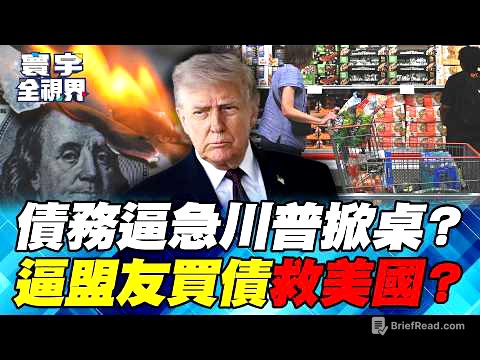
The U.S. faces a debt crisis, with debt exceeding defense spending. However, AI presents an opportunity to generate revenue, attract investment, and increase tax revenue. By focusing on AI, the U.S. aims to create a new wave of prosperity that can mitigate its debt and deficit.
AI-Driven Economic Prosperity in South Korea and Taiwan [9:03]
South Korea and Taiwan are experiencing significant economic benefits from AI. South Korea's AI-driven tax revenue has led to the creation of a sovereign wealth fund. Taiwan's stock market is booming due to AI, with daily trading volumes reaching record highs, resulting in increased tax revenue and investment in AI companies. These examples illustrate the potential for AI to drive economic growth.
Three Stages of AI Beneficiaries [10:51]
According to Su Chih-feng, there are three stages of beneficiaries in the AI era. The first stage involves companies building AI infrastructure, such as chip manufacturers like TSMC and Intel. The second stage includes large service providers like Ansobi, Google, and Amazon. The third stage comprises those who use AI to create new applications, such as pharmaceutical companies developing new drugs.
Historical Parallels: Railroads, Electricity, and AI [12:07]
Drawing historical parallels, the video compares the AI revolution to the development of railroads and electricity. In the railroad era, steel companies initially profited, but the ultimate beneficiaries were those who used the railroads, like John D. Rockefeller, who built a vast oil distribution network. Similarly, in the electricity era, appliance manufacturers like Whirlpool benefited most. The video suggests that the true beneficiaries of AI will be those who apply it innovatively.
Taiwan's Cautious Approach to AI Expansion [15:15]
The video highlights Taiwan's cautious approach to AI expansion, particularly by TSMC. Unlike Nvidia's rapid growth, TSMC is expanding at a more controlled pace, guided by experienced leaders who understand the risks of overexpansion. This measured approach aims to ensure long-term stability and prevent a potential economic collapse.
China's Focus on Chip Manufacturing and Missed Opportunities [17:05]
China is focusing heavily on chip manufacturing, similar to building railroads, while the U.S. is aiming to create the next Rockefeller by fostering innovative AI applications. China's emphasis on self-reliance in chip production, including efforts to develop its own equipment, is seen as a potential pitfall, as it may lag behind in the rapidly evolving AI landscape.
China's Economic and Social Challenges [17:52]
The video draws parallels between China's current situation and Japan's economic stagnation in the 1980s. Like Japan, China faces challenges related to government control, lack of innovation, and suppression of individual initiative. Recent incidents of violence and social unrest in China are attributed to economic pressures and social dissatisfaction.
China's Regulatory Overreach and Market Intervention [19:36]
China's government is criticized for excessive regulation and intervention in the market. The video cites instances where Chinese regulators have intervened in the stock market to curb AI stock prices, hindering market-driven growth. This regulatory overreach is contrasted with the more open and market-oriented approach of the United States.
China's Economic Struggles and Social Unrest [21:56]
The speaker emphasizes that Xi Jinping's policies are hindering China's economic progress. The video highlights the withdrawal of foreign investment due to restrictive regulations and political interference. Additionally, it points to increasing social unrest and violence in China, reflecting underlying economic and social pressures.
India's Social and Economic Challenges [32:33]
The video shifts focus to India, where a Supreme Court justice's derogatory remarks about unemployed youth sparked widespread protests. The incident highlights the social and economic challenges faced by young people in India, including unemployment and discrimination based on caste. The emergence of the "Cockroach People's Party" reflects the growing frustration and activism among Indian youth.
Caste-Based Discrimination and Social Inequality in India [34:40]
The video discusses the persistence of caste-based discrimination in India, citing examples of unequal access to education and employment opportunities. Despite efforts to address inequality, caste-based discrimination remains a significant issue, contributing to social unrest and activism.