TLDR;
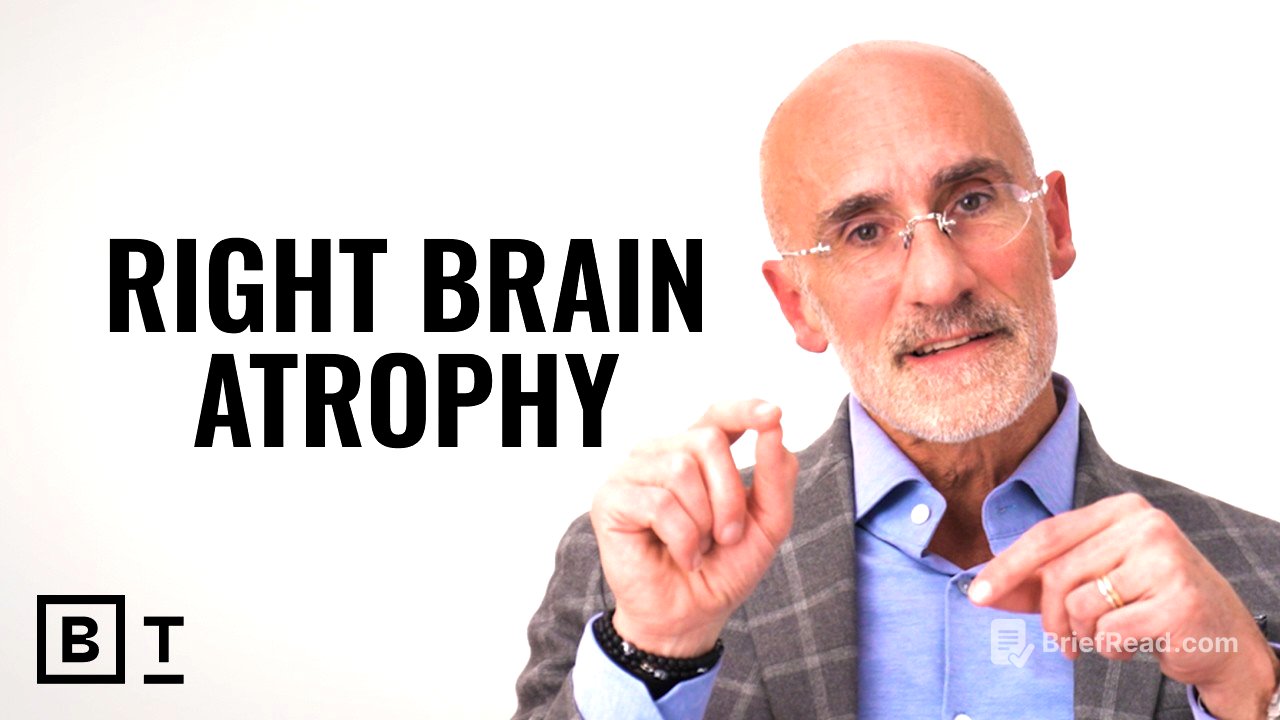
This video discusses the rise of depression and anxiety, particularly among young adults, and the core issue of meaninglessness in life. It explores how relationships and real-life interactions provide meaning, while technology and social media often create distance and feelings of simulation. This has led to the growing number of individuals feeling "stuck" in their search for meaning, as well as the inadequate understanding of how to find it. The speaker emphasizes the importance of balancing the analytical left brain with the empathetic right brain to address life's emotional and existential challenges.
- Rapid increase in depression and anxiety in young adults.
- Lack of meaning in life is closely tied to these mental health issues.
- Technology and social media contribute to feelings of disconnection and meaninglessness.
The Rise of Depression and Anxiety [0:00]
The video opens with alarming statistics about the rise of depression and anxiety among young adults, tripling and doubling respectively over the past 15 years. The narrator suggests that common explanations blaming older generations or young people's fragility do not hold true. Instead, the key issue is a feeling of meaninglessness that has risen sharply in recent years, especially among the youth, prompting a deeper exploration into the reasons behind this phenomenon.
The Meaning of Life [1:40]
Arthur Brooks discusses how the number one predictor of feeling life is meaningful stems from real-life relationships rather than virtual interactions. He notes that technological mediation, such as screens between people, diminishes the depth of connections, leading many to feel as if they are living in a simulation. He emphasizes that young people often express feelings of their lives being “fake” or lacking substance, relating this to their struggles with finding meaning in their lives.
Searching for Meaning [3:20]
Brooks points out that many young individuals who feel their lives lack meaning are not even actively looking for it. He suggests that the problem lies deeper than just a lack of meaning—it is about the inability to seek it. He introduces the work of social psychologists Michael F. Steager and Frank Martella, who define meaning as the combination of coherence, purpose, and significance, highlighting how these concepts intertwine in the human experience.
Understanding Meaning [5:00]
The Meaning in Life Questionnaire, developed by Steager, is utilized to evaluate individuals' sense of meaning and their efforts to search for it. Brooks outlines four types of people identified through this survey based on their presence and search for meaning. He elaborates on the types, from those with a strong presence and no search to those who are lost and not actively seeking, stressing that the latter group, particularly young adults, has grown increasingly prominent.
The Role of the Brain [6:40]
Brooks describes the role of different brain hemispheres in understanding life: the right side is associated with feelings of mystery and meaning, while the left focuses on logical, analytical tasks. He notes that our current society favors left-brain solutions, which can overshadow the need for right-brain experiences such as creating relationships and feeling emotions. This imbalance contributes to issues of loneliness and a lack of meaning.
Technological Impact on Meaning [8:20]
The speaker discusses the impact of technology on human connectivity and meaning. He argues that our increasingly engineered lives lead us to believe that technical solutions can resolve emotional and psychological problems. This reliance on technology often exacerbates feelings of loneliness and meaninglessness instead of alleviating them, creating a cycle of disconnection.
Boredom and Addiction [10:00]
Brooks highlights a tendency among individuals to avoid boredom by turning to their devices. He presents research showing that people often prefer the discomfort of electric shocks over facing boredom, illustrating a societal shift towards constant distraction. Consequently, this behavior is linked to addictive tendencies, as individuals seek to escape from the challenges of sitting with their thoughts.
A Culture of Distraction [11:40]
The discussion touches on how previous generations managed their lives without the distraction of digital devices. Brooks explains that modern culture promotes constant engagement with technology, inhibiting the ability to experience boredom. This inability to embrace boredom, which is vital for meaningful reflection and emotional processing, has notable implications for mental health.
The Campbell Effect [13:20]
Brooks references "The Campbell Effect," elaborating on how problems tend to escalate suddenly after a period of gradual change. He argues that the widespread addiction to technology and the corresponding feelings of meaninglessness are results of actions taken little by little that eventually culminate in significant societal issues.
Navigating Technological Solutions [15:00]
Lastly, Brooks critiques the belief that increased technology and solutions will resolve issues of loneliness and meaninglessness, warning against the idea of relying solely on technology. Instead, he advocates for balanced use of technology, encouraging authentic human connections and meaningful relationships to regain life’s depth and significance.
![[Ida Jean Orlado] THEORY OF DELIBERATIVE NURSING PROCESS {REPORT 8}](https://wm-img.halpindev.com/p-briefread_c-10_b-10/urlb/aHR0cDovL2ltZy55b3V0dWJlLmNvbS92aS82TUd6TTJpQU9FSS9ocWRlZmF1bHQuanBn.jpg)