TLDR;
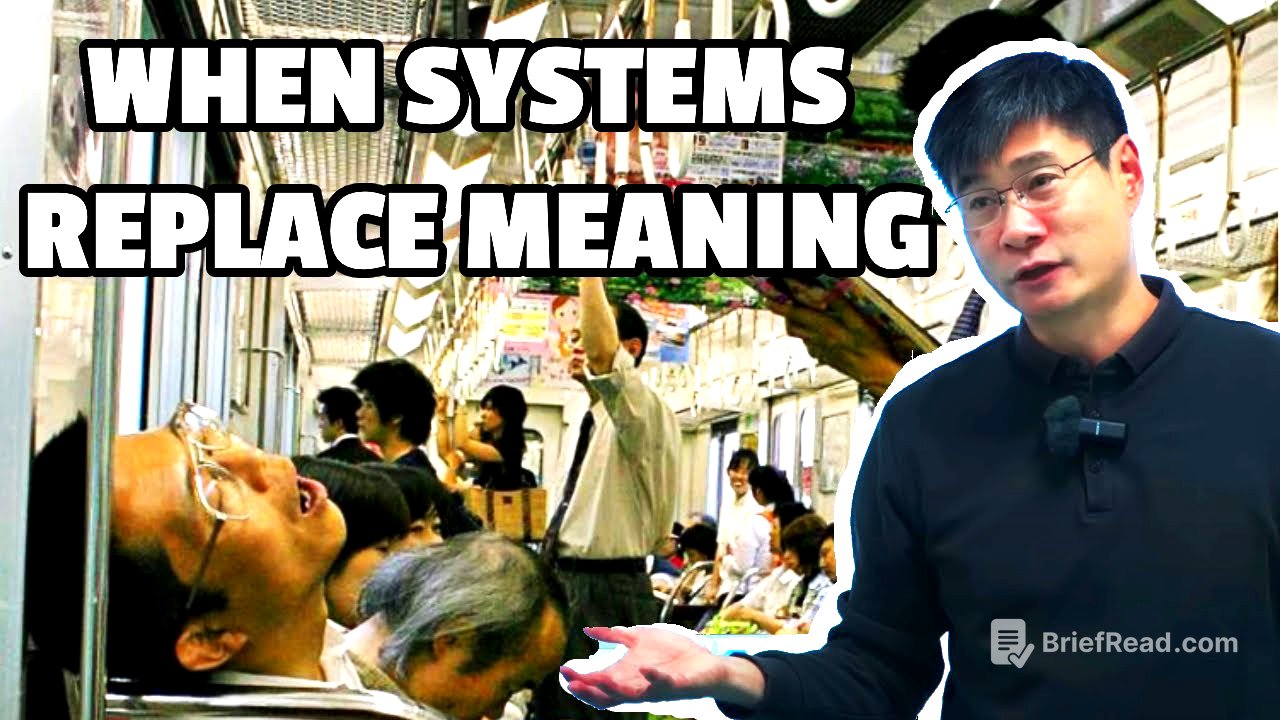
The video discusses the tendency of bureaucracies towards totalitarianism, drawing on Hannah Arendt's analysis of totalitarian regimes and James Scott's critique of state power. It argues that bureaucracies, driven by a need to justify their existence, often prioritize administrative order over the well-being and diversity of society. This leads to a decline in individual agency, economic stagnation for the middle class, and a general disillusionment with work and democracy.
- Bureaucracies tend towards totalitarianism by becoming detached from reality, prioritizing expansion, and defying reality.
- States create problems by prioritizing administrative order, imposing ideologies, and suppressing diversity.
- Over-bureaucratization leads to economic stagnation, disillusionment with work, and a decline in democratic participation.
The Logic of Bureaucrats [0:01]
The speaker illustrates the mindset of bureaucrats with a personal anecdote about an incident in Toronto where his non-English speaking son fainted in a park. Despite the situation being resolved, police insisted on taking them to the hospital, showcasing how bureaucrats prioritize procedure over practical needs. This behavior stems from a desire to justify their existence by creating problems for ordinary citizens, rather than addressing more pressing issues.
Origins of Totalitarianism [2:15]
Drawing on Hannah Arendt's analysis, the speaker explains that totalitarian regimes share three characteristics: detachment from reality, a focus on expansion, and a defiance of reality. These regimes operate like religious cults, imposing their ideology without regard for real-world consequences. The speaker argues that these characteristics can also apply to bureaucracies, suggesting that governments, over time, tend towards totalitarianism as a means of self-justification.
Seeing Like a State [5:10]
Referencing James Scott's "Seeing Like a State," the speaker explains how bureaucracies often create more problems than they solve. Bureaucracies prioritize administrative order, turning diverse and organic societies into static, mechanical systems. The state classifies individuals based on their utility, disregarding their personal identities and aspirations. This is illustrated by the example of a teenage boy being seen as a potential laborer or soldier, rather than as an individual.
Consequences of Over Bureaucratization [13:27]
The speaker discusses the consequences of over-bureaucratization, noting that while consumer goods have become more affordable, essential services like healthcare, education, and housing have become more expensive due to bureaucratic control. The speaker also points out that the apparent wealth generation reflected in the stock market is misleading, as the value of stocks measured in gold has actually decreased, indicating that the perceived prosperity is an illusion created by bureaucrats. This over-bureaucratization leads to people not wanting to work anymore, a phenomenon known as "quiet quitting" or "lying flat," as individuals feel alienated and powerless within bureaucratic systems. This also contributes to a decline in democracy, as people feel their voices and influence are diminishing.



![Matt and MetalGarurumon Make a Friend [Adventure 2020 Discussion] | Baby Flame Vol. 9](https://wm-img.halpindev.com/p-briefread_c-10_b-10/urlb/aHR0cDovL2ltZy55b3V0dWJlLmNvbS92aS9LekhIZkI5S2ZKSS9ocWRlZmF1bHQuanBn.jpg)