TLDR;
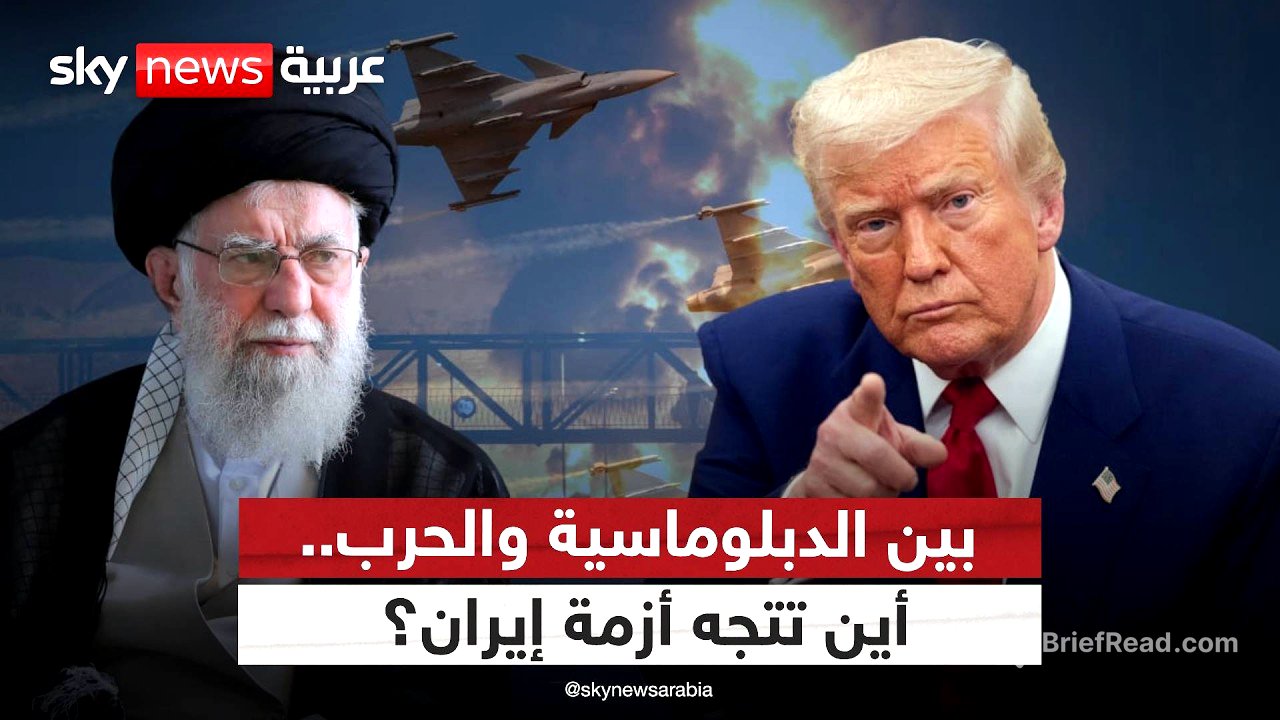
This YouTube video features a discussion on the escalating tensions between the United States and Iran. It covers the deployment of US military assets to the region, potential Iranian responses, and the possibility of diplomatic negotiations versus military action. The discussion includes the perspectives of experts on the internal dynamics within Iran, the strategic goals of the US and Israel, and the potential roles of regional actors.
- US military deployment and its objectives
- Internal Iranian dynamics and potential responses
- Strategic goals of the US and Israel
- Potential roles of regional actors
Trump's Announcement and Military Deployment [0:00]
President Trump announced the deployment of another US naval fleet towards Iran, while also expressing hope for a deal with Tehran. In response, Iran's Foreign Minister stated that Tehran has not requested negotiations but is in contact with mediating countries. The key question is whether the US is applying pressure or preparing for a strike, and what Iran's potential response might be.
Motivations Behind Military Deployment [1:04]
The deployment includes the newest type of aircraft carriers, with more firepower than all navies in the Mediterranean and Arabian Sea combined, costing billions of dollars daily. The goal is either to reach an agreement that stabilizes the situation, allowing Iran to save face by halting enrichment temporarily, or to prepare for a strike if diplomacy fails. There are disagreements between Israel, which seeks to dismantle the Iranian regime, and the US, which primarily aims for an agreement.
Internal Dynamics in Iran [3:18]
The deployment of US military forces near Iranian coasts raises questions about its impact on Iran internally. The expert suggests analyzing the situation from an American perspective, considering both Republican and Democratic viewpoints. All scenarios, including war, complete destruction of Iran, technical procedures, and alternative plans, are being considered. It's possible that in the end, actions might be redirected towards Iraq, targeting the Popular Mobilization Forces, and claiming it as a strike against Iran.
Potential Iranian Response and US Strategy [6:02]
The US might target the Popular Mobilization Forces to cut off Iran's connections with Lebanon and Palestine, isolating Iran. Trump insists on deploying a massive fleet towards Iran, moving quickly. Iran is prepared for any strike, and a strong response is necessary to prevent the government's collapse. If a strike occurs, it will be broad, targeting the Revolutionary Guard, air defenses, airports, and naval capabilities.
US Objectives and Potential Negotiations [8:06]
The US leadership believes the cost of action is not high, aiming for negotiations by setting a deadline for Iran to decide on missile programs and nuclear issues. The US is not planning a ground invasion but rather continuous strikes to force negotiations, while Israel aims to dismantle the regime. The conflict lies between America's goal of specific demands related to Iran's strategic deterrence and Israel's goal of regime change.
Possible Concessions and Conditions for Negotiation [10:32]
Iran can engage in negotiations if its rights as a nuclear state are preserved, with fair terms and international oversight. They demand recognition of their rights under international law, the UN, and the IAEA, and seek guarantees against future accusations and attacks. Iran is ready to provide full guarantees that it does not seek nuclear weapons and to allow inspections without preconditions, as in 2013.
Conflicting Objectives and Military Capabilities [12:35]
There are conflicting scenarios: the US seemingly doesn't want to overthrow the regime, while Israel aims for military action to change the regime. The Pentagon may not fully know Iran's military capabilities, including potential breaches in their military sector. Iran has untracked military capabilities and the ability to disrupt the petrochemical sector, making a consensus on achievable targets with calculated losses difficult for the US.
US Strategy and Regional Impact [15:49]
Exaggerating Iran's military strength might provoke the US into action to test these capabilities. The US no longer relies on oil imports, diminishing the impact of threats to the Strait of Hormuz. The US will not engage in ground operations but aims to weaken the regime and undermine its legitimacy. The focus is on economic and naval blockades, even if a deal is reached, to ensure compliance.
US Military Preparations in the Region [19:02]
The US has increased its military presence in the Middle East, including deploying the USS Lincoln carrier strike group, adding 5,700 troops, deploying three additional coastal ships, and moving heavy military transport aircraft with logistical supplies. Additional F-15 Eagle fighters have also been deployed to the region.
Iran's Resilience and Potential Responses [20:14]
Iran faces the possibility of a new strike, along with international pressure and potential cyber attacks or a naval blockade. Some hardliners in Iran want to strike first, targeting US military assets. While Iran is open to negotiations, it will retaliate strongly if attacked, having exhausted diplomatic efforts.
Military Capabilities and Diplomatic Hopes [24:52]
No one possesses the ultimate weapon indefinitely, as development is continuous. Iran is prepared to inflict significant damage on any aggressor, even at the cost of half its country. There is still hope for a diplomatic solution, with a "parachute" delivering a peace deal acceptable to both sides.
Conflicting Signals and Potential Outcomes [25:42]
If the American negotiator hears the same statements, we are heading to war. The problem lies in the duality of discourse, with triumphant rhetoric in Iranian media. The US aims for long-term attrition without ground invasion, starting with economic and naval blockades.
Role of Regional Proxies and Future Scenarios [27:48]
Regional proxies like Hezbollah are unlikely to alter the equation significantly. The US may try to provoke them into action, but it is not wise for them to intervene. Iran may ask them not to get involved. While Hezbollah threatens retaliation if Tehran is struck, they have not acted in response to previous attacks on their own members.
Internal Factors and Potential for De-escalation [30:06]
Iran prefers to manage the conflict without allies and is prepared to defend itself. Despite military capabilities, Iran cannot destroy US military assets but can disable them. There is an 80% belief that a peace deal will emerge, preventing war.
Historical Comparisons and Domestic Challenges [32:02]
Iran is not comparable to Iraq under Saddam Hussein or Venezuela under Maduro. Unlike Saddam, Iran has its own arms industry, and unlike Venezuela, Iran has a united populace. The key is the Iranian people, who, if they protest for their livelihoods, can destabilize the regime.
Path to Resolution [33:47]
The moment of truth is approaching, and any peace deal must address Iran's enrichment and missile programs. Trump is not inclined towards peace deals, and the idea of a peaceful resolution is unrealistic.