TLDR;
This video explains the concept of tokens and their significance in machine learning, particularly in the context of using models like ChatGPT. Key points include:
- Rate Limiting: Usage limits of ChatGPT are dictated by tokens, which are units of measurement for input and output.
- Tokenization: Text is converted into tokens for processing, with varying costs for input versus output tokens.
- Context Windows: The limit on the amount of text a model can remember in a session.
- Practical Tips: Strategies to optimize token usage and save costs.
Why ChatGPT Hits Usage Limits [0:00]
The discussion begins with a scenario where ChatGPT ceases to respond due to hitting usage limits, known as rate limiting. These limits are determined by tokens, which are essential for understanding the constraints of AI tools. The video aims to clarify the concept of tokens and how they are calculated, emphasizing the necessity for developers to understand this aspect for efficient usage of AI.
Why Machines Cannot Read Text [1:50]
The narrator explains that machines do not inherently understand human language; instead, they rely on mathematical operations. Text inputs such as "hello" are converted into numerical formats. This limitation is highlighted by discussing ASCII values, but the narrator points out that ASCII lacks the capacity to convey relationships and context, which are critical for machine understanding.
Why ASCII Numbers Fail for LLMs [3:30]
ASCII numbers are introduced as a method of converting text into numbers. For example, the word "hello" is broken down into its individual letters and converted into their respective ASCII values. However, this approach neglects the relationships between words, leading to a gap in understanding. Advanced models, like those using embeddings, address this issue by recognizing patterns and meanings in language.
What A Token Really Is [6:25]
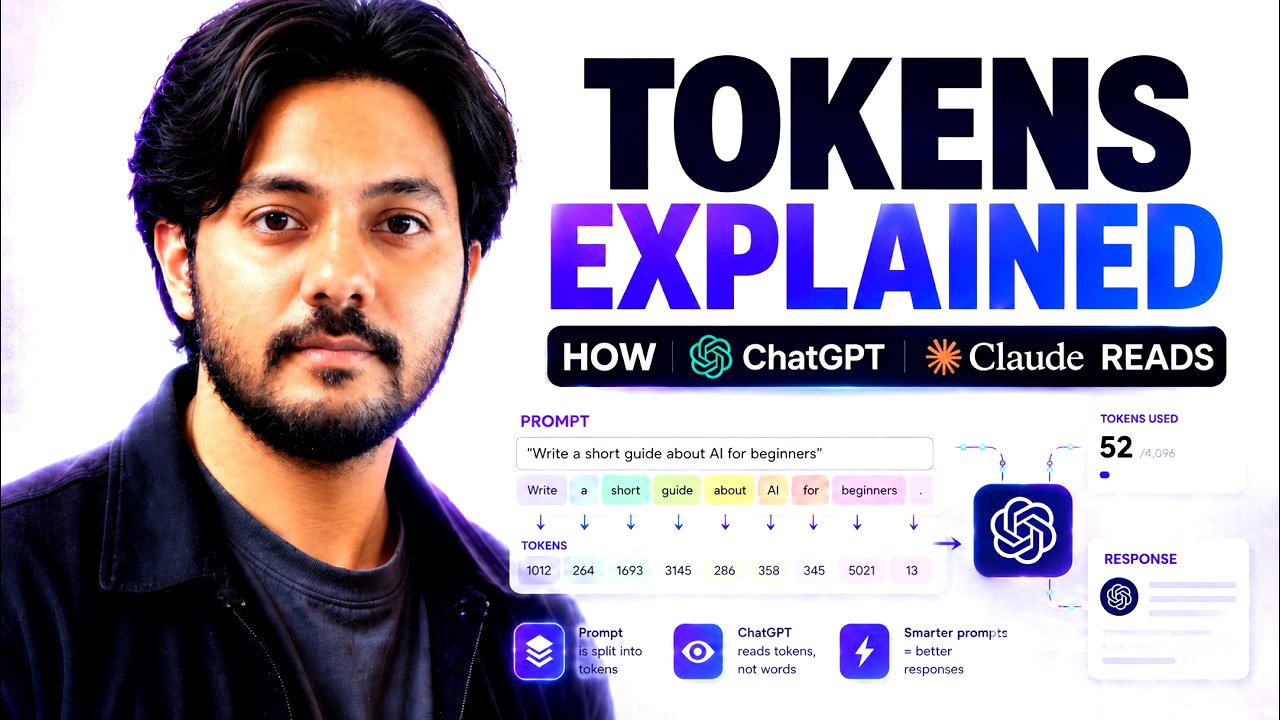
A token is described as a small unit of text that a model processes before conversion into numbers. The process of tokenization is crucial as it breaks down text further into manageable parts. For instance, the phrase "hello?" becomes three tokens: "hello," space, and "?". This segmentation is important for the model to analyze and interpret input text accurately.
Embeddings Give Numbers Meaning [8:50]
The video delves into embeddings, which transform tokens into numerical vectors. These embeddings maintain the semantic relationships between words, allowing AI models to understand context better. A discussion includes how different embedding techniques yield various dimensional representations of words, fundamentally improving how language models operate.
OpenAI Tokenizer Live Demo [10:00]
A live demonstration shows how the OpenAI tokenizer works, converting phrases into tokens and their respective IDs. The examples highlight how variations in wording, such as capitalization, result in different token representations. This section emphasizes the model's nuanced handling of input and its implications for token count.
English vs Telugu Token Cost [13:25]
The narrator compares token usage between English and Telugu to illustrate the cost implications of different languages. For example, the word "hello" results in one token in English but requires nine tokens in Telugu. This discrepancy showcases how language structure affects cost and token usage, influencing user experience with the model.
Input vs Output Tokens And TPS [14:25]
The video addresses the difference between input and output tokens in AI interactions. Input tokens are what users send to the model, while output tokens are the responses generated. The concept of Tokens Per Second (TPS) is introduced to explain how quickly a model can process and respond, influencing the overall interaction speed.
Why Output Tokens Cost 5x More [16:30]
Output tokens are explained to be significantly more expensive than input tokens, with costs highlighted for various models. This difference arises because generating responses requires substantial computational resources and processing power. The narrator illustrates the varying pricing structures across different OpenAI models and the implications for users.
The Hidden Token Tax (Tools, MCP, History) [18:30]
The concept of a "hidden token tax" is introduced, where the total token consumption includes not just the input but also metadata and context about tools, past interactions, and user prompts. This additional data increases the overall token count, complicating costs for users who may underestimate their token utilization.
Context Window And Why AI Forgets [19:55]
The context window refers to the maximum amount of text a model can comprehend at any given time. The video explains how different models have varying context limits, impacting their ability to retain information during long interactions. Once this limit is reached, the model forgets earlier context, influencing response accuracy and coherence.
Tips To Save Tokens [21:30]
Practical tips are provided for optimizing token usage, including starting new chats periodically and avoiding long inputs. Users are encouraged to streamline their prompts and use less complex models for simpler tasks to minimize costs. The narrator concludes by emphasizing the importance of understanding tokens for effective interaction with AI models.