TLDR;
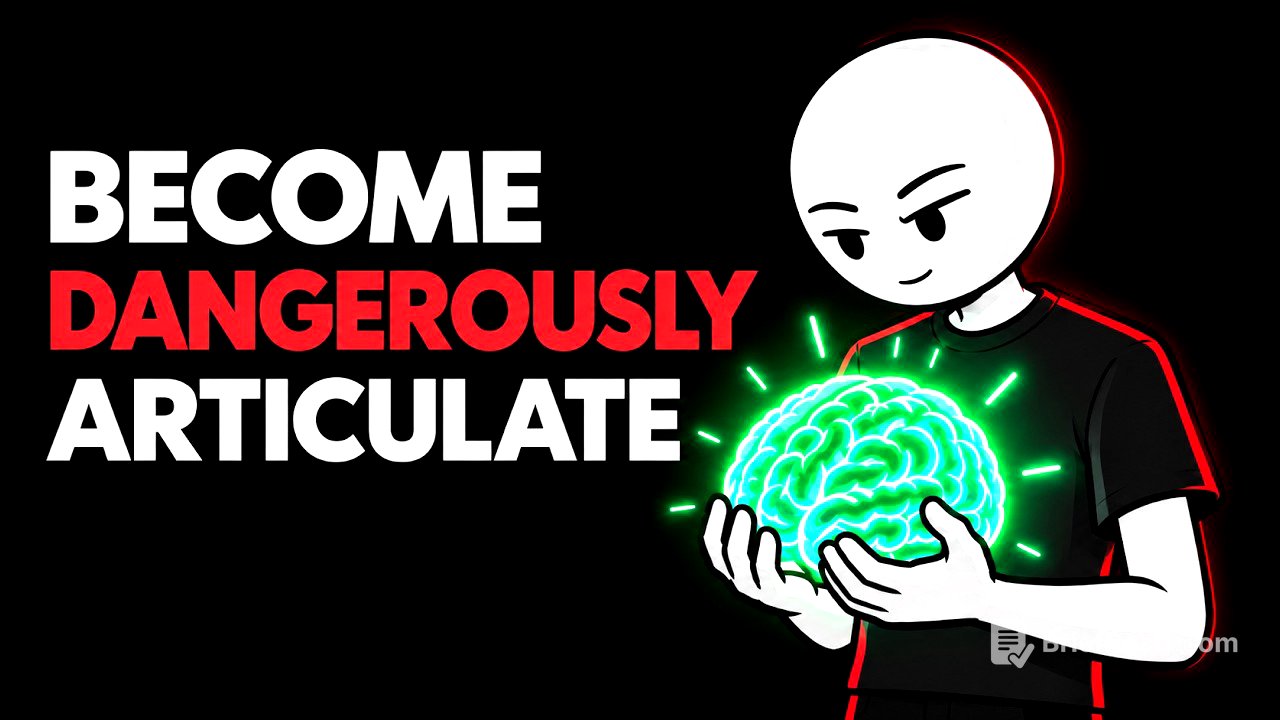
This video explores the art of clear communication, highlighting the differences between knowing something and effectively expressing that knowledge. It presents key skills to improve verbal intelligence and articulate thoughts, focusing on understanding, context, and clarity.
- Communication involves not just what you know, but how you convey it.
- A structured approach can help you organize and express your ideas clearly.
Introduction to Communication Skills [0:00]
The video begins with a relatable scenario where someone is asked for their opinion during a meeting. Despite having a thoughtful answer, the speaker struggles to articulate their thoughts clearly, leading to confusion. This highlights the difference between knowledge and communication skills, emphasizing that verbal intelligence encompasses more than just vocabulary or sentence structure.
Understanding the Problem [0:59]
The presenter discusses the challenge of expressing opinions without a clear understanding of the underlying thoughts. They refer to research on the "illusion of explanatory depth," which shows people often believe they understand concepts more deeply than they actually do. The importance of asking oneself clarifying questions before speaking is emphasized, helping articulate thoughts more effectively.
Providing Context [3:14]
Context is crucial for comprehension. The video illustrates this with an example of explaining laundry procedures. Providing context before revealing detailed information enhances understanding, as shown in experiments by psychologists Bransford and Johnson. The presenter advises beginning conversations with a clear subject statement to help listeners follow the discussion.
Connecting Ideas [6:24]
The presenter emphasizes the significance of connecting sentences so listeners can easily follow the argument. They contrast disjointed statements with a cohesive explanation, supporting the practice of using connecting words like "because" and "however" to clarify relationships between ideas. This technique ensures that the listener can understand the logical flow of the conversation.
Making Abstract Ideas Visible [8:54]
To enhance understanding, the speaker suggests making abstract concepts more tangible through examples. Specific situations turn vague ideas into relatable narratives, like describing procrastination behaviors instead of merely stating the term. While examples help illustrate points, the speaker notes they do not prove the argument's validity but rather aid comprehension.
Precision in Language [10:22]
Choosing precise words is crucial in communication. The presenter explains how different phrasing can change interpretations and emphasizes distinguishing facts from beliefs. The importance of being careful with language to convey uncertainty is discussed, encouraging statements that reflect true understanding rather than exuding false confidence.
Collaboration in Conversation [12:18]
The video touches on the collaborative nature of conversation, where both participants should engage to reach shared understanding. Adjusting explanations based on audience reactions and tailoring information to the listener enhances communication effectiveness. The importance of recognizing when explanations aren’t resonating is highlighted.
Managing Anxiety in Communication [14:08]
The speaker discusses how anxiety can hinder communication, especially in high-stakes situations. They reference a study showing that reframing anxiety as excitement can enhance performance. The suggestion is made to redirect focus from nerves to the message being communicated, encouraging simplicity and clarity in explanations.
Training for Articulation [15:46]
To improve articulation, the presenter introduces a practical 5-minute exercise that involves explaining a subject, using active recall rather than reading notes. This exercise fosters better organization of thoughts and encourages awareness of communication gaps before they occur in conversations.
Final Thoughts on Communication [19:00]
The video concludes by reiterating that being articulate doesn’t mean perfecting every detail but effectively expressing ideas. It encourages focusing on clarity and making complex ideas understandable for others, with a reminder that intelligence is best shown through accessible communication rather than complexity.