TLDR;
This video recounts the tragic events of the May 1998 riots in Indonesia, focusing on the violence, especially against the Chinese Indonesian community, and the mass rapes that occurred. It details the widespread destruction, loss of life, and the eventual downfall of President Soeharto's regime. The video also touches on the aftermath, including the lack of justice for victims and the ongoing efforts to remember and learn from these events.
- The riots were triggered by economic hardship and political tension, leading to widespread looting, arson, and violence.
- Chinese Indonesians were specifically targeted, with many experiencing property destruction, sexual assault, and murder.
- The government's response was initially slow and ineffective, leading to accusations of negligence or complicity.
- The riots ultimately contributed to the end of Soeharto's 32-year rule, paving the way for democratic reforms.
- The legacy of the May 1998 riots includes ongoing demands for justice, efforts to promote inter-ethnic harmony, and a renewed focus on human rights.
The Unfolding Tragedy of May 13, 1998 [0:09]
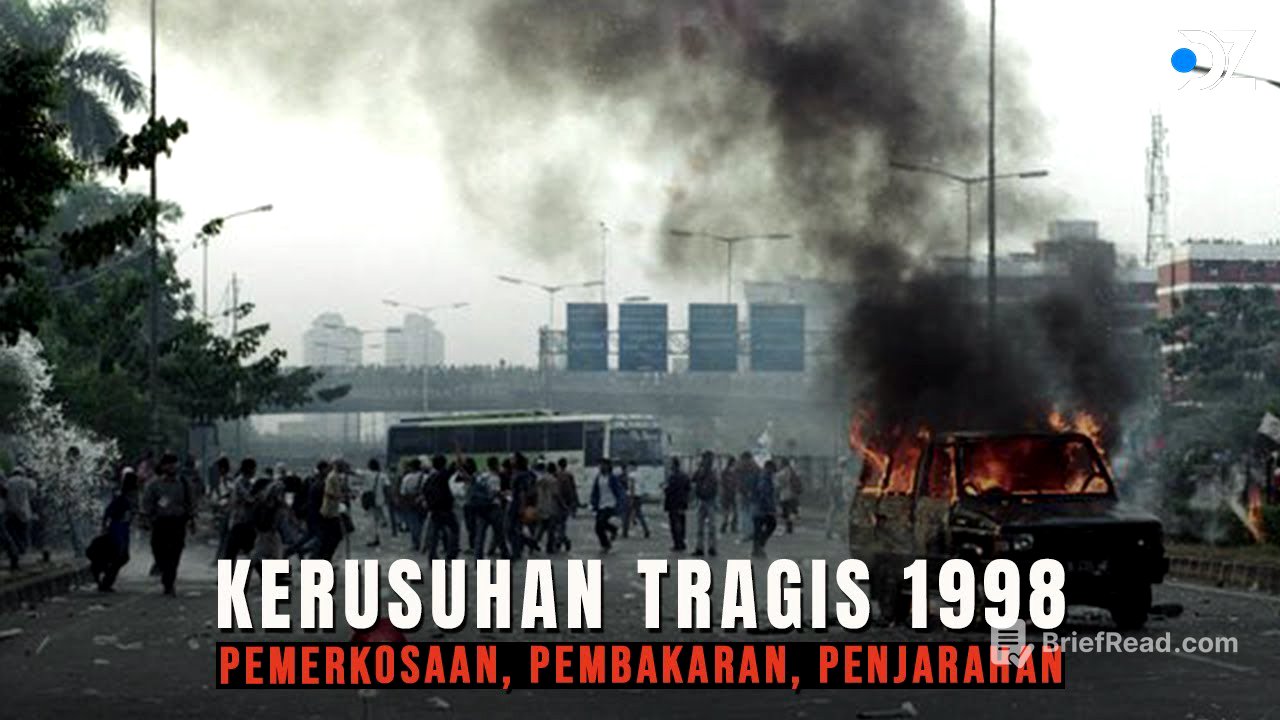
On May 13, 1998, Jakarta was in mourning after the shooting of Trisakti University students. Amidst the grief, anger was brewing, fueled by conversations in markets and terminals about the shootings. By noon, thousands gathered in the streets, driven by anger, and peaceful protests turned into riots. Unidentified groups infiltrated the crowds, setting fire to warehouses, shopping centers, and shops, particularly in areas like Glodok and Mangga Dua, which were largely owned by Chinese Indonesians. The chaos escalated quickly, with streets engulfed in flames and smoke.
Escalation and Inaction [2:01]
As the afternoon progressed, the situation became uncontrollable, with security forces either retreating or disappearing. Many witnesses reported that soldiers stood by and watched the looting without intervening, while a few officers tried to protect citizens. Jakarta was essentially left to burn, with cars overturned and set ablaze, and shops looted. Some Chinese shop owners desperately put up signs indicating they were pribumi (native Indonesian) or pro-reform in hopes of avoiding being targeted, but the mob was indiscriminate, targeting anyone suspected of being non-pribumi. The night was filled with panic, blackouts, and the sounds of explosions, as terrified Chinese Indonesians barricaded themselves in their homes or fled the city.
May 14: The Peak of Horror [4:18]
May 14, 1998, marked the peak of the riots, with thousands of people, mostly young men and urban poor, flooding the streets to vent their anger and loot. Major shopping centers and small shops were attacked, including Yogya Plaza in East Jakarta, which was set on fire with many people still inside. People inside the mall desperately sought escape, with some jumping from upper floors and others trapped and burned alive. The fire at Plaza Yogya resulted in the deaths of an estimated 288 to 488 people, mostly women and children.
Spreading Unrest [6:59]
The violence quickly spread from Jakarta to other cities like Bogor, Depok, Tangerang, and Bekasi. In Tangerang, Chinese-owned shops and settlements were attacked, while in Bekasi and Depok, shops were looted and vehicles were burned. Even Bogor saw looting in its city center. The riots extended beyond Java to cities like Solo, Surabaya, Palembang, Lampung, and Medan, each experiencing similar patterns of destruction and violence, with Chinese Indonesians often targeted.
The Darkest Secret: Sexual Violence [10:34]
Amidst the chaos, a wave of mass rapes occurred, becoming the darkest aspect of the May 1998 riots. Volunteer groups documented at least 85 cases of sexual violence, including rape, torture, and sexual assault, with Chinese Indonesian women being the primary victims. The actual number is believed to be much higher, with many victims remaining silent due to fear and trauma. These acts of sexual violence were systematic and planned, occurring in various riot locations. Victims were often dragged from their homes and shops, stripped, raped, tortured, and subjected to racial slurs. The brutality included the use of sharp objects to torture the victims' genitals.
Aftermath and Government Response [14:38]
Initially, the government doubted the reports of mass rapes, citing a lack of evidence. However, activists persisted, and President Habibie eventually formed the National Commission on Violence Against Women in October 1998, and the state officially apologized to the rape victims. By May 15, 1998, the situation in Jakarta began to stabilize, with military patrols increasing and a de facto curfew in place. The number of casualties was tallied by volunteers and hospitals, and tragic stories emerged.
The Fall of Soeharto [16:54]
The May 1998 riots shook the foundations of the New Order regime. President Soeharto, who had ruled for 32 years, faced increasing pressure to step down. After returning from Cairo on May 15, he attempted to salvage his regime by proposing a Reform Committee, but many independent figures refused to join unless Soeharto resigned first. On May 18, thousands of students occupied the MPR building, and MPR Speaker Harmoko called for Soeharto's resignation. On May 19, Soeharto met with Islamic leaders, who conveyed the public's desire for him to step down. The final blow came when 14 ministers threatened to resign, leading to Soeharto's resignation on May 21, 1998.
Legacy and Remembrance [24:00]
The May 1998 tragedy left a complex legacy for Indonesia, marked by democratic reforms but also unresolved questions of justice. Families of victims continue to demand investigations and trials for those responsible for human rights violations. Cases like the Trisakti shootings and the mass rapes remain unresolved due to a lack of evidence and victims' reluctance to testify. Despite the lack of legal resolution, the events of 1998 are commemorated annually, with communities and pro-democracy groups holding events to remember the victims and advocate for justice. For Chinese Indonesians, the tragedy marked a turning point, leading to greater political engagement and a stronger assertion of their identity as integral members of the nation.