TLDR;
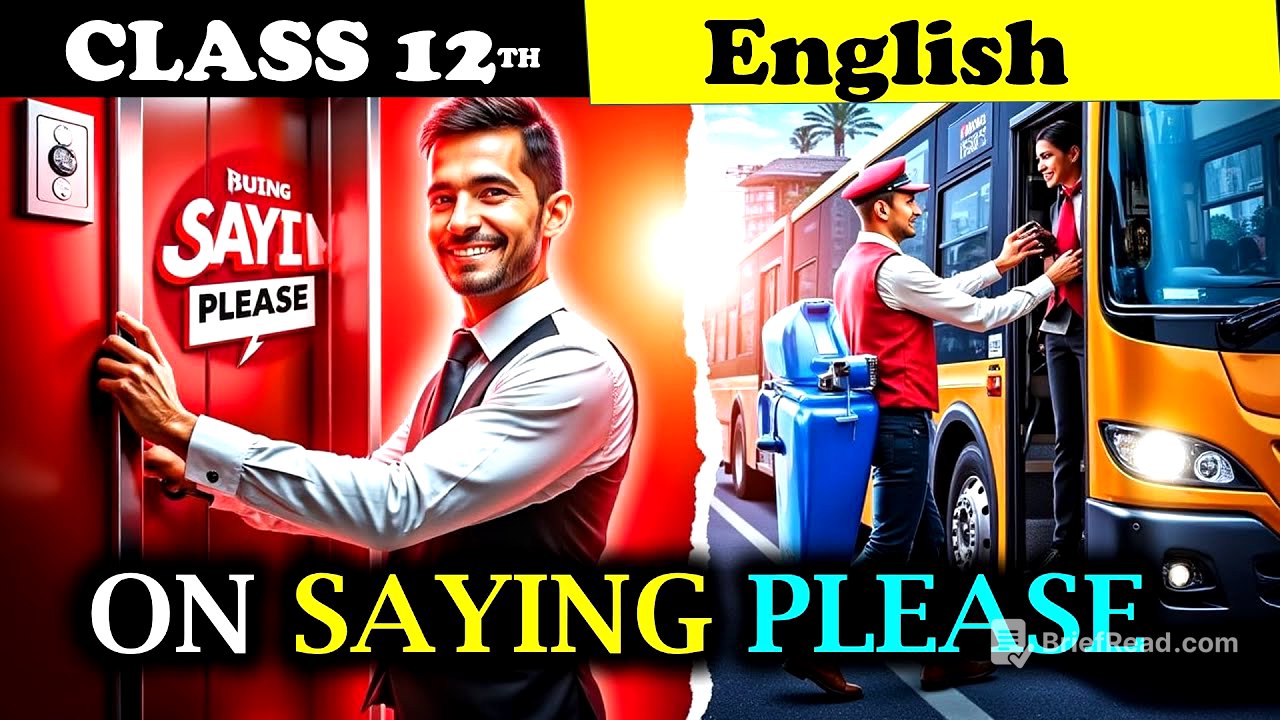
This video summarizes the essay "On Saying Please" by A.G. Gardiner, which explores the importance of good manners and courteous behavior in society. It highlights how being polite and considerate can positively impact interactions and create a more pleasant environment, while rudeness can have a ripple effect, spreading negativity. The video uses examples like a liftman's reaction to a rude passenger and a bus conductor's kindness to illustrate the power of good manners.
- Good manners are essential for a harmonious society.
- Rudeness can have a ripple effect, spreading negativity.
- Kindness and politeness can create a positive environment.
Introduction: The Importance of "Please" [0:00]
The video begins by introducing the theme of the essay: the significance of saying "please" and the impact of good and bad behavior. It sets the stage by mentioning a story about a liftman who throws a passenger out of the lift for not saying "please," leading to a fine for the liftman. This incident serves as a starting point to explore the broader implications of discourtesy and its consequences.
The Legality of Discourtesy [1:00]
The video explains that while physical assault is a legal offense, discourtesy is not punishable by law. There are no legal repercussions for being rude or impolite. The author argues that if the law allowed people to retaliate with violence for rude behavior, society would descend into chaos. The absence of legal consequences for bad manners doesn't make it acceptable, especially when discourtesy can cause mental and emotional harm, which the law doesn't address.
The Ripple Effect of Bad Manners [2:46]
The video discusses how rudeness can have a cascading effect, where one person's bad mood or experience is passed on to others. The author provides an example of Sir Anthony, who takes his frustration out on Captain Anthony, who then vents on Fogg, and so on. This illustrates how negative behavior can spread through a chain of interactions, affecting multiple people. The author suggests that the passenger who was rude to the liftman may have been subjected to similar treatment earlier in their day, perpetuating the cycle of bad manners.
The Value of Courtesy [5:11]
The video emphasizes that "please" and "thank you" are not legal requirements but rather social customs that have been around for a long time. These courteous expressions act as the "oil" that keeps the machinery of life running smoothly. The author highlights the importance of these small gestures in maintaining positive social interactions and fostering a more pleasant environment.
The Bus Conductor's Kindness [5:45]
The video shares a personal anecdote about the author's experience with a kind bus conductor. The author forgot his wallet and was unable to pay for his ticket. Instead of being rude or dismissive, the conductor offered to let him ride for free, showcasing exceptional kindness and understanding. This act of generosity left a lasting positive impression on the author.
The Impact of Good Behavior [8:42]
The video continues the story of the bus conductor, recounting a later incident where the conductor accidentally stepped on the author's foot. The conductor's sincere apology and good-natured response further impressed the author. Observing the conductor's overall positive attitude and considerate behavior towards all passengers, the author notes how he created a pleasant atmosphere on the bus, positively influencing everyone's mood.
The Chain of Courtesy and a Lesson from Lord Chesterfield [10:11]
The video concludes by reiterating that just as bad behavior can create a chain reaction, so can good behavior. The author shares a story about Lord Chesterfield, who, when confronted by a rude man who refused to yield the sidewalk, politely stepped into the street, leaving the man to appear boorish. This illustrates that responding with kindness and courtesy can be a more effective way to handle rudeness and can lead to a "spiritual victory." The author suggests that the liftman could have responded with similar grace instead of resorting to physical action.