TLDR;
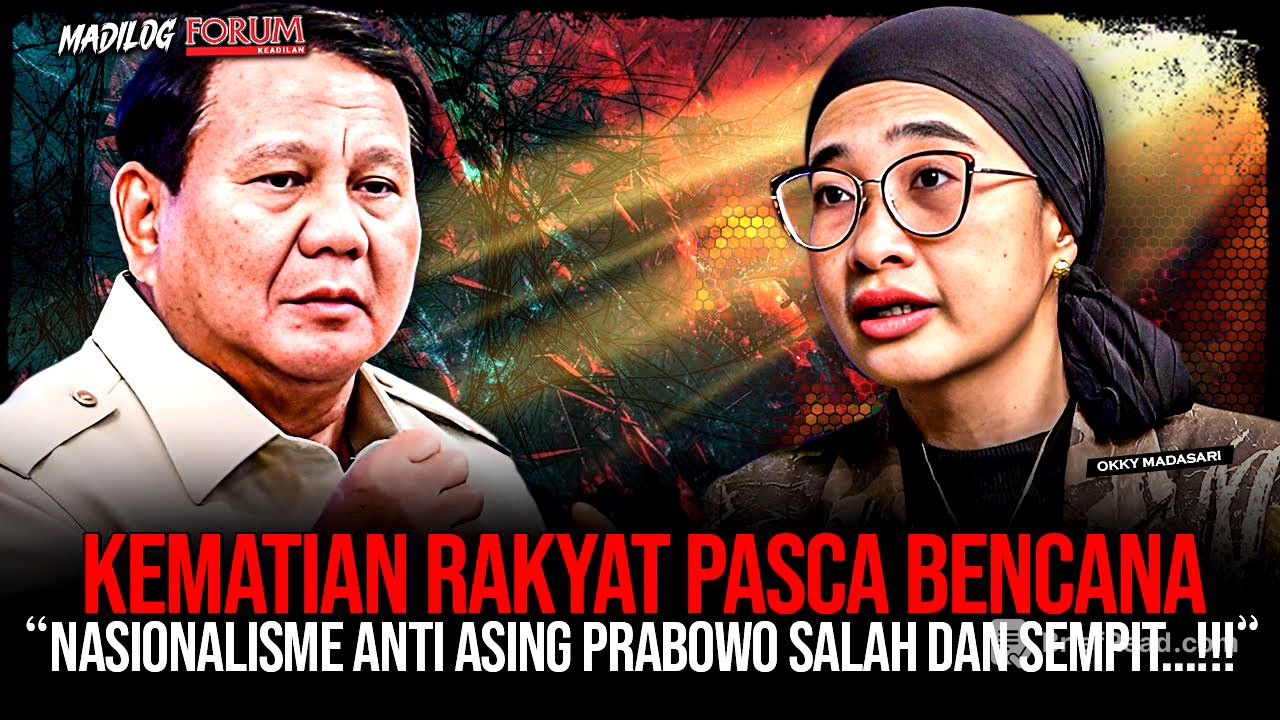
This video analyzes the Indonesian government's response to the Sumatera disaster in 2025, highlighting the contradictions between the government's claims of being able to handle the situation and the reality on the ground, where many people are suffering and in need of assistance. It also touches on the broader issues of leadership, state capacity, and empathy in disaster management, as well as the role of foreign aid and nationalistic sentiment.
- The government's response to the Sumatera disaster has been slow and inadequate.
- There is a lack of transparency and accountability in the government's handling of the disaster.
- The government's rejection of foreign aid is based on a narrow and misguided sense of nationalism.
- The disaster has exposed deeper issues of leadership, state capacity, and empathy within the government.
- There is a growing sense of frustration and disillusionment among the people of Sumatera, particularly the younger generation.
Intro [0:00]
The host introduces the topic of the video, which is the Sumatera disaster and the government's response to it. He mentions the white flags being raised in Aceh as a sign of desperation and compares it to similar expressions of discontent in other countries. The host introduces Dr. Oki Madasari, a sociologist who has done extensive research on the younger generation, to provide insights on how they view the disaster and the government's response.
White Flags in Aceh and Government's Response [3:36]
Dr. Madasari explains that the white flags in Aceh symbolize the urgent need for assistance, indicating that the people are overwhelmed by the disaster and require external support. This is contrasted with President Prabowo's statement that Indonesia is capable of handling the situation without foreign aid, which is seen as contradictory and ironic. The reality in Aceh is dire, with thousands dead and many more in need of basic necessities, a fact confirmed by the local governor. The government's response is criticized for lacking speed, transparency, and accountability, failing to meet the basic standards of disaster management.
Critique of Government's Disaster Management [5:54]
The speaker criticizes the government's approach to disaster management, pointing out that scientific indicators show the response to the Sumatera disaster is worse than previous disasters like the Aceh tsunami or the Jogja earthquake. The lack of a clear chain of command and the slow response from agencies like BNPB (National Disaster Management Authority) highlight the disorganization and confusion in the government's efforts. The speaker also questions the leadership of President Prabowo, comparing his response unfavorably to that of previous leaders during similar crises.
Rejection of Foreign Aid and Nationalistic Populism [8:29]
The discussion addresses the government's rejection of foreign aid, which is seen as a way to promote negative populism and a narrow sense of nationalism. The speaker argues that seeking foreign assistance during disasters is a common practice worldwide and that rejecting it is illogical. The reasons behind this rejection are twofold: fear of losing control over the narrative and avoiding demands for transparency. The lack of transparency and accountability further undermines the government's disaster management efforts, leading to a sense of abandonment among the affected population.
Irony of Seeking Help and Bureaucratic Obstacles [11:07]
It's considered ironic that the affected regions have to plead for help due to bureaucratic hurdles. Offers of assistance from Malaysia and Singapore were reportedly redirected to Sri Lanka, highlighting the government's reluctance to accept foreign aid. The president's use of anti-foreign sentiment to build nationalism is criticized as misguided and harmful. The speaker emphasizes that seeking foreign aid in times of disaster is normal and necessary, referencing the significant role it played in the aftermath of the 2004 tsunami.
Lack of Early Warning System and Leadership [12:37]
The speaker notes the absence of an effective early warning system, despite Indonesia's past experience with the 2004 tsunami, where the country was praised for its handling of the disaster. The current lack of mitigation efforts and the government's inability to take charge of the situation are criticized. The speaker questions who is currently in control of the disaster response and contrasts it with the clear leadership that was present during previous disasters.
Leadership and State Capacity [14:45]
The Sumatera disaster raises significant questions about leadership, state capacity, and empathy within the government. The speaker criticizes the lack of empathy shown by some officials and questions President Prabowo's leadership in the face of the crisis. Prabowo's reluctance to acknowledge the severity of the disaster and his limited engagement with the affected areas are seen as major shortcomings.
Historical Parallels and Narrow Nationalism [17:21]
The discussion draws a parallel between President Prabowo's anti-foreign aid stance and Sukarno's "Go to hell with your aid" remark, both of which reflect a narrow and superficial sense of nationalism. The speaker argues that using anti-foreign narratives is a common tactic for leaders seeking to build nationalistic sentiment and cover up their failures.
Transparency and Deforestation [19:28]
The speaker suggests that President Prabowo's reluctance to accept foreign aid and declare a national emergency may be linked to his extensive land holdings in the disaster-affected area. Transparency would reveal the extent of deforestation and the impact of palm oil plantations, which Prabowo supports, on the environment. The speaker criticizes the government's failure to prevent deforestation and calls for accountability from the Ministry of Forestry.
Accountability of the Minister of Forestry [23:35]
The speaker emphasizes the responsibility of the Minister of Forestry in addressing deforestation and holding those accountable for illegal logging. The speaker criticizes the Minister of Forestry's past actions, including a photo of him playing cards with a suspected illegal logger, and questions the effectiveness of the Ministry's efforts to protect the forests. The speaker also raises concerns about the composition of the FOLU team, which is responsible for managing forests and climate, noting that it is dominated by members of the PSI party.
Inconsistencies and Political Interests [27:05]
The speaker highlights President Prabowo's past statements in support of foreign aid and the Gerindra party's previous calls for declaring a national emergency during the Lombok earthquake. These inconsistencies suggest that Prabowo's current stance is driven by political interests rather than genuine concern for the people affected by the disaster. The speaker concludes that Prabowo is prioritizing the interests of the elite and his political agenda over the lives and well-being of the people.
Politicization of Humanitarian Aid [29:36]
The discussion shifts to the trend of prioritizing politics over humanitarianism, as seen in the government's response to the Sumatera disaster. The speaker criticizes the government's dismissive attitude towards the disaster, treating it as a minor issue affecting only a few provinces. This denial, according to the speaker, is systemic and institutionalized, leading to policies that prioritize political interests over the needs of the people.
Denial and Foreign Influence [30:34]
The speaker accuses President Prabowo of being in denial about the severity of the disaster and of using the narrative of foreign influence to deflect criticism. The speaker points out the hypocrisy of Prabowo, who has been actively seeking relationships with foreign leaders, while simultaneously accusing critics of being funded by foreign interests.
Rejection of Aid and International Perception [34:41]
The speaker argues that rejecting foreign aid does not necessarily create animosity with other countries, but it does make Indonesia look strange on the international stage. In today's interconnected world, the situation in Aceh is visible to everyone, and the slow response to the disaster is leading to further suffering. The speaker emphasizes that the government's actions are not only harming the people of Sumatera but also damaging Indonesia's reputation.
Role of Representatives and Silent Legislators [37:16]
The discussion criticizes the lack of advocacy from the elected representatives in the DPR (People's Representative Council) and DPD (Regional Representative Council) regarding the disaster. The speaker notes that these representatives, who are supposed to voice the concerns of the people, have been largely silent on the issue, with the exception of the DPD chairman who echoed Prabowo's sentiments about national pride. The speaker contrasts this silence with the actions of the Aceh governor, who has been vocal about the need for assistance and the suffering of his people.
Gen Z Disappointment and Anarchistic Tendencies [40:41]
The speaker discusses the potential for disillusionment among the younger generation (Gen Z) in Indonesia, drawing parallels with similar movements in other countries. The speaker notes that the first to mobilize aid were citizens, highlighting the capacity of people to take initiative without waiting for the bureaucracy. The speaker also mentions the growing sentiment among young people in Aceh for independence, reflecting a deep sense of disappointment with the government.
Anarchism and Distrust in Government [42:59]
The speaker suggests that the citizen-led aid efforts can be seen as a form of anarchism, reflecting a distrust in government and a belief in self-organization. However, the speaker acknowledges the negative connotations associated with anarchism and clarifies that it does not equate to vandalism or violence. Instead, it represents a form of self-governance where citizens take initiative and lead without government intervention.
Seeds of Distrust and Potential for Change [48:46]
The speaker emphasizes the importance of addressing the growing frustration and anger among the people, particularly the younger generation. The speaker warns that President Prabowo's recent speeches are only exacerbating the situation by denying the reality of the disaster and blaming foreign influences. The speaker urges Prabowo to show leadership and take the disaster seriously, acknowledging that there is still an opportunity for him to regain public trust.
Hope for Improvement and Call to Action [53:39]
The speaker expresses hope that President Prabowo can still change course and take meaningful action to address the disaster. The speaker emphasizes the need for transparency, accountability, and a willingness to accept foreign aid if necessary. The speaker concludes by urging Prabowo to acknowledge the severity of the situation, take responsibility, and show true leadership in order to regain the trust and support of the people.
Conclusion [1:00:19]
The host concludes by summarizing the key points of the discussion, emphasizing the importance of empathy, solidarity, and justice in the face of the disaster. The host quotes Hannah Arendt and Imam Ali to highlight the dangers of prioritizing power and self-preservation over the needs of the people. The host ends by calling for accountability and urging the government to prioritize the well-being of its citizens.