TLDR;
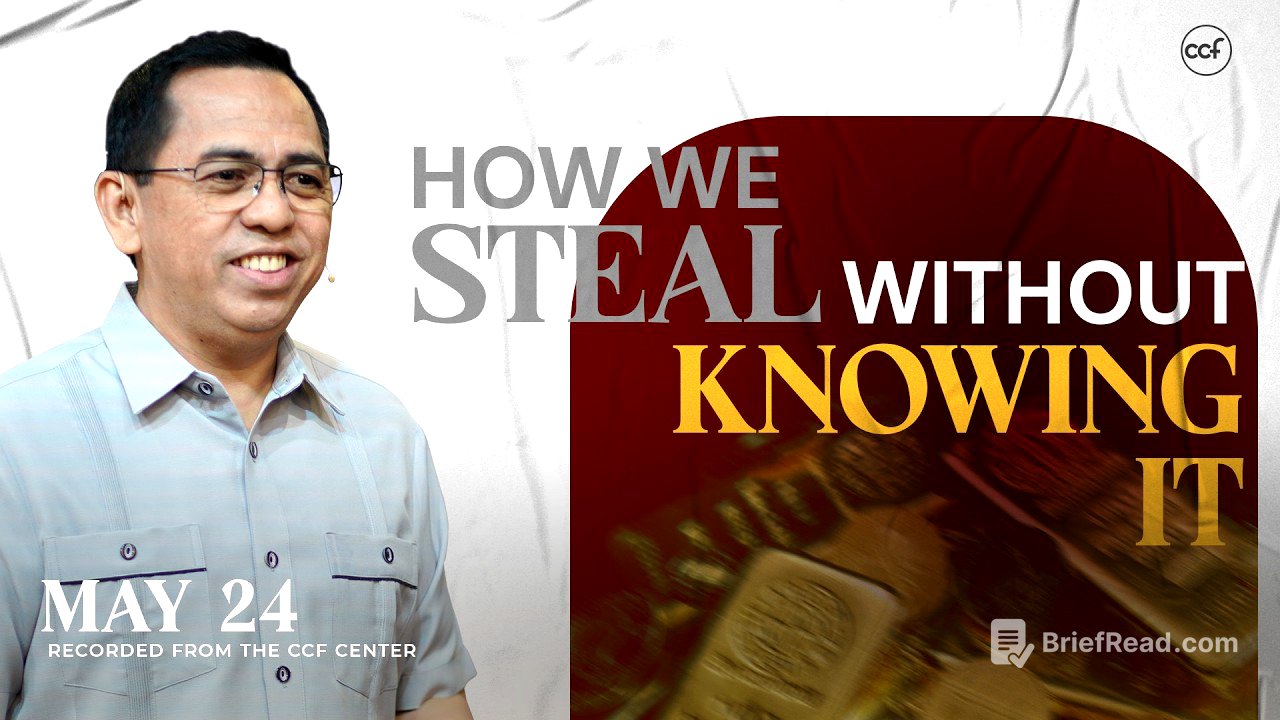
This sermon explores the meaning of "You shall not steal" from the Ten Commandments, emphasizing that stealing is more than just physical theft; it's about our relationship with God and recognizing His ownership of everything. It identifies various forms of stealing, including material, relational, and spiritual theft, and encourages listeners to repent and replace taking with blessing.
- Stealing is a heart problem, not just a hand problem.
- God owns everything, and we are stewards of His resources.
- Replace taking with blessing and generosity.
Opening [0:00]
The sermon begins by highlighting the seriousness of stealing, noting that accusations of theft are prevalent in society, especially within government agencies. The speaker introduces the message as a way to understand the roots of stealing and how to overcome it, emphasizing that the commandment "You shall not steal" is a direct expression of God's character. Understanding and obeying this commandment is part of worship, which is a proper response to who God is and what He has done.
1. Recognize the many ways we steal [21:37]
The speaker emphasizes the need to recognize the various ways we steal, dividing stealing into three categories: material, relational, and spiritual. This recognition is essential for repentance and redirecting our hearts back to God, replacing the act of taking with the act of blessing others.
Material Stealing [22:28]
Material stealing includes theft, fraud, corruption, cheating, dishonest business practices, fake transactions, unpaid debts, piracy, plagiarism, and exploitation. The speaker shares personal anecdotes and examples to illustrate these points, such as businesses that deceive customers with false advertising or altered scales. He also addresses the issue of tax evasion, emphasizing that obedience to God is not dependent on the honesty of rulers. Stealing time, through chronic lateness or misusing work hours, is also a form of material theft.
Relational Stealing [43:58]
Relational stealing involves taking trust, honor, and loyalty from others. Examples include stealing credit for accomplishments, manipulating relationships for personal gain, and poisoning relationships through gossip and division. The speaker references Absalom, who stole the hearts of the men of Israel by flattering them and undermining his father, King David. He also touches on the seduction of the bride of Christ, where individuals or groups attempt to steal the loyalty of believers away from Jesus.
Spiritual Stealing [49:41]
Spiritual stealing involves taking what belongs to God, such as glory, worship, obedience, and control. This includes exalting oneself, claiming ownership of accomplishments, and living independently from God. The speaker emphasizes that even seemingly humble expressions like "Glory to God" can be a form of spiritual stealing if the heart is not genuinely acknowledging God's role. He also addresses the issue of robbing God through improper worship, disobedience, and a lack of generosity.
Testimony Sharer - Manny Aguila [57:01]
Manny Aguila shares his testimony about how his faith in Christ transformed his life and guided him to walk in integrity, even when compromising seemed easier and more profitable. He recounts instances where he resisted unethical practices in his corporate sales career, trusting in God's promises despite facing financial pressures and health challenges. Manny emphasizes that true success is about honoring God, even when no one is watching, and that God's faithfulness sustained him through various trials.
2. Repent of the heart behind stealing [1:03:54]
The speaker urges listeners to repent of the heart behind stealing, emphasizing that stealing rejects God as owner and provider, violates God's design for love and justice, and destroys people and spreads evil. He encourages trusting in God's provision and timing, referencing Psalm 23 ("The Lord is my shepherd; I shall not want") and Philippians 4:19 ("My God will supply all your needs"). The speaker warns against the devil's tactics of causing doubt in God's faithfulness and encourages listeners to trust in God's goodness and justice.
3. Replace taking with blessing [1:11:04]
The speaker instructs listeners to replace taking with blessing, emphasizing that those who have stolen must stop and instead labor to share with those in need. He clarifies that working is not just for personal gain but to be a blessing to others. The speaker challenges the common understanding of progress, stating that true progress in Christianity is having enough to accomplish God's will. He reminds listeners that they are not permanent residents on earth but are destined for a home in heaven.
Closing [1:14:24]
The sermon concludes by emphasizing that Christianity is not merely behavioral modification but a heart transformation. The opposite of stealing is not honesty but generosity. The speaker highlights that before Christ, people tend to take and grasp, but after finding Christ, they labor, serve, bless, and give because they love. He shares the story of the thief on the cross who recognized Jesus as king and was promised paradise. The speaker reiterates that Satan steals and destroys, while Jesus gives life and blesses, and that God owns everything.
Sunday Fast Track [1:19:40]
This section presents a Q&A session with Pastor Bong, addressing questions related to the sermon's topic.
Q1. Kailangang bang gumawa ng kahit konting illegal para umasenso? [1:20:22]
Pastor Bong addresses the common sentiment that success requires compromising on ethical principles. He argues that true success lies in one's relationship with God and contentment, rather than worldly possessions. He emphasizes that God promises to provide and that contentment is a form of wealth.
Q2. Ano ang dapat gawin ng mga na-biktima ng scan? [1:21:51]
Pastor Bong offers encouragement to those who have been victims of theft or scams. He reminds them that everything belongs to God, so the thieves are ultimately stealing from Him. He advises them to give their pain to God, focus on their character, and trust that God will restore what was lost.
Q3. Ok lang ba magnakaw, kung para ito sa ikabubuti ng mahal sa buhay? [1:22:58]
Pastor Bong addresses the difficult situation of stealing to provide for loved ones. While acknowledging the desperation that can drive such actions, he emphasizes the importance of prayer and trusting in God's provision. He references Jesus' teaching on prayer, encouraging listeners to seek God's kingdom first and trust that He will provide.
Q4. Ano ang biblical ng tugon sa talamak na korapsyon at pagnanakaw sa ating bansa? [1:24:18]
Pastor Bong discusses the appropriate response to widespread corruption and theft in the country. He notes that prayer is not just about asking but also about communing with God and receiving instruction. He encourages listeners to be aware of opportunities to testify against wrongdoing and to be ready to act when God opens doors. He emphasizes that self-preservation should not be the primary concern, but rather a willingness to speak out against injustice.