TLDR;
This video reveals 11 secrets that airlines and airports often keep from travelers to influence their behavior and increase profits. These secrets range from manipulating on-time performance statistics and potential privacy breaches to hidden fees and AI-driven pricing strategies. By understanding these tactics, travelers can protect their data, avoid unnecessary expenses, and navigate the airport experience more effectively.
- Airlines manipulate on-time performance by trapping passengers in jet bridges.
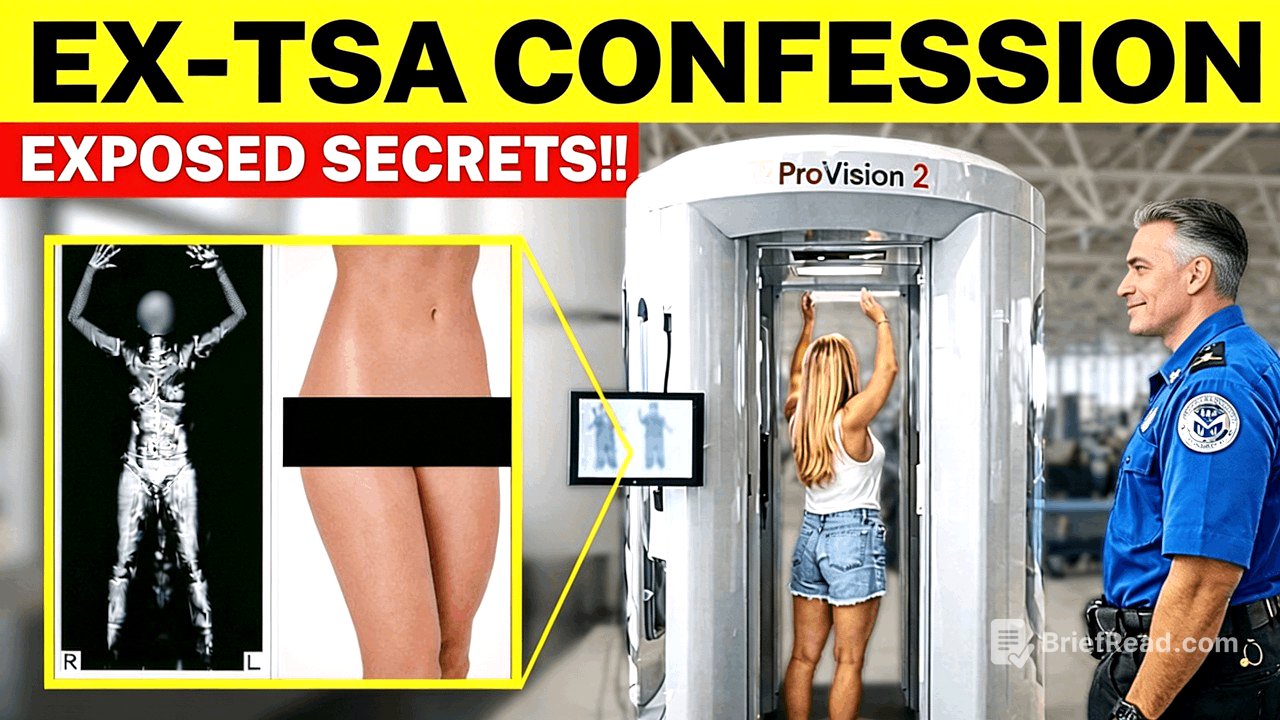
- TSA body scanners use generic avatars, but can detect hidden items.
- Accepting food vouchers can waive rights to cash compensation for flight delays.
- Travelers have the right to opt out of biometric facial recognition.
- Fragile stickers on luggage can make them targets for rough handling.
- Duty-free liquids can be confiscated at connecting airports if they haven't upgraded scanners.
- USB ports in seatbacks can be a security risk for data theft.
- Un-declared food can result in fines and loss of trusted traveler status.
- Currency exchange booths hide profits in the exchange rate spread.
- Ghost seats can become available right before departure.
- The Montreal Convention provides significant compensation for lost luggage.
- Airlines use AI to adjust ticket prices based on your device, search history, and perceived desperation.
- Departure scams target tired travelers with fake services and rigged scales.
The On-Time Deception [0:53]
Airlines manipulate on-time performance statistics by scanning tickets and trapping passengers in the jet bridge, which stops their delay clock. Even if the plane is delayed, the airline's data reflects an on-time departure once passengers are checked in. To avoid discomfort and participate in this manipulation, travelers should board last, preserving their comfort while the airline games its data.
TSA Body Scanner Screens [1:29]
TSA body scanners use millimeter wave technology to create a generic avatar, not an actual image of your body, protecting passenger privacy. The scanner highlights anomalies or suspicious items as yellow boxes on a generic human outline. While agents don't see your actual body or identifying features, the machine can detect hidden items under clothing, including weapons, liquids, and unusual objects.
The Voucher Settlement Trap [2:18]
Airlines often offer digital food vouchers for delayed flights, but these vouchers may contain a settlement clause that waives the passenger's right to statutory cash compensation. Accepting the voucher could mean forfeiting hundreds of dollars in compensation under regulations like EU 261. Travelers should ask the agent if the voucher waives their right to statutory cash compensation to ensure they don't lose their entitlement to cash.
The Biometric Opt-Out [2:53]
Travelers have the legal right to opt out of facial recognition at airport gates and use their physical ID instead. Opting out prevents the airline from building a database with your biometric data for free and reclaims your digital sovereignty in a system that views your face as unpaid labor.
The Fragile Target [3:20]
Putting a fragile sticker on luggage can make it a target for rough handling. Baggage handlers, rushing to move 50 bags a minute, may not have time for the special stacking required for fragile bags. As a result, fragile bags may end up at the bottom of the stack due to spite or speed. Instead of using a sticker, travelers should use a polycarbonate hard shell that can withstand the physical demands of cargo handling.
The Liquid Freedom Lie [3:55]
Some major airport hubs have dropped the 100 ml liquid rule due to new scanners, but this freedom is not universal. If you buy a large bottle of liquids at one airport and connect at another that hasn't upgraded its scanners, security will confiscate the bottle. To avoid this, travelers should only buy duty-free liquids during the final leg of their journey to avoid donating expensive gifts to the airport's confiscation bin.
The Juice Jacking Firewall [4:23]
Plugging your phone directly into the seatback USB port is a security risk because USB ports transfer data and power simultaneously. Juice jacking attacks can compromise your phone and siphon data the moment it handshakes with the system. To protect your data, use a power brick and a wall outlet, creating a physical firewall between your personal data and the aircraft's entertainment system.
The Apple Fine [4:53]
Customs agencies have updated their zero-tolerance policies regarding undeclared food. Taking a free fruit or snack off the plane can result in a biosecurity violation, leading to an instant $500 fine and the loss of Global Entry or Trusted Traveler status. Travelers should leave the food on the plane, as no snack is worth the permanent loss of expedited travel privileges.
The 15% Idiot Tax [5:21]
Currency exchange booths that advertise 0% commission technically tell the truth about the fee, but they hide their profit in the spread, the difference between the real exchange rate and what they sell it to you for. This can result in paying up to a 15% tax for convenience. Instead, travelers should use a bank ATM in the city, as their bank's rate, even with a small fee, will almost always beat the commission-free trap at the gate.
The Ghost Seat Reality [5:53]
When an agent says a flight is full, they are usually referring to the seats currently assigned. Ten minutes before departure, crew rest seats and elite blocks are often released back into the inventory. Once boarded, refresh the airline app's seat map. If an economy plus seat opens up, move into the seat and wait. If the door closes and you are in that seat, it is yours.
The Montreal Convention Leverage [6:24]
If an airline loses your bag, they will offer a small amount for essentials, but you should reject it. Under the Montreal Convention Article 22, the liability limit is significantly higher, often up to $2,000 for reasonable expenses. If your suit or professional gear is in that bag, buy what you need, keep the receipts, and quote the convention.
The Surveillance Tax, the AI Trap [6:58]
Airlines use AI to implement dynamic surveillance pricing, adjusting ticket prices based on your hardware, search history, and perceived desperation. The AI assumes you have more disposable income if you are booking on a high-end MacBook. Checking the same flight multiple times signals desperation, causing the algorithm to raise the price. Even the "only two seats left" warning is often phantom inventory designed to trigger panic. To counter this, use a VPN to change your digital location, swap devices, and understand that incognito mode is outdated.
The Departure Scams, the Human Trap [8:14]
Departure scams target tired travelers with fake services and rigged scales. These scams include fake porters who demand money for short distances, priority sticker scams offering fake priority lane access, and rigged scales at check-in counters. In international halls, thieves may swipe wallets from trays while men and women are separated at the scanner. To avoid these scams, keep your hand on your luggage until you reach the official desk, travel with a digital scale, and keep your valuables inside your carry-on.