TLDR;
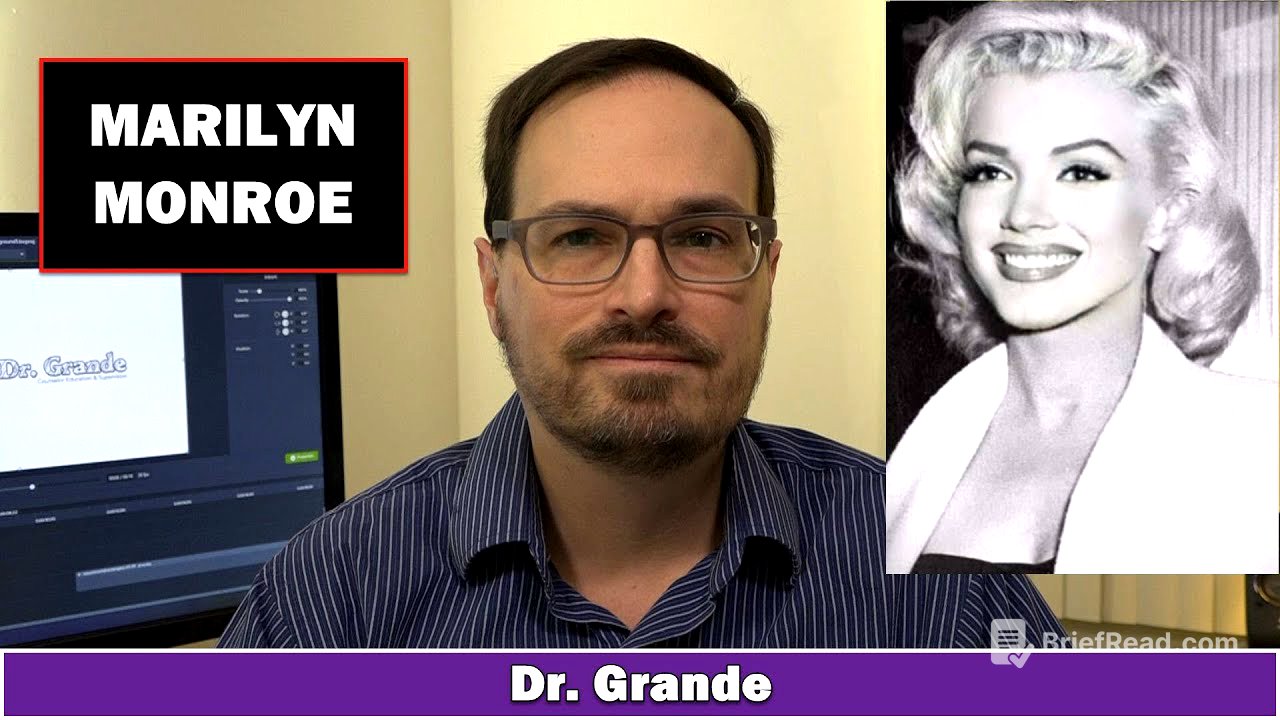
This video analyses the mental health and personality factors potentially influencing the life and death of Marilyn Monroe. It covers her troubled childhood, career struggles, relationships, and battles with mental health and substance abuse. The analysis uses the five-factor model to assess her personality, considers various potential diagnoses, and critiques the approach of her mental health professionals.
- Marilyn Monroe's early life was marked by instability and trauma, including foster homes and abuse.
- She struggled with mental health issues, including insomnia, depression, and possible borderline personality disorder, exacerbated by substance abuse.
- Her mental health professionals may have enabled her substance use and failed to provide adequate care.
Background [0:35]
Marilyn Monroe, born Norma Jeane Mortenson in 1926, had a difficult childhood. Her mother, Gladys Baker, was unable to care for her, leading to Monroe being placed in foster homes and an orphanage. Her father's identity was unknown. She experienced sexual and emotional abuse. Monroe married James Dougherty in 1942, but they divorced in 1946 due to her burgeoning modelling career, which he didn't support.
Career and Relationships [2:01]
Monroe secured a contract with 20th Century Fox and changed her name. Despite early film roles, she faced financial struggles and had relationships with men in the entertainment industry who sometimes aided her career. Her marriage to baseball player Joe DiMaggio in 1952 was unstable due to his dislike of attention, which Monroe craved. Insecure about her acting, Monroe developed on-set problems, but starred in successful films like "Gentlemen Prefer Blondes". Tension with 20th Century Fox arose from their refusal to offer her diverse roles.
Personal Struggles and Therapy [4:13]
Monroe formed her own production company after divorcing DiMaggio in 1954. She struggled with insomnia, using barbiturates, and entered psychoanalytic therapy to address insecurities. She married playwright Arthur Miller in 1956, but faced difficulties during the filming of "Prince and the Showgirl," including lateness and disruptive behaviour. Monroe became increasingly dependent on Miller, suffered miscarriages, and overdosed on barbiturates in 1958.
Escalating Issues and Hospitalisation [6:02]
Moving to Los Angeles, Monroe worked on "Some Like It Hot" and began seeing Dr. Ralph Greenson, who used a psychoanalytic approach. Her alcohol and drug use escalated, and she exhibited disruptive behaviour on set. After another miscarriage, she had an affair during her next film. While filming "Misfits," her unprofessional behaviour caused delays, and she spent a week in detox. Monroe and Miller divorced in 1961, and after "Misfits" failed and Clark Gable died shortly after filming, Monroe blamed herself. She was hospitalised for gallbladder removal, endometriosis treatment, and depressive symptoms, enduring a terrible experience at the Payne Whitney Psychiatric Center.
Final Months and Death [8:14]
In early 1962, Monroe bought a home and was cast in "Something's Got to Give," but her physical illness led to missed time and eventual firing. The studio later rehired her. On August 4, 1962, her housekeeper found her unresponsive in her locked bedroom. Dr. Greenson broke in and found her dead. The cause of death was a barbiturate overdose, ruled as suicide.
Mental Health and Personality Factors [9:56]
Numerous theories surround Monroe's death and mental health, including affairs with the Kennedys and diagnoses of borderline, histrionic, narcissistic personality disorders, bipolar disorder, and schizophrenia. Her official diagnoses included "addictive paranoid borderline personality" and "manic depressive," though these are not recognised diagnoses today. Monroe had a history of trauma, unstable relationships, substance abuse, chronic insomnia, and physical health conditions.
Personality Profile and Potential Diagnoses [12:53]
Using the five-factor model, Monroe had high openness to experience, low conscientiousness, high extroversion, low to mid-level agreeableness, and high neuroticism. Her behaviour aligns with substance use disorder, but her psychiatrists enabled her by over-prescribing substances. While schizophrenia was considered due to her mother's history, there isn't strong evidence. Bipolar disorder is possible, but it's unclear if she had true manic episodes. Cluster B personality disorders, particularly borderline personality disorder, best align with her behaviour, trauma history, and substance use.
Critique of Mental Health Professionals and Final Thoughts [16:54]
Monroe's mental health professionals were irresponsible, possibly contributing to her death by becoming "star-struck" and giving her whatever she wanted. Monroe likely became trapped in a cycle of insomnia, sedative use, and stimulant use to maintain her energy for work. This combination of exhaustion, substance use, and mood regulation problems created a disastrous situation, similar to those of Elvis Presley and Michael Jackson.