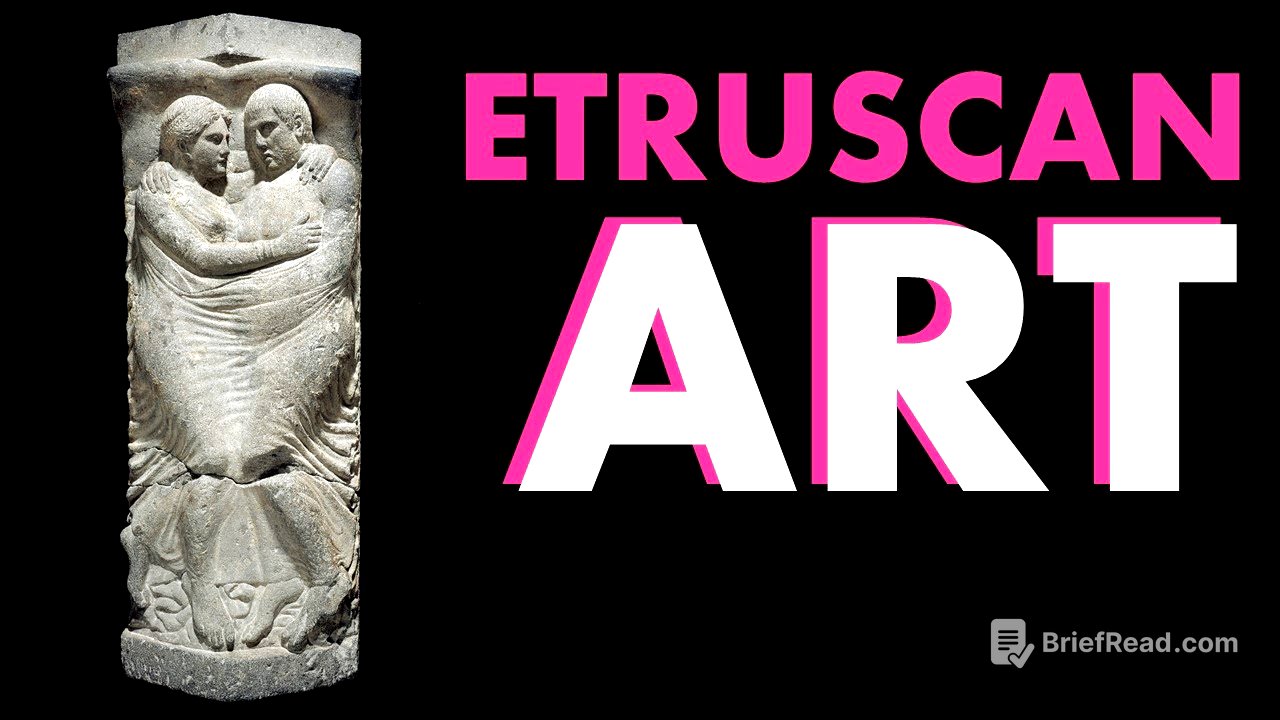
TLDR;
This video provides an overview of Etruscan art and culture, highlighting their influence in the Italian peninsula before the rise of Rome. It covers their wealth from mining, similarities and differences with Greek culture, unique temple designs, burial practices, and advancements in sculpture and metalworking. The lecture also touches on the social dynamics of Etruscan society, particularly the role and freedom of women, and concludes with examples of their later art, showing the transition into Roman styles.
- Etruscans predated and influenced Roman culture.
- Etruscan art shares similarities with Greek art but has distinct characteristics.
- Etruscan society had unique social dynamics, especially regarding women's roles.
Etruscan Origins and Rise to Power [0:00]
The Etruscans dominated the Italian peninsula from the 8th to 6th centuries BC, predating the Romans. Their power stemmed from extensive mining of tin, iron, copper, and silver, leading to a wealth boom by the 7th century and increased demand for art. The Etruscans even controlled Rome for a period, with kings like Tarquinius Priscus ruling the city. The dynasty ended violently, with Tarquinius Superbus overthrown in 509 BC, leading to the establishment of the Roman Republic.
Cultural Similarities and Differences with the Greeks [1:57]
The Etruscans coexisted with the Greek Archaic, Classical, and Hellenistic periods, sharing cultural similarities but also exhibiting significant differences. At their peak, the Etruscans were wealthier and more powerful than the Greek city-states. An example of their artistry is a fibula, a brooch, showcasing orientalizing influences from Mesopotamia, similar to the Ishtar Gates. The fibula was crafted using repoussé and granulation, techniques indicative of a wealthy culture capable of high-quality craftsmanship.
Etruscan Temples and Sculpture [3:51]
Etruscan culture shared religious similarities with the Greeks, but their temples had distinct features. Etruscan temples often featured pitched roofs, columns resembling the Doric style, and statuary on the roof, but they differed by sitting on platforms and lacking a surrounding colonnade. The columns were of the Tuscan style, made of wood, and the temples primarily used wood and terracotta, unlike the marble used by the Greeks. Etruscan sculpture, while sharing archaic features like bulging eyes and smiles with Greek sculpture, used terracotta instead of marble. Etruscan sculptures displayed more movement and naturalism compared to the rigid poses influenced by Egyptian art in Greek archaic sculpture.
Burial Practices and Tombs [8:35]
Etruscan burial practices differed significantly from those of the Greeks, with the Etruscans burying their dead in elaborate tombs, similar to the tholos tombs of Mycenaean culture. These large tombs, some 130 feet in diameter and 50 feet tall, were designed to resemble homes, complete with furniture, kitchens, and decorations. The tombs were carved from tufa, a volcanic rock prevalent in Italy, and decorated with terracotta additions. Frescoes, like those in the Tomb of the Leopards, depicted lively scenes of Etruscan life, showcasing the culture's artistic abilities, which, at the time, surpassed those of the Greeks.
Social Dynamics and Daily Life Depictions [10:39]
Etruscan society differed from Greek society in its treatment of women, who enjoyed more freedom and were often depicted alongside men in social settings. Unlike the segregated lives of Greek men and women, Etruscan women participated in conversations, attended dinners and sporting events, and were honored alongside men. Tombs like the Tomb of the Reliefs displayed detailed carvings of domestic life, including cooking implements and even a house cat, providing insight into the daily lives of the Etruscans.
Etruscan Art: Metalworking and Sculpture [19:53]
The Etruscans were master sculptors and metalworkers, rivaling the Greeks in their advancements. The Capitoline Wolf, a bronze sculpture depicting the mythological founding of Rome, showcases the Etruscan mastery of the lost wax technique and their ability to convey emotion and realism in their art. Other examples, like the Chimera, a creature from Greek mythology, demonstrate their skill in bronze work and attention to detail, combined with stylization. Objects like the cista, a container for women's toiletries, further highlight the wealth and sophistication of Etruscan society.
Late Etruscan Art and Transition to Roman Influence [26:11]
The Etruscans utilized the arch in their architecture, an element that would later become prominent in Roman structures. As Etruscan cities were conquered by the Romans, their art began to reflect Hellenistic influences, with a focus on emotion and sorrow. Sarcophagi from this period depict despondent figures and gruesome scenes of death, reflecting a shift in artistic style. By the time of figures like Aule Metele, a civic leader, Etruscan art had fully transitioned to Roman styles, with dress and hairstyles mirroring Roman fashion.