TLDR;
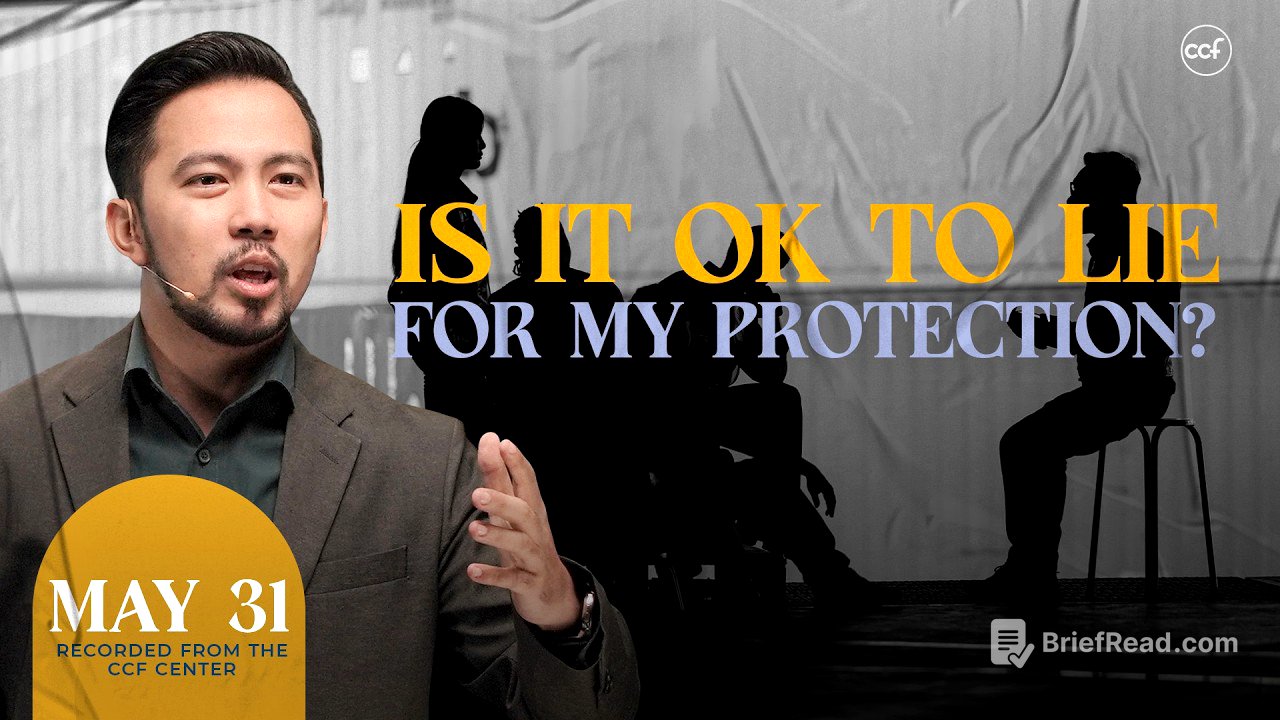
This video explores the ninth commandment, "You shall not bear false witness against your neighbor," discussing its implications beyond simple lying and emphasizing truthfulness as a form of worship. It features a testimony from Megan, who shares her personal journey from habitual lying to finding freedom and truth in Christ. The sermon examines the nature of lies, their consequences, and how to live truthfully in a world of deception, highlighting that truth sets us free, strengthens relationships, and ultimately saves us.
- Lying is more than just a personal failing; it damages communities and relationships.
- Truthfulness is essential for worship and reflecting God's character.
- Overcoming the habit of lying requires embracing one's true identity in Christ and seeking guidance from the Holy Spirit.
Megan's Testimony: From Lies to Truth in Christ [0:54]
Megan shares her personal struggle with lying, which began in her youth due to feelings of inadequacy and a desire for acceptance. She fabricated stories about her family, accomplishments, and background to appear more interesting to others. This behavior escalated to malicious lies intended to harm people, including creating fake online profiles to deceive friends. Megan's life spiraled into unhealthy choices and people-pleasing after experiencing family trauma and loss. Eventually, an invitation to CCF led her to hear Revelation 21:8, which deeply convicted her and prompted a spiritual transformation. She realized that her lying stemmed from a deeper issue of trying to create a lovable version of herself while hiding her perceived flaws. Accepting Jesus as her Lord and Savior, she began a journey of overcoming insecurity and dishonesty through discipleship, learning that her value is based on her identity in Christ, not external validation.
Introduction to the Ninth Commandment [6:43]
The speaker introduces the series on the Ten Commandments, explaining that they guide us in how to worship God and respond to His nature and actions. The first four commandments concern our vertical relationship with God, while the subsequent commandments address our horizontal relationships with others. The focus shifts to the ninth commandment, "You shall not bear false witness against your neighbor," clarifying that it extends beyond mere lying to include any false accusations or fake news that harms others. The speaker uses the example of Pinocchio to illustrate the importance of truthfulness as a mark of being a real person.
Understanding the Commandment [11:01]
The speaker explains key words in the commandment, such as "bear," which means to speak or testify, and "neighbor," which refers to anyone around us. The commandment is not just about avoiding lies but also about actively upholding truth in our interactions with others. Examples are given, such as spreading false rumors about a colleague to get them fired or lying under oath in court (perjury), to illustrate how falsehoods can destroy community and individual lives. The speaker emphasizes that the ninth commandment is a call to defend truth, as a nation without truth has no direction.
The Consequences of Lying [14:31]
The speaker cites Deuteronomy 19, which outlines the severe punishment for bearing false witness, emphasizing that the punishment should match the harm intended by the false testimony. This underscores the importance of truth in the eyes of God's justice. Lying is portrayed as deeply harmful, causing pain to others and even leading people to deceive themselves. The speaker stresses that truth is not a preference but a necessity in scripture, forbidding falsehoods in public and private.
Kinds of Lies and Historical Context [20:04]
The speaker discusses various types of lies, including social or harmless lies (white lies), noble lies, emergency lies, deceptive tactics, bold-faced lies, lies of omission, lies of fabrication, minimization, and lies of exaggeration. The speaker also touches on legal or malicious deception, such as perjury and fraud, particularly in the context of spreading fake news. The speaker references the historical figure who advocated for making lies big, simple, and repetitive to gain belief, citing examples from his book about blaming Jews for Germany's loss in World War I and promoting anti-Semitic conspiracy theories.
Biblical Exceptions and the Importance of Discernment [27:01]
The speaker addresses instances in the Bible where lying seemed to lead to positive outcomes, such as Rahab hiding the Israelite spies and the Hebrew midwives deceiving Pharaoh. The speaker clarifies that lying in any form is a sin, but in cases where it protects lives, especially God's people, God's grace abounds. The speaker emphasizes that this does not justify lying but calls for guidance from the Holy Spirit and discernment in deciding when to speak or remain silent, always seeking to honor God.
Truth Sets Us Free [32:29]
The speaker emphasizes that truth sets us free, contrasting the limited and fearful life created by lies with the freedom found in truth. Drawing from John 8:31-33, the speaker explains that those who continue in Jesus' word will know the truth, and the truth will set them free. The speaker highlights that sin, including lying, enslaves us, but Jesus can liberate us from this bondage. The speaker references Genesis 3, where the serpent's lies led to the fall of humanity, illustrating how lies destroy lives and relationships.
Truth Strengthens Relationships [44:56]
The speaker asserts that truth strengthens relationships, emphasizing the importance of honesty in building strong connections. Quoting Ephesians, the speaker encourages speaking the truth in love, noting that the culture in Ephesus was rife with fake news and deceit. Speaking truth in love is essential for the growth and building up of the body of Christ. The speaker warns against participating in unfruitful deeds of darkness, such as gossip and spreading false information, which can destroy lives.
Truth Saves [1:00:02]
The speaker concludes by stating that truth saves, emphasizing that while people may fear the consequences of telling the truth, it ultimately leads to salvation. The speaker quotes Jesus from John 14:6, "I am the way, the truth, and the life," highlighting that the only way to stay truthful is to stick with Jesus. The speaker references John 10:7-9, where Jesus describes Himself as the door of the sheep, through whom one can be saved. The speaker contrasts the enemy's desire to steal, kill, and destroy with Jesus' promise of abundant life.
The Ultimate Example of False Witness: Jesus Christ [1:03:56]
The speaker shares the story of Richard Jewel, who was initially hailed as a hero for discovering a bomb at the 1996 Atlanta Olympics but later falsely accused of planting it, to illustrate how lies can destroy lives. The speaker emphasizes that the ninth commandment is not minor and that our words can have devastating consequences. The speaker points to Jesus Christ as the ultimate victim of fake news and false witnesses, highlighting how false testimonies led to His suffering and crucifixion. Despite this, Jesus' resurrection vindicated the truth. The speaker encourages listeners to choose to believe the voice of truth in Christ, who offers hope, redemption, and a new life, even when faced with lies and accusations.
Past Track Q&A [1:17:03]
In a Q&A segment, Pastor Paul addresses questions about the impact of lies on relationships, recognizing a fake version of oneself, and the pressures that lead to lying. He emphasizes that even seemingly small lies can erode relationships over time and that embracing one's true identity in Christ is essential for freedom. He notes that lying often stems from selfishness and fear of the consequences of truth, advising listeners to seek God's guidance in their thoughts, words, and actions to avoid these pitfalls.