TLDR;
This video covers the nutritional value, composition, and preparation methods of meat, fish, and poultry. Key points include:
- Meat is defined primarily as skeletal muscle from warm-blooded animals, with a focus on red meat versus white meat and the health implications of each.
- Fish and its classification based on fin structure and shell types, along with the cooking and preservation methods.
- Poultry definitions and classifications, processing steps, and storage methods.
Introduction to Meat, Fish and Poultry [0:16]
The session on meat, fish, and poultry introduces their nutritive values and impacts on diet. By the end, students should be able to interpret the nutrient content and understand preparation methods.
Understanding Meat [0:56]
Meat is described as the muscle of warm-blooded, four-legged animals, including cattle, sheep, and pigs, including by-products like organs. Red meat refers to mutton, goat, pork, beef, and rabbit meat, containing myoglobin which gives it a reddish colour. Health guidelines suggest white meat is preferable due to lower health risks associated with heart and cholesterol issues. The classification of meat includes details on different ages of meat types, organ meats, and products such as sausages.
Nutritional Composition of Meat [4:33]
The nutritional value of meat includes proteins, fats, carbohydrates, vitamins, and minerals. Meat contributes significantly to protein in the diet, with lean meat having a higher protein percentage. Fat content varies significantly, along with cholesterol levels, leading to recommendations for moderate consumption due to health concerns. Important nutrients found in meat include calcium, iron, zinc, and B vitamins.
Post-mortem Changes in Meat: Rigor Mortis [7:56]
Rigor mortis, the stiffening of muscles after death, results from the absence of ATP, leading to a permanent link between actin and myosin. This process is observed over 24 to 48 hours in beef and marks significant biochemical changes in meat immediately post-slaughter.
Meat Aging Process [9:27]
Post rigor mortis, aging occurs when meat becomes tender after a few days. This process, carried out at low temperatures for 1 to 4 weeks, enhances flavour and juiciness due to the breakdown of connective tissues.
Tenderization Methods [11:01]
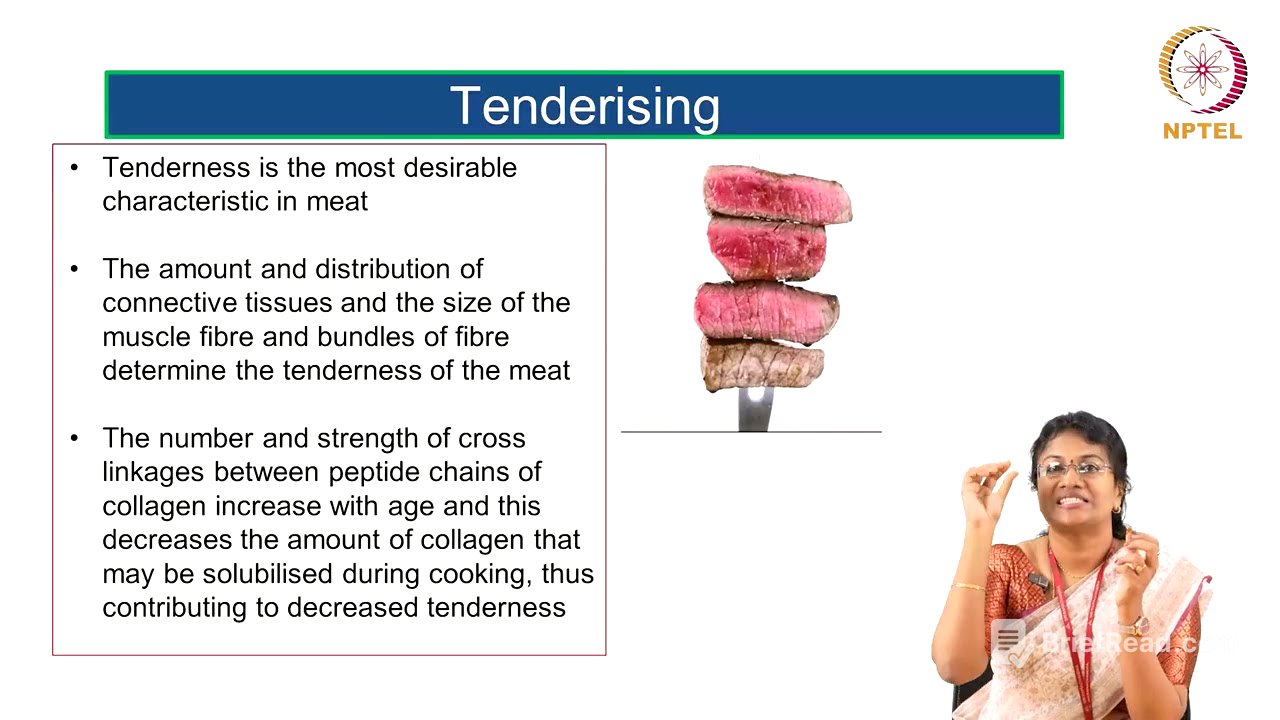
Tenderness is crucial for meat quality, influenced by connective tissue and muscle fibre size. The aging process can decrease tenderness, and various methods, such as mechanical processes or the use of enzymes from papaya leaves, are employed to tenderize meat.
Curing Process [13:34]
Curing modifies meat to enhance preservation, flavour, colour, and tenderness. Curing agents such as salt, sodium nitrate, nitrite, and sugar are used, each serving specific roles in flavour enhancement and prevention of microbial growth.
Grading Meat [16:49]
Meat quality is evaluated based on maturity and marbling—distribution and amount of fat within lean meat. Both factors directly influence the texture, firmness, and colour of the meat.
Meat Cookery [18:14]
Various factors affect the cooking quality of meat, including the treatment of the live animal and the cooking methods used. Different meat types have specific internal temperature requirements for being considered well done.
Introduction to Fish [19:52]
India's extensive coastline supports a variety of fish, both fresh and dried. Fish classification is divided into fin and shellfish, with discussions on nutritional values and cooking methods for optimum flavour.
Fish Cookery and Preservation [21:22]
Fish should be cooked at moderate temperatures to develop flavours and coagulate proteins. Cooking methods include dry heat, moist cooking, and chill preservation techniques to maintain freshness.
Introduction to Poultry [23:00]
Poultry includes domesticated birds like chickens, ducks, and turkeys, which are classified by age and purpose. Broilers, roosters, and stewing chickens are discussed in terms of age and processing categories.
Poultry Processing and Preservation [24:12]
Poultry processing involves numerous steps from slaughtering to defeathering and internal organ removal. Preservation methods for poultry include canning, dehydration, chilling, and freezing to ensure quality and safety.
Conclusion [25:54]
The session concludes with a recap of topics covered: the intricacies of meat, fish, and poultry, including nutritional values and various preparation techniques. Students are reminded to engage with upcoming content related to spices, condiments, and fruits and vegetables.