TLDR;
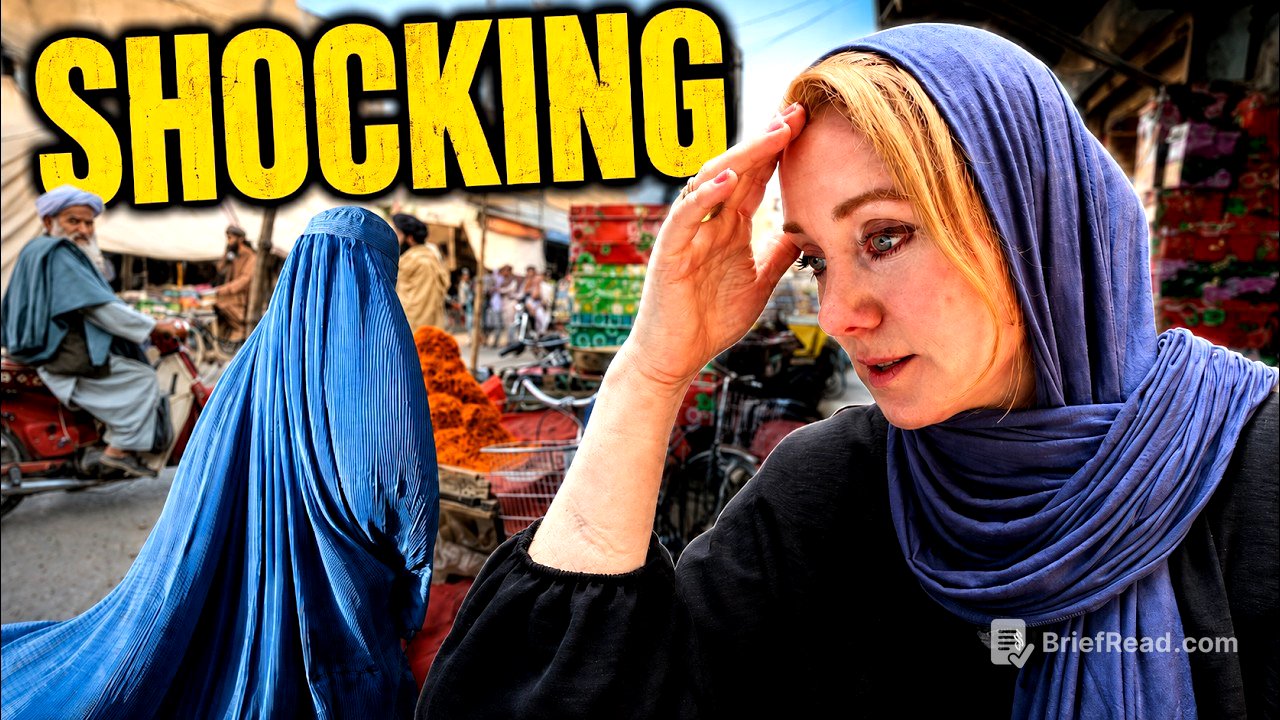
The video highlights the challenges faced by women in Afghanistan under a highly gender-segregated society, focusing on personal experiences and interviews that reveal their struggles. It emphasizes the impact of international policies on Afghan women, particularly regarding education and freedom.
- Women in Afghanistan face severe restrictions, including being barred from education and public spaces.
- International response to their situation is critical, yet policies from countries like the UK hinder Afghan women’s access to education.
Visiting a beauty shop in Kabul, Afghanistan, where beauty salons are closed [0:37]
The video begins with a search for face cream in Kabul, where beauty salons are closed due to Taliban regulations. The host visits a beauty shop, Belavita, which remains open to sell beauty products. During the visit, it is noted that women working in the shop had previously been medical students but were barred from practicing medicine. This situation offers a glimpse into the broader challenges facing Afghan women, indicating a growing health crisis as fewer female doctors enter the field.
How do Afghans get married in a gender segregated society in Afghanistan [3:40]
The host interviews a man named Rahmat about the marriage customs in Afghanistan. He explains that, during weddings, men and women are kept apart, with guests having to separate upon arrival. The groom and bride enter together but must split into different sections. Rahmat humorously demonstrates the entrance while discussing how the women celebrate and dance away from the male guests, highlighting the distinct cultural practices that illustrate gender segregation at social events.
Visiting a women's market in Kabul to see what Afghan women are wearing [7:40]
The host visits Lise Mariam market in Kabul to observe Afghan women's attire in public. While women's visibility is low in some areas, Kabul shows more diversity in clothing styles, including various dresses and hijabs. However, the host also notes that the situation can quickly change, as women in other regions face arrests over hijab rules, suggesting a tightening of restrictions. This observation sets the stage for a discussion on the misconceptions regarding freedom in urban versus rural Afghanistan.
Local Afghan women are banned from parks, but international women can go [8:43]
The video discusses the restrictions Afghan women face accessing public spaces, particularly parks. The host learns that local women are banned from entering parks while foreigners are allowed access. This leaves a stark contrast in experiences based on nationality and highlights ongoing gender-based discrimination. The explanation of park access underscores the Taliban's assertion of needing to "protect" women while allowing foreign women to enjoy freedoms denied to locals.
I visit a local doctor surgery in Kabul and speak to female doctors [10:54]
In a local clinic, the host converses with female doctors and learns about the critical lack of new female medical professionals entering the field. The doctors reveal that they are among the last generation of female doctors and express concern over what will happen as they retire. The alarming situation emphasizes the impending healthcare crisis in Afghanistan, where women may lack access to female healthcare providers due to educational bans imposed by the Taliban.
How do Afghans eat out in a gender segregated restaurant [12:16]
The host visits a gender-segregated restaurant where distinct areas are allocated for men and women. The restaurant allows families to sit together in a designated area, while men gather in an open section. Through this experience, the host notes how public dining reflects larger cultural norms around gender separation and the evolution of restaurant dining culture amidst these strict regulations.
I meet a female Afghan medical student banned from university [14:05]
The host meets a female medical student who shares her aspirations to specialize in gynecology but is banned from continuing her education. She describes the suffocating environment that limits women’s opportunities for personal development and discourages them from pursuing careers. Her testimony encapsulates the frustrations many women face under the current regime, painting a bleak picture of the future and fewer prospects for Afghan women.
Afghan women feel shut off by the international community [15:20]
The video highlights how Afghan women feel increasingly isolated from the international community. Their lack of access to education and support creates a sense of despair as they search for means to improve their living conditions. The documentary emphasizes how global policy decisions impact the lives of Afghan women, often without their input or understanding of consequences.
The British Governments new rules are preventing Afghan women from accessing university [15:53]
The host discusses new British government policies that ban Afghan students, including women, from entering the UK for education. This policy was introduced in response to concerns around asylum claims but has far-reaching effects on women striving for academic excellence in Afghanistan. It highlights the complexities of immigration politics and the resultant consequences for individuals seeking education.
Visiting oxford university to find out about the impact of the UK visa brake on Afghan students [16:19]
The host travels to Oxford University to uncover the impact of the UK's visa restrictions on Afghan students. She meets with Yama Mujadidi, who explains the significance of education and how many Afghan students, particularly women, had secured places but are now unable to attend due to the ban. Yama emphasizes the societal loss resulting from not allowing these students access to education.
Meeting Yama Mujadidi, Director at Oxford University about Afghan women's rights [16:59]
During their conversation, Yama Mujadidi describes the deep emotional impact of the UK’s policies on Afghan students, highlighting the disappointment of those who had hoped for educational opportunities. He underscores the importance of advocacy for Afghan women's rights and suggests that societal support is necessary for substantial change to occur.
How can you support Afghan women? Find out here [19:36]
The video concludes by encouraging viewers to take action to support Afghan women. The host emphasizes the need for signatures on petitions aimed at changing UK policies and providing Afghan women with the opportunity to pursue education. She invites viewers to engage and help amplify the voices of Afghan women facing challenges under the current regime.