
TLDR;
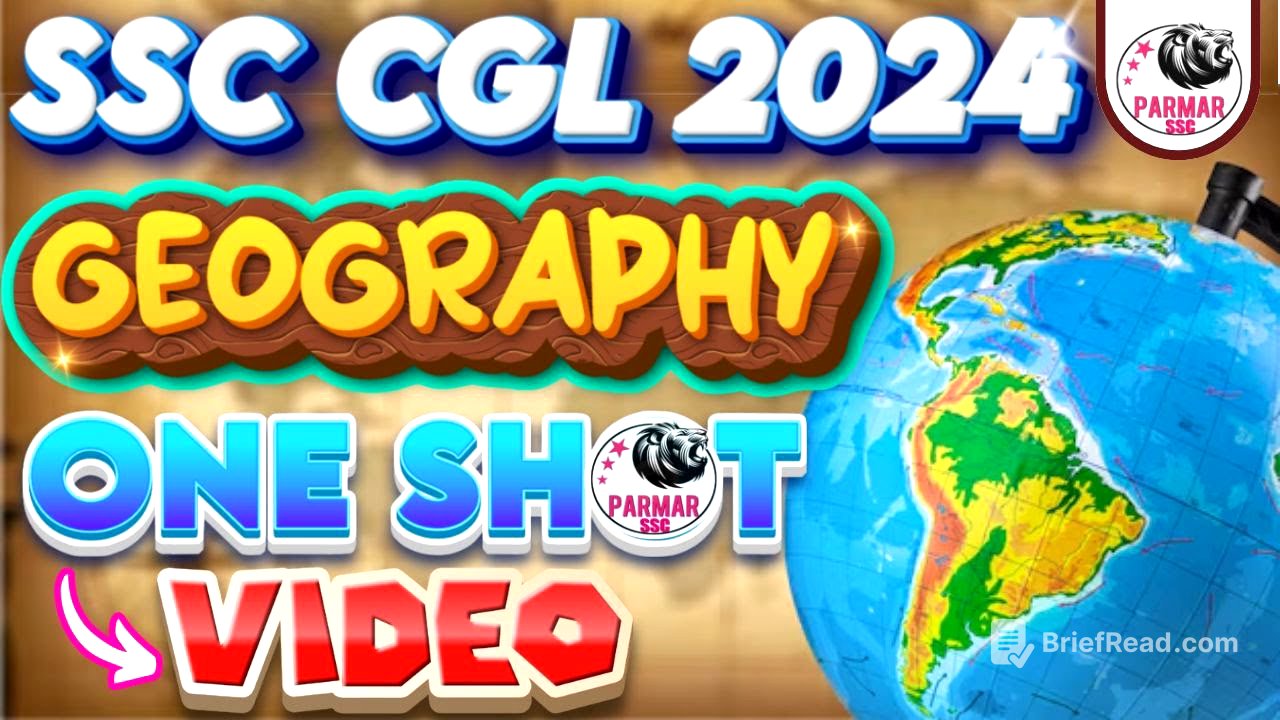
The video covers a comprehensive one-shot lecture on Geography, touching on various topics, including World and Indian geography, the formation of the universe, the structure of the solar system, important geographical theories, and various concepts in mapping and earth science.
- Discusses Big Bang Theory and the evolution of the solar system.
- Explains the distinction between world geography and Indian geography, highlighting latitude, longitude, and time zones.
- Describes different types of celestial bodies such as stars, planets, and galaxies.
- Shares details about the structure of the Earth and geological concepts, including tectonic plates and mountain formation.
- Covers the concepts of climatic classification and different forest types present in India.
- Ends with a discussion of river systems in India, geographical divisions, and significant water bodies.
Introduction and Overview [0:00]
The lecture begins with a greeting and an outline for the session focused on Geography. It suggests that participants take the session in a single go for effective revision, laying the foundation for the topics to be covered.
Formation of the Universe [3:19]
Explains the Big Bang Theory, which theorizes that the universe originated from a singular event leading to the formation of galaxies and solar systems. Introduces George Lamaitre as the proponent and touches upon the Steady State Theory proposed by Fred Hoyle.
Understanding World Geography [5:42]
Details concepts related to latitude and longitude, including the Tropic of Cancer and signifying Indian Standard Time. It highlights the importance of understanding these geographic concepts for deciphering geographical coordinates and time calculation.
Cosmic Concepts and Celestial Bodies [10:03]
Addresses constellations, their significance, and characteristics. Notably discusses Orion and Ursa Major, explaining the mythology and visual shapes attributed to them. Explains the significance of the brightest stars within these constellations.
Structure of the Earth [14:55]
Describes the Earth's composition in terms of its layering – crust, mantle, and core. Discusses geological phenomena like volcanic activity and earthquakes, outlining how they shape the landscape and contribute to mountain formation.
Geographical Regions and Climate [22:40]
Examines the climatic zones based on understanding latitude, altitude, and ocean currents, introducing the concept of climatic classification into tropical, temperate, and polar zones. Emphasizes the different factors affecting climate patterns, including geography and seasonal changes.
Indian Geography and River Systems [39:45]
Discusses the distinct topographical features of India, focusing on its rivers - both Himalayan and Peninsular. Elaborates on major river systems like the Indus, Ganga, and Brahmaputra, highlighting their tributaries and origins.
The Forest Zones of India [54:40]
Provides an overview of the major forest types in India, including evergreen, deciduous, and coniferous forests. Discusses their geographical distribution, physical characteristics, and ecological significance.
Geographical Changes and Human Impact [1:07:50]
Reviews the impact of human activity on geography, addressing concepts like shifting cultivation, land use changes, and the resultant effects on soil quality and climate resilience in different regions of India.
The Impact of Water Bodies in Geography [1:20:51]
Closes with a discussion on the major water bodies, lakes, and wetlands in India, alongside their relevance to the geographical narrative, indicating the importance of conservation and environmental awareness among audiences.





![[LIVE] Nebius Group (NBIS) Q2 Earnings Report & Conference Call](https://wm-img.halpindev.com/p-briefread_c-10_b-10/urlb/aHR0cDovL2ltZy55b3V0dWJlLmNvbS92aS90dm9oT1ZtaWxYby9ocWRlZmF1bHQuanBn.jpg)