TLDR;
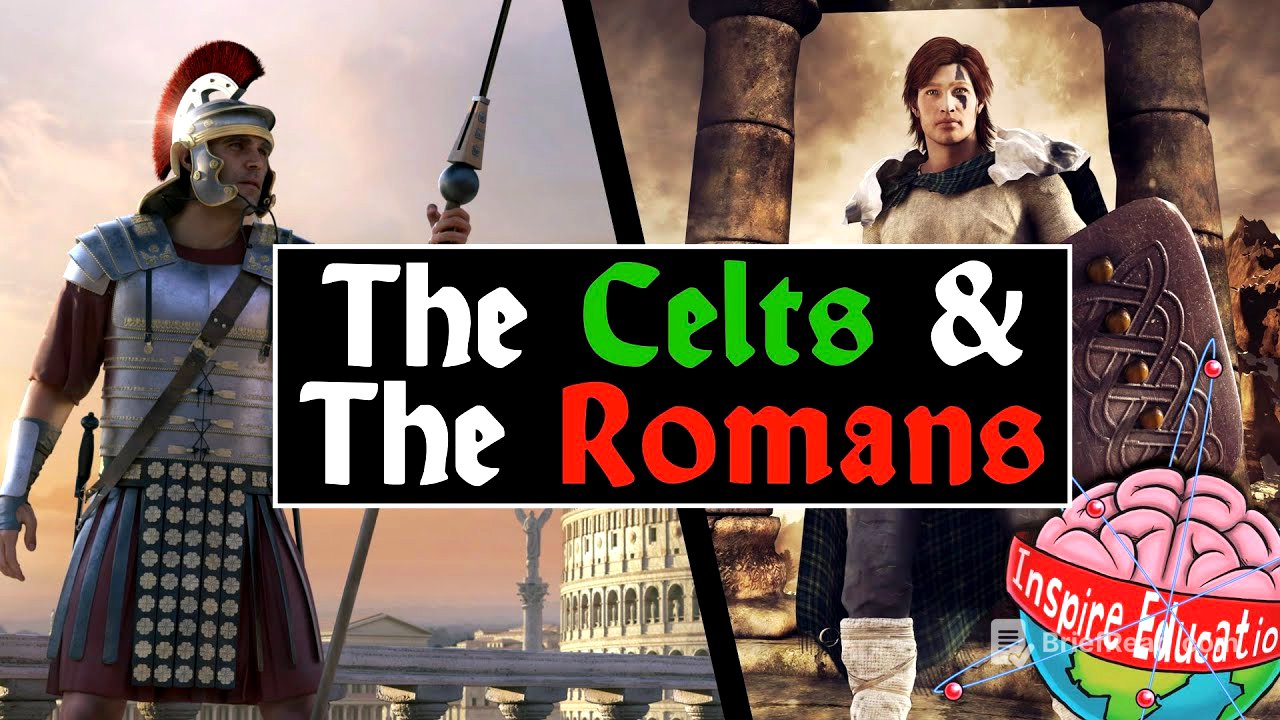
This video explores the similarities and differences between the Romans and Celts in ancient Britain, covering aspects of their culture, society, and daily life. It examines entertainment, language, art, warfare, armour, diet, religion, urban development, housing, social structures, clothing, and jewellery, highlighting how these two groups coexisted and influenced each other.
- Both cultures valued entertainment, though their forms differed.
- War was central to both societies, but their approaches to it varied.
- Religion played a significant role, with both groups initially practicing polytheism before the spread of Christianity.
Intro [0:00]
The video introduces the coexistence of Romans and Celts in Britain following the Roman invasion in 43 A.D. While some Celts adopted Roman culture, religion, and traditions, many continued their traditional way of life. For many years, Romans and Celts lived side by side, leading to both cultural exchange and distinct differences. The video aims to explore these similarities and differences.
Entertainment [0:38]
Both Celts and Romans enjoyed entertainment. Celts favoured singing songs and telling stories. Roman entertainment was more extravagant, including chariot races and gladiatorial fights.
Language [0:52]
The Romans spoke Latin, while the Celts spoke Old Celtic. This linguistic difference marked a clear distinction between the two cultures.
Art [0:57]
Art was popular among both Romans and Celts. Celtic art was characterised by intricate patterns, especially swirly lines and knots. Roman art was famous for mosaics, sculptures, and paintings.
War [1:11]
The Celts, who had inhabited Britain since the Iron Age, fiercely defended their land, viewing war as a necessary part of life. The Romans were also frequently at war, expanding their empire through invasion and conquest. Both cultures valued fighting skills and leadership in war. Both used chariots, but Celts fought as individuals, while Romans emphasised teamwork.
Armour [1:48]
Roman soldiers wore uniforms with heavy metal armour and rectangular wooden shields. Celtic warriors went into battle wearing blue body paint, with leather armour and round shields.
Food [2:03]
The Celtic diet mainly consisted of broth, a watery soup with vegetables, grains, and legumes, along with fish. The Romans consumed a wide variety of foods, many imported from other countries, including delicacies like poached snails and cow udders.
Religion [2:26]
Both Romans and Celts initially believed in many gods and offered sacrifices. Romans offered coins and statues, while Celts sacrificed food, objects, and even people. The Romans adopted Christianity in AD 313, and many Celts also converted, at least for a time.
Cities [2:48]
Celts preferred rural village life with winding dirt tracks. Romans built large cities with advanced infrastructure. Roman engineers constructed viaducts to transport water, and some Roman houses had heating. Many cities featured public baths and sewer systems. Roman roads were straight, paved with stone, and connected cities.
Houses [3:15]
Roman houses were rectangular, made of stone bricks with red tile roofs, windows, and stone gates. Wealthy Romans built houses around courtyards with many rooms, some featuring mosaic floors. Celtic houses were round, made of straw, mud, and horse manure, with timber walls and thatched roofs. The ground floors were bare or covered with animal skins.
Daily life [3:45]
Celtic tribes lived and worked together in small settlements, each with its own leader, laws, and customs. Roman citizens took pride in being part of one nation with one emperor, where the same laws applied throughout the empire. Both Roman and Celtic societies used slaves and forced labour, with people having specific jobs based on their skills.
Clothes [4:13]
Both Romans and Celts wore woollen clothes. Celts dyed their clothes in bright colours, while Romans preferred plain colours. Celtic men wore trousers, and women wore long dresses. Roman men and women wore togas.
Jewellery [4:29]
Both Romans and Celts enjoyed wearing jewellery. Brooches, hairpins, and belt buckles were practical, while necklaces and earrings were decorative and indicated a person's status. Celtic women wore small patterned earrings, while Roman women wore long, dangling earrings.