TLDR;
This video by Nanita Krishnan discusses food spoilage and preservation, focusing on the causes, types, and principles of food preservation techniques. Key points include:
- Food spoilage can occur due to enzymatic, chemical, and microbiological processes.
- Preservation methods aim to delay spoilage by preventing microorganism growth and chemical reactions.
Introduction to Food Spoilage [0:00]
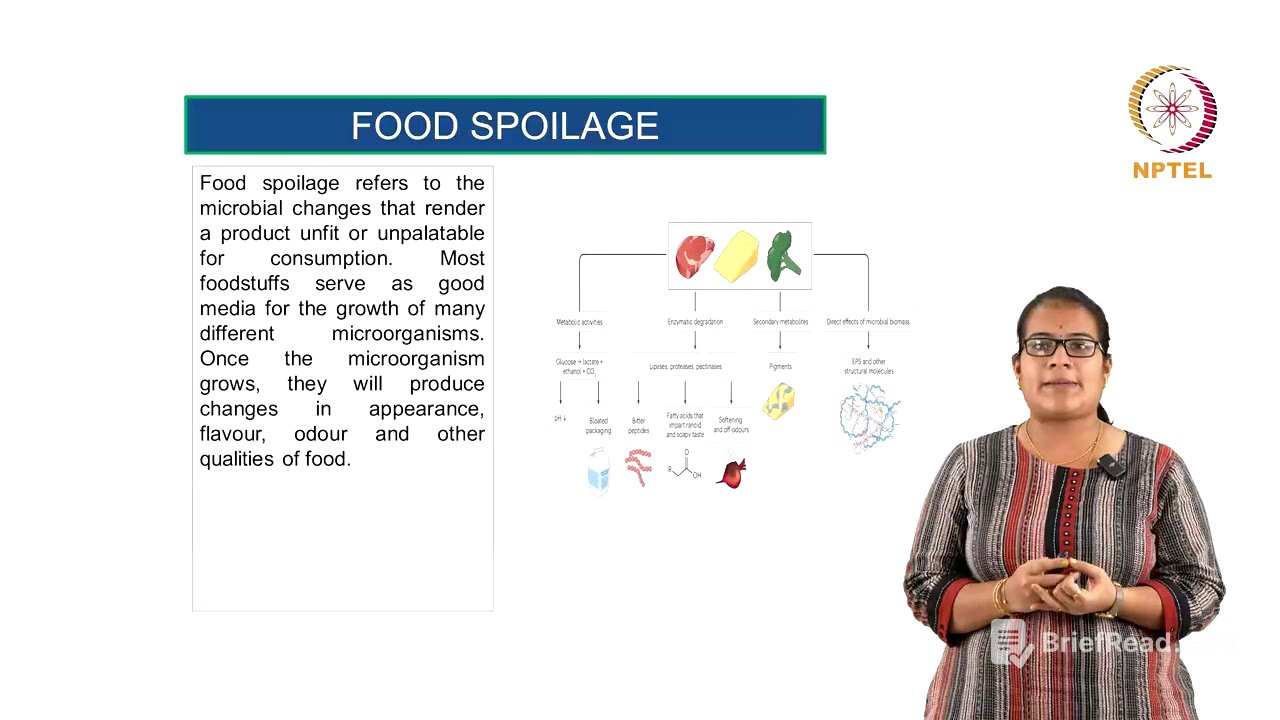
Nanita Krishnan, a lecturer in clinical nutrition, introduces the topic of food spoilage and preservation. Food spoilage is described as the deterioration of food texture, palatability, and nutritional value, primarily caused by microorganisms. The video aims to explain the causes and prevention methods of food spoilage, interpret its types, and outline preservation principles.
Types of Food Contamination [1:38]
Contamination of food occurs in two forms: natural and artificial. Natural contamination involves insects that introduce microorganisms, while artificial contamination is linked to environmental factors such as industrial waste and chemicals. These contaminations can render food unsafe for consumption.
Enzymatic Changes in Food [2:18]
Food undergoes various chemical changes after harvesting, which may be desirable, such as meat tenderising. However, microbial growth leads to undesirable spoilage. Enzymatic processes, such as proteolysis and starch breakdown, can result in food degradation through enzymes like ascorbic acid oxidase, lipase, and pectic enzymes found in different food sources.
Chemical Reactions and Microbiological Processes [4:55]
Chemical reactions in food, such as oxidation caused by environmental factors, produce rancid odours, particularly in fats and oils. Microbiological processes occur when food is contaminated by microorganisms, leading to changes in its appearance, flavor, and nutritional value. For instance, yeast can cause bread to spoil.
Degradation Processes in Foods [6:56]
Food spoilage processes include putrefaction, fermentation, and rancidity. Putrefaction affects protein foods through microbial degradation, while fermentation impacts carbohydrate foods, resulting in gas production and changes in flavour. Rancidity affects fatty foods due to the activities of lipolytic microbes, leading to the production of undesirable odours.
Nutrients and Microbial Growth in Food [8:45]
Different food groups contain nutrients that facilitate microbial growth. Dairy products support protein degradation; meat and poultry experience fatty acid oxidation; seafood has amino acid breakdown, and plant foods undergo carbohydrate fermentation. These microbial developments can lead to food being unsafe for consumption and associated health risks.
Microbial Presence in Foods [10:17]
Microorganisms like yeast, bacteria, molds, and fungi are naturally present in foods, thriving in specific conditions. Yeast is found in high-sugar foods, bacteria in low-acid foods, molds in high-acid foods, and fungi in foods with high moisture content, contributing to spoilage.
Food Preservation Techniques [10:46]
Food preservation techniques are essential to prevent spoilage by controlling microbial growth and the oxidation of fats. Various methods include maintaining an aseptic environment, removing microorganisms, and employing heat treatment or radiation. Chemical reactions can be delayed using antioxidants, and enzyme activity can be inactivated through techniques like blanching.
Principles of Food Preservation [11:31]
The principles of food preservation focus on preventing microbial decomposition and inactivation of food enzymes. These include maintaining low temperatures, drying, and using chemicals to hinder microbial growth. Food preservation is vital for ensuring food safety and maintaining its quality over time.
Key Takeaways [13:44]
The unit summarises the causes of food spoilage, including enzymatic processes, chemical reactions, and microbiological activities. It discusses how food sources undergo putrefaction, fermentation, and rancidity. Additionally, it highlights principles of food preservation aimed at deactivating microorganisms and preventing spoilage through various methods and antioxidants.