TLDR;
This video provides a summary of Alessandro Manzoni's "The Betrothed" ("I promessi sposi"), a significant work in Italian literature. The story, set in 17th-century Italy under Spanish rule, follows the trials and tribulations of two lovers, Renzo and Lucia, as they navigate obstacles created by a local baron and the societal injustices of the time. The video explores the key plot points, characters, and themes of the novel, highlighting its enduring relevance and impact on Italian culture.
- The novel explores themes of love, power, evil, injustice, hypocrisy, heroism, and fatalism.
- It is set in 17th-century Italy under Spanish rule, focusing on the lives of peasants.
- The story follows Renzo and Lucia, whose wedding plans are thwarted by the local baron, Don Rodrigo.
Wedding [0:00]
The video introduces "The Betrothed" ("I promessi sposi"), a renowned Italian novel by Alessandro Manzoni, published between 1827 and 1842. Set in 1628, during Spanish rule in Italy, the story revolves around Renzo and Lucia, two lovers residing near Lake Como, who are planning their wedding. However, their plans are disrupted when Don Abbondio, the local priest, is intimidated by thugs acting on behalf of Don Rodrigo, a local baron who desires Lucia.
Rival [1:00]
Don Abbondio postpones the wedding, much to Renzo's dismay. Renzo discovers that Don Rodrigo is also interested in Lucia. Agnese, Lucia's mother, advises Renzo to seek legal counsel from Dr. Azzeccagarbugli, a lawyer in Lecco. The lawyer initially acknowledges that threats against marriages are illegal, but upon learning of Don Rodrigo's involvement, he refuses to help Renzo. Lucia then seeks assistance from Friar Cristoforo, who confronts Don Rodrigo at his mansion, but Don Rodrigo dismisses him.
New plans [2:40]
Agnese suggests that Renzo and Lucia declare themselves married before a priest and two witnesses. Renzo enlists his friend Tonio for assistance. Don Rodrigo's men, disguised as beggars, visit Lucia and Agnese's house to gather information for a future plan. That night, Agnese, Tonio, and his brother Gervaso distract Don Abbondio's servant, Perpetua, allowing Renzo and Lucia to sneak in. The priest drops the lamp, and a struggle ensues in the dark. Don Rodrigo's men return to find the house empty.
Gertrude [4:00]
Menico, a boy sent by Friar Cristoforo, warns Agnese, Lucia, and Renzo not to return home, and they head to the monastery. Friar Cristoforo provides Renzo with letters of introduction to a friar in Milan and to arrange accommodation in Monza. Lucia is entrusted to the care of Gertrude, a nun from a prominent family who was forced into the convent by her father. Gertrude, known as "la Signora," has an affair with Egidio, an associate of the Unnamed, and they murder a nun who discovers their relationship.
Scandal & unrest [5:00]
Renzo, unable to find the friar in Milan, wanders through the famine-stricken city. A mob attacks a bakery and attempts to lynch a governor, who is saved by Ferrer, the Grand Chancellor. Renzo assists Ferrer and becomes involved in a discussion that attracts the attention of a police agent. The agent attempts to lead Renzo to prison, but Renzo stops at an inn, where he reveals his identity after drinking.
Escape [6:40]
In the morning, Renzo is arrested but escapes with the help of a sympathetic crowd. He flees to Bergamo, part of the Venetian Republic, to seek refuge with his cousin Bortolo. At an inn in Gorgonzola, Renzo realises the extent of his trouble and travels at night to avoid detection, eventually crossing the River Adda.
The Unnamed [7:30]
Reaching his cousin's house, Renzo is met by Antonio Rivolta. News of Renzo's situation reaches the convent, and Lucia is relieved to learn he is safe. Agnese learns that Friar Cristoforo has been summoned to Rimini due to a plot orchestrated by Don Rodrigo and Count Attilio. Don Rodrigo, aided by the Unnamed, plans to kidnap Lucia from the convent. Gertrude, blackmailed by Egidio, sends Lucia outside the convent, where she is abducted and imprisoned at the Unnamed's castle.
A new path [8:30]
The Unnamed is troubled by Lucia's presence, which evokes painful memories. Lucia decides to renounce Renzo if she is saved. People pass by the Unnamed's house to hear Archbishop Cardinal Federigo Borromeo. The Unnamed meets Cardinal Federigo Borromeo and undergoes a dramatic change, ending his reign of terror and returning Lucia home under his protection.
Plague [10:00]
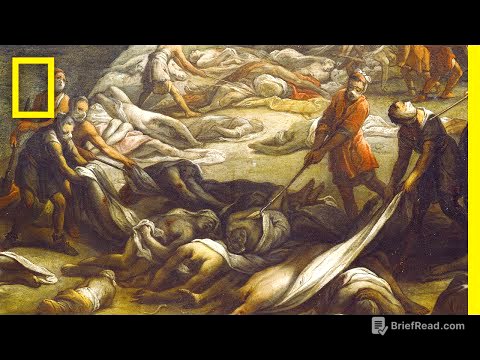
Don Rodrigo is stunned by the Unnamed's defiance, weakening his position. Don Abbondio is reprimanded by the archbishop. Lucia worries about Renzo, who is now a subject of diplomatic conflict. Donna Prassede, a wealthy woman, takes Lucia into her household and disparages Renzo. The Thirty Years' War exacerbates the population's misery. War rages across northern Italy, and Milan is overwhelmed by beggars and the sick. German armies attack Italy, causing looting and destruction. Agnese, Don Abbondio, and Perpetua flee to the Unnamed's territory, while their village is sacked by mercenaries. The plague of 1630 devastates Milan.
Forgiveness [10:45]
Renzo, recovering from the plague, returns to Lecco to find devastation. The warrant for his arrest and Don Rodrigo are forgotten. He learns Lucia is in Milan. Renzo is shocked by Milan's condition, and his clothing raises suspicion that he is a foreign agent spreading the plague. He discovers Lucia is at the Lazzaretto of Milan, recovering from the plague. Friar Cristoforo reunites Renzo and Lucia after Renzo forgives the ailing Don Rodrigo. The friar absolves Lucia of her vow of celibacy.
Summary [11:30]
Agnese, Lucia, and Renzo return to Lecco, where the couple are eventually married by Don Abbondio. They start a new life in Bergamo. "The Betrothed" is a widely read Italian novel, considered a masterpiece of Italian literature. The book explores themes of love, power, evil, injustice, hypocrisy, heroism, and fatalism. Manzoni leaves the reader to draw their own conclusions. The novel has similarities to Walter Scott's "Ivanhoe." Manzoni initially wrote in Florentine dialect but later removed regional variations. "I Promessi Sposi" has been adapted into operas and films.