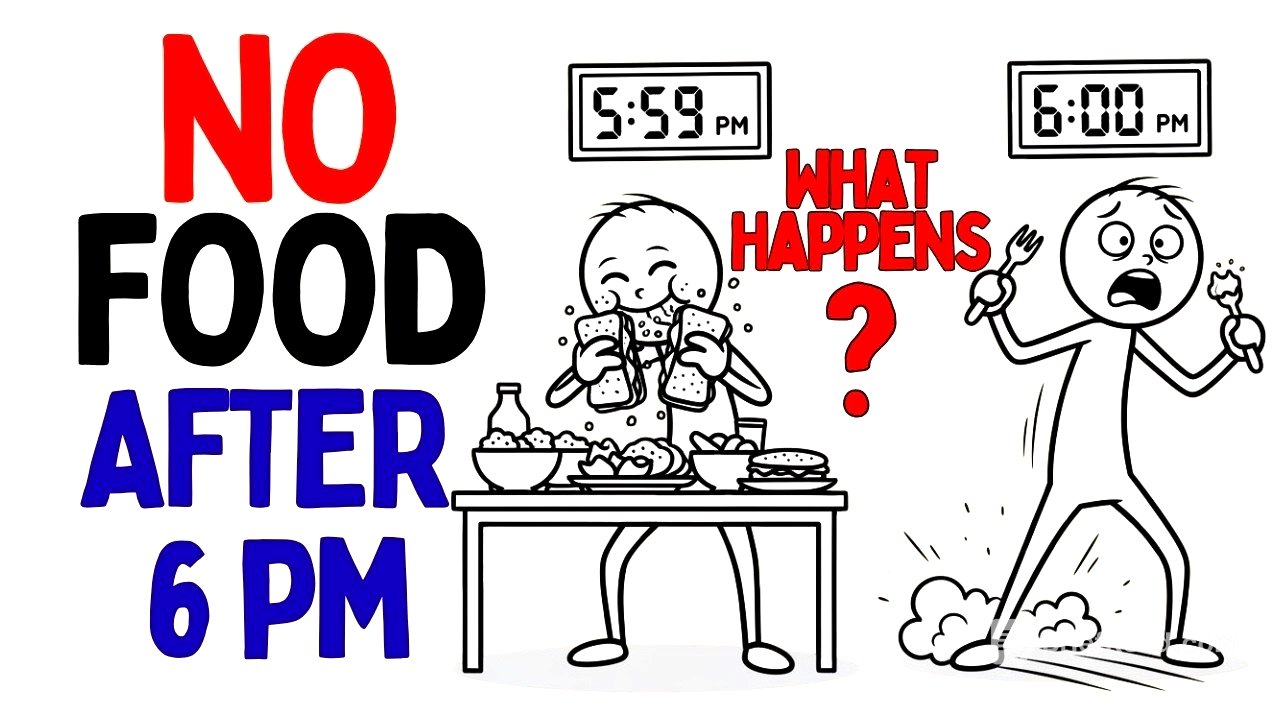
TLDR;
This video explains the science behind the 6:00 p.m. rule for weight loss, focusing on how it aligns with the body's natural circadian rhythms to optimise fat burning and overall metabolic health. It details the hormonal processes that occur from the last meal at 6:00 p.m. through to the next morning, highlighting the roles of insulin, melatonin, and human growth hormone (HGH). The video also provides practical strategies for implementing this eating pattern successfully.
- Eating in alignment with circadian rhythms is crucial for metabolic health.
- The period between midnight and 6:00 a.m. is a golden opportunity for visceral fat loss.
- Melatonin and insulin have conflicting roles; late-night eating disrupts this balance.
- Human Growth Hormone (HGH) is essential for preserving muscle mass during fat loss.
- Autophagy, a cellular cleaning process, is optimised during fasting periods.
Introduction: The 6:00 PM Rule and Biological Rhythms [0:00]
The video challenges the traditional "calorie in, calorie out" approach to weight loss, arguing that the timing of meals is equally, if not more, important. It introduces the concept that the body isn't a simple machine processing energy uniformly throughout the day, but a complex organism governed by biological clocks. Eating against these natural rhythms, particularly late at night, shifts the body into fat storage mode. The video introduces the 6:00 p.m. rule as a way to align eating patterns with the body's natural rhythms, promoting fat burning and overall health.
The Postprandial Phase: Insulin's Role After Eating [4:04]
For the three hours following the last meal at 6:00 p.m., the body enters the postprandial phase, where the digestive system breaks down food and glucose enters the bloodstream. The pancreas releases insulin to escort glucose into cells for energy. Insulin also acts as a storage hormone, locking the doors to fat stores when levels are elevated. Eating late causes insulin to remain high for longer, preventing the body from switching into fat-burning mode. Stopping eating at 6:00 p.m. allows insulin levels to naturally decrease by 9:00 p.m., transitioning the body into maintenance mode and preparing it for cellular repair and fat burning.
Melatonin's Metabolic Role and the Problem with Late-Night Snacking [8:05]
As darkness approaches, the pineal gland secretes melatonin, known primarily as the sleep hormone. Melatonin and insulin have a conflicting relationship; melatonin signals the pancreas to slow down insulin production, as the body is evolutionary programmed for daytime eating and nighttime fasting. Eating late at night disrupts this balance because the body is less prepared to handle the incoming sugar, leading to elevated blood sugar levels, inflammation, and the storage of fat, particularly visceral fat. Adhering to the 6:00 p.m. rule avoids this hormonal clash, allowing melatonin to prepare the body for sleep and insulin to finish its job without interference.
Midnight to 6:00 AM: The Golden Window for Fat Loss [11:58]
Between midnight and 6:00 a.m., insulin levels reach their baseline, opening the door to fat reserves. The body intelligently switches to burning stored fat, prioritising visceral fat around the organs. During the hours of 2:00 a.m. and 6:00 a.m., the body enters a state of high-efficiency fat oxidation, where the liver converts stored fat into ketones for fuel. Late-night snacks derail this process by causing a glucose spike and elevating insulin levels, preventing the body from tapping into fat stores. Following the 6:00 p.m. rule creates a consistent pattern that allows the metabolism to efficiently burn fat during this period.
Human Growth Hormone (HGH) and Muscle Preservation [16:29]
Between 3:00 a.m. and 5:00 a.m., human growth hormone (HGH) is released, promoting muscle growth, tissue repair, and fat burning. HGH and insulin have an inverse relationship; low insulin levels allow HGH to surge. Fasting, like the 6:00 p.m. rule, triggers HGH release, which protects muscle mass and encourages the body to burn stored fat for energy. This is crucial for healthy weight loss, as traditional calorie restriction diets can lead to muscle loss. The 6:00 p.m. rule helps recompose the body by burning fat while preserving or building muscle.
Metabolic Flexibility, Hunger Regulation, and Autophagy [19:26]
By 6:00 a.m., after a 12-hour fast, the body achieves metabolic flexibility, seamlessly switching between burning glucose and fat. This flexibility is often lost in modern society due to constant eating. A consistent eating pattern regulates ghrelin, the hunger hormone, preventing erratic hunger and cravings. Insulin sensitivity is at its peak in the morning, allowing the body to efficiently use nutrients from the first meal. Autophagy, a cellular cleaning process, occurs during fasting, removing damaged proteins and cellular debris, promoting longevity and cellular health.
Practical Strategies for Implementing the 6:00 PM Rule [23:48]
To address the challenges of implementing the 6:00 p.m. rule, the video offers practical strategies. The "tea trick" involves drinking caffeine-free herbal tea to combat evening hunger, which is often habit-based rather than physiological. Controlling light exposure by dimming lights and reducing blue light after 8:00 p.m. helps promote melatonin production. Starting gradually by moving the last meal earlier in 30-minute increments allows the body to adapt. Consistency is key, but occasional flexibility is acceptable.
Restoration and Reclaiming Control [27:59]
Stopping eating at 6:00 p.m. is about giving the body time to heal, repair, and access stored energy. Belly fat is often a symptom of imbalance, indicating that the body never gets a break from constant food intake. The 6:00 p.m. rule changes the relationship with food and biology, promoting trust in the body's natural rhythms. This leads to improved physical health, mental clarity, and a sense of control, empowering individuals to take charge of their health.



![Learn Python - Full Fundamental Course for Beginners | Python Tutorial for Beginners [2019]](https://wm-img.halpindev.com/p-briefread_c-10_b-10/urlb/aHR0cDovL2ltZy55b3V0dWJlLmNvbS92aS92X1M2NGtsZHJ5Yy9ocWRlZmF1bHQuanBn.jpg)