TLDR;
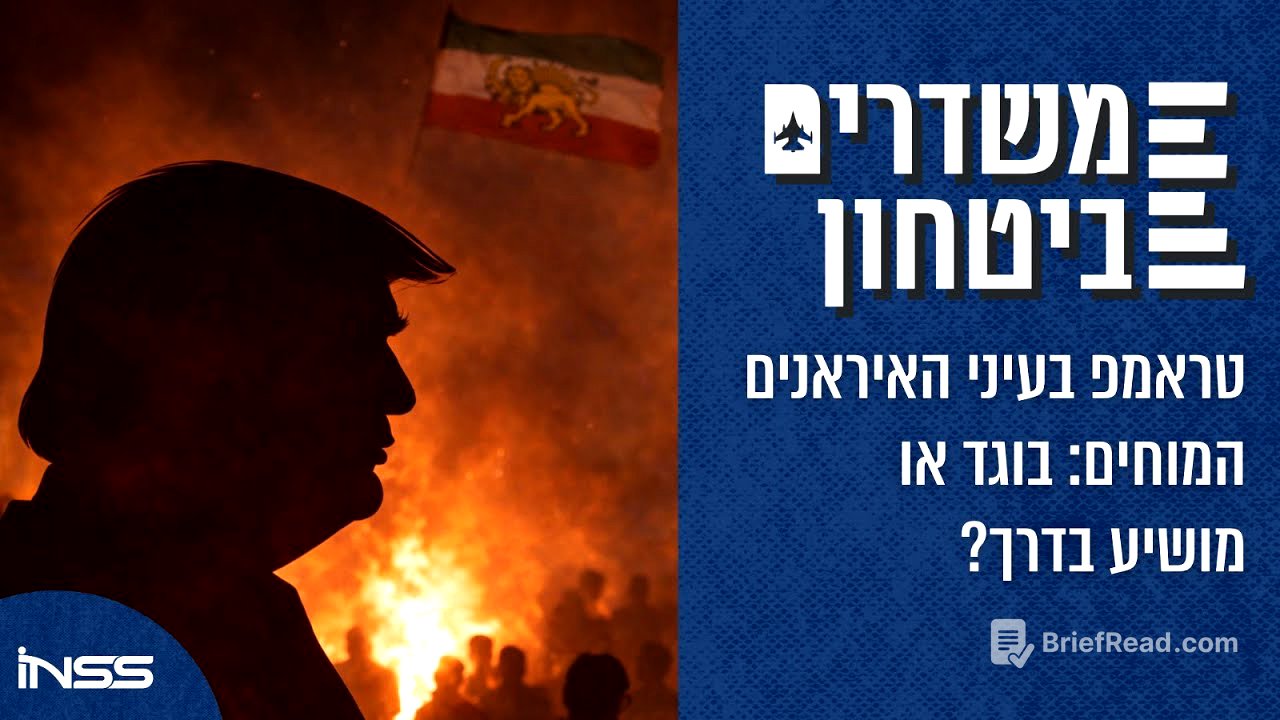
This podcast episode from INSS Israel discusses the ongoing protests in Iran, potential US intervention, and the implications for a potential conflict between Iran and Israel. It examines the state of the protests, the Iranian regime's response, and the economic factors driving the unrest. The discussion also covers Donald Trump's statements and actions regarding Iran, the influence of regional actors, and the potential scenarios for US policy, including regime change or a new agreement.
- The protests in Iran appear to have subsided due to a heavy security presence and internet restrictions, but underlying issues of legitimacy, economic hardship, and a generational gap persist.
- Donald Trump's administration considered military action but ultimately decided to wait and see, influenced by messages from Iran, regional actors, and internal advisors.
- Potential US policy options range from seeking a new agreement with the current regime to pursuing regime change, each with its own challenges and risks.
Introduction [0:00]
Emanuel Alves Phelps introduces the episode of "Security Broadcasts," focusing on the situation in Iran. The discussion will cover potential US intervention in support of Iranian protests, the current state of the protests, and the impact on the likelihood of a war between Iran and Israel. The guests are Dr. Raz Zimmt, a senior researcher and director of the Iran programme at INSS, and Dr. Avi Shai Ben-Sasson Gordis, a senior researcher in the Israel-US policy programme.
The Current Situation in Iran [1:11]
Raz Zimmt provides an overview of the situation in Iran, noting that the protests appear to have subsided due to a heavy security presence and near-total media blackout. While isolated incidents may still occur, widespread demonstrations are no longer visible. Despite the apparent return to a degree of normalcy, with schools potentially reopening, reports of numerous deaths and ongoing arrests persist, indicating the situation is far from normal. The government's internet restrictions, while impacting daily life and the economy, are less severe than previous complete shutdowns, suggesting lessons learned from past economic disruptions.
Economic Hardship and Future Protests [5:38]
Even if the current wave of mass protests has ended, the underlying economic difficulties that fuelled the unrest remain, potentially exacerbated by the government's actions. This could lead to further waves of protests in the near future. The Iranian regime faces a crisis of legitimacy, a growing gap between the public and the government, and a struggling economy. The brutal suppression of recent protests has further damaged the regime's legitimacy and widened the gap with the public. While it is difficult to predict when the next wave of protests will occur, the underlying tensions remain.
The Iranian Regime's Response and Historical Context [7:28]
There are reports that Iranian authorities are not allowing families to collect the bodies of those killed, and are requiring payment and pledges of non-political action for the return of bodies. The regime's actions evoke memories of the mass executions of 1988, a traumatic event in Iranian history. The current crackdown, with potentially over 10,000 deaths, may surpass even the severity of the 1988 events. While exact figures are difficult to confirm, the scale of the repression is unprecedented in recent Iranian history.
Trump's Response and Decision-Making [10:02]
Avi Shai discusses Donald Trump's response to the situation in Iran, noting that Trump initially appeared poised to authorise a military strike but ultimately changed course. This decision was influenced by several factors, including messages from the Iranian regime that they would not execute protesters. Trump may have used this as an opportunity to claim a victory, arguing that his pressure had worked. However, it is important to note that while executions may have been temporarily halted, other forms of repression continued.
Regional Influences and Military Posturing [13:01]
Regional actors, including Israel and Gulf states, conveyed messages to the Trump administration advising against military action at this time. Israel expressed concerns about its preparedness for an Iranian response, while other countries feared instability within their own borders. The US military posture in the region also played a role, with forces having been redeployed from the Middle East to other areas. The recent redeployment of forces to the region could be a warning to Iran or preparation for a delayed military action.
Potential US Policy Options [22:04]
Avi Shai outlines three potential US policy options regarding Iran: seeking a new agreement with the current regime, pursuing regime change, or promoting a change within the regime. A new agreement could capitalise on the regime's perceived weakness, but faces challenges such as Khamenei's potential opposition. Regime change is difficult without widespread public support and carries the risk of unintended consequences. A change within the regime could involve supporting elements within the Iranian leadership to replace Khamenei, but this is also uncertain.
Trump's Motivations and the Role of Ego [25:55]
Trump's desire for a victory or the appearance of one may drive his actions, but it is unclear if he regrets his initial support for the Iranian people. Trump's pattern of tweeting and then having the US policy establishment scramble to interpret his intentions has been a recurring theme. Trump may be motivated by images of repression and a desire to stop it quickly, without getting bogged down in a long conflict. The memory of Obama's inaction during the 2009 Green Movement may also be influencing Trump's thinking. Khamenei's insults may also be affecting Trump's decision-making.
Internal Divisions and Potential for Change
It is important to consider how much the insults that Khamenei throws at Trump affect him and his decision-making. While a popular revolution leading to the regime's collapse would be ideal, other changes, even if not optimal, could open opportunities. Even if Khamenei is replaced by a hardliner from the Revolutionary Guard, it could still lead to gradual change. The Revolutionary Guard is not monolithic, and a new leader might be more pragmatic and open to negotiation. It is unlikely that internal disagreements within the Iranian regime will be visible during this crisis.
The Risk of Regional Escalation [35:22]
There is an assumption that any US military action in Iran would trigger an Iranian response against Israel. While this is a possibility, it is not guaranteed. Iran would likely consider escalating the situation, potentially targeting US or Gulf interests, or even Israel. However, Iran also understands that such escalation could invite further attacks, including from Israel. The current situation is one where none of the actors have ideal options.
Recommendations and Conclusion [39:30]
Israel should continue to avoid direct intervention and allow the US to lead any potential action. Israel should also engage with the US to ensure its security concerns are addressed in any potential agreement with Iran. While a nuclear deal with Iran has been supported for years, it is difficult to see Israel agreeing to a deal that would provide financial relief to the current regime. Despite the lack of ideal options, the risk remains that miscalculation or a desire to avoid inaction could lead to escalation.