TLDR;
This video discusses a scandal involving Chinese smartphone manufacturers allegedly cheating on performance tests by using specially tuned "media units" for reviews, which perform better than the retail units sold to consumers. A tech media outlet, Geekerwan, exposed this practice, leading to censorship of their video and widespread discussion online. The video also touches on historical instances of cheating by Huawei, the cultural and political roots of such practices in China, and the recent price increases in the smartphone market.
- Chinese smartphone brands are allegedly using specially tuned "media units" for reviews that perform better than retail units.
- Geekerwan's exposé led to censorship of their video and sparked widespread discussion online.
- Huawei has a history of cheating in performance benchmarks and photography.
- Cultural and political factors in China contribute to the prevalence of cheating in the smartphone market.
- Recent price increases in the smartphone market may be linked to rising memory chip costs.
Geekerwan's Exposé of Smartphone Cheating [0:00]
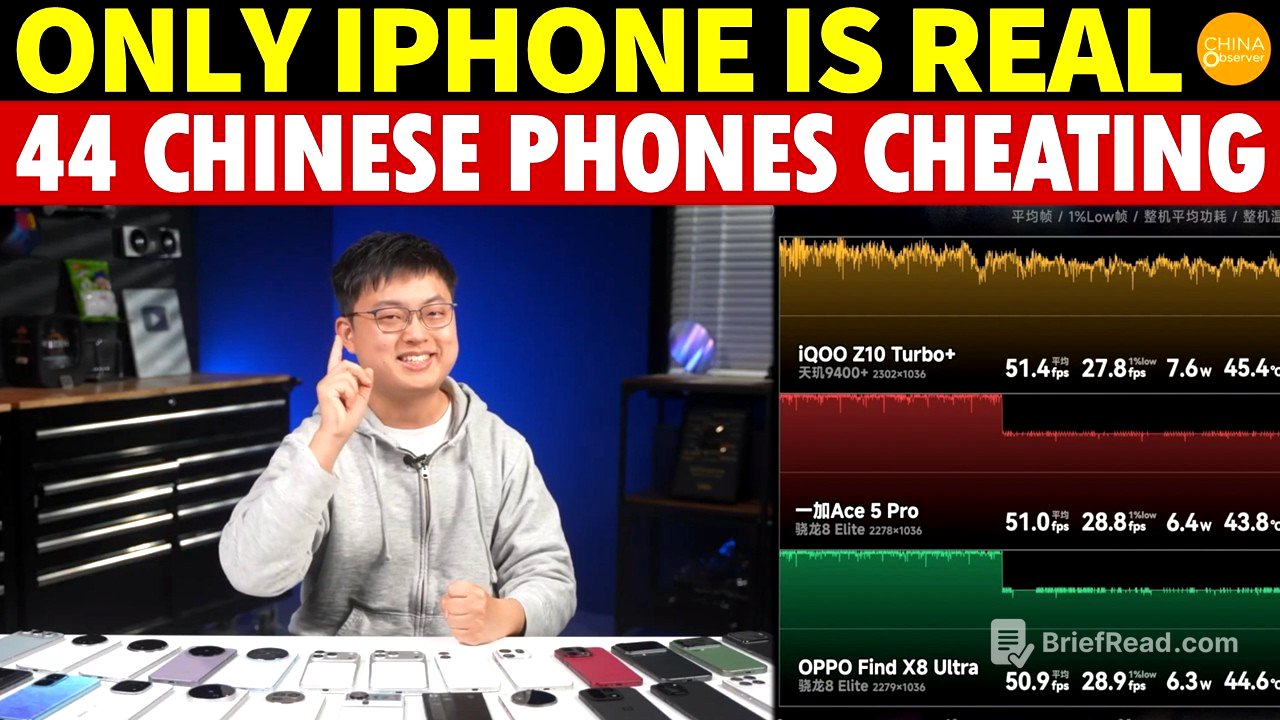
On February 15th, Geekerwan released a video exposing systematic cheating by Chinese smartphone brands. The video highlighted that manufacturers were handpicking low power, high-quality chips and specially tuning devices, known as media units, for media testing. These media units performed significantly better than the phones sold to the public. Geekerwan purchased 44 retail phones and tested them, comparing the results with published data, concluding that many manufacturers were cheating.
Specific Examples of Cheating [1:14]
The video provided specific examples of brands such as Nubia, Honor, and Xiaomi, whose retail units showed worse frame rates, higher power consumption, and poorer temperature control compared to media test units. For instance, the Vivo X200 series could maintain full frame rate in media tests but not in retail versions. Oppo's retail model had higher power consumption, and the Xiaomi 15 series had variable rate shading forcibly turned on in media units. The Honor Magic 6 Pro also had lower frame rates, higher power consumption, and more heat in its retail version. Notably, the Apple iPhone was the only brand not found to be cheating, with retail units performing better than media units.
Censorship and Public Reaction [4:28]
Shortly after its release, Geekerwan's video was taken down from Billy Billy, and videos discussing the issue were also removed. The video was then uploaded to BY Ducloud, but those links were also blocked. Even Geekerwan's community live stream was suspended. Many viewers turned to YouTube to watch the video, but it was later made private. Despite the censorship, viewers voiced their support for Geekerwan, praising their honest testing. Some speculated that the video was censored because it revealed that only Apple did not cheat, while others suggested higher-level pressure from Beijing.
Industry-Wide Implications and Historical Context [7:52]
The incident has led to calls for reviews to use retail units only, as consumers no longer trust performance data from the companies themselves. The credibility of digital tech influencers has been questioned, drawing parallels to fraud scandals in the auto industry. Cheating in performance scores and battery life manipulation has been a recurring issue in the Chinese smartphone market. Huawei has a history of cheating, including being removed from rankings for violating 3D Mark evaluation standards and using fake sample photos.
Cultural and Economic Factors [13:37]
Commentators suggest that the culture of exaggerated promotion and benchmark cheating among Chinese manufacturers is rooted in political movements that damaged traditional moral values. Cheating has become a chronic problem, with companies feeling forced to follow suit. Major Chinese smartphone brands have also announced price increases, attributed to rising costs for memory and storage chips. Some believe that the Chinese Communist Party has tolerated or even encouraged fraud under the guise of protecting national industries, maintaining a facade of prosperity through information control.