TLDR;
The video provides an overview of essential trace minerals, focusing on their roles, functions, deficiencies, and sources. Key points include:
- Copper, manganese, chromium, and selenium are vital for various bodily functions.
- Deficiencies in these minerals can lead to significant health issues.
- Food sources rich in these minerals are necessary for optimal health and prevention of related diseases.
Copper [0:16]
Copper is crucial as a catalytic co-actor in many metalloenzymes involved in iron metabolism, antioxidant defense, connective tissue synthesis, neurotransmitter production, and energy metabolism. The human body contains 75 to 100 mg of copper, primarily found in the liver, brain, kidneys, and heart. Serum copper levels range from 70 to 140 micrograms per deciliter. Copper transport in the blood is mainly bound to ceruloplasmin and is stored predominantly in the liver. Copper deficiency can lead to Menkes disease, characterised by kinky hair, neurological deterioration, anaemia, and bone abnormalities. Conversely, Wilson's disease results from copper toxicity, causing liver cirrhosis, neurological damage, and Kayser-Fleischer rings in the eyes.
Copper absorption occurs in the small intestine, with key enzymes like ceruloplasmin and superoxide dismutase relying on copper for their function. Key food sources include beef liver, oysters, sesame seeds, cashew nuts, and dark chocolate.
Manganese [5:19]
Manganese is an essential trace mineral that acts as a co-actor for numerous enzymes, contributing to antioxidant defense, bone formation, carbohydrate and amino acid metabolism, as well as cholesterol synthesis. The total body manganese content ranges from 10 to 20 mg, with the highest concentrations found in bones, liver, kidneys, and pancreas. Its transport in the blood is bound to transferrin.
Deficiency of manganese is rare but can lead to skeletal abnormalities, impaired reproductive function, and glucose intolerance. Manganese toxicity, known as manganism, occurs primarily through occupational exposure and presents symptoms similar to Parkinson's disease.
Manganese functions primarily through its role in superoxide dismutase, activating enzymes crucial for energy metabolism. Food sources include cloves, ragi (finger millet), brown rice, spinach, and tea.
Chromium [8:52]
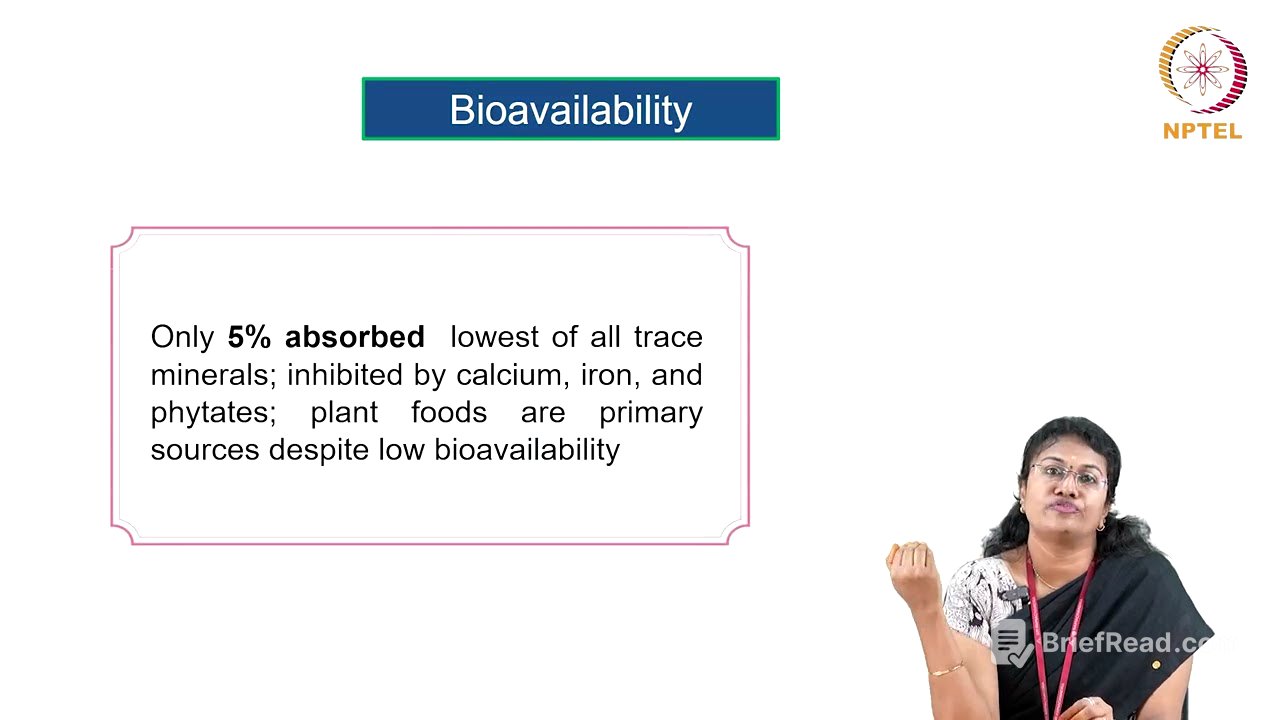
Chromium is a trivalent cation that enhances insulin action and plays a role in carbohydrate, fat, and protein metabolism. Adults typically have less than 6 mg of chromium, which decreases with age. Chromium deficiency can lead to impaired glucose tolerance, insulin resistance, and elevated blood lipids. Unlike dietary chromium, industrial chromium can be toxic and potentially carcinogenic.
The primary function of chromium involves potentiating insulin, facilitating glucose uptake, and supporting protein synthesis. Its absorption occurs in the small intestine and is affected by factors such as age and diet. Major food sources include broccoli, whole wheat, barley, and red wine.
Selenium [13:28]
Selenium is an essential trace mineral incorporated into selenoproteins as selenocysteine, functioning as a critical element in antioxidant defense, thyroid hormone metabolism, immune function, and reproductive health. The total body content of selenium is around 13 to 20 mg, primarily found in the thyroid, liver, kidneys, and muscles.
Deficiency can result in conditions such as cardiomyopathy and other health problems. Selenium's functions include detoxification of hydrogen peroxide and lipid hydroperoxides, support for immune response, and male fertility. Bioavailability is strongly influenced by soil selenium levels. Major dietary sources include Brazil nuts, tuna, chicken, and whole grains.
Conclusion [18:37]
The importance of trace minerals in diet cannot be overstated as both deficiency and excess can impair health. Essential minerals such as iron, iodine, and zinc are critical for specific bodily functions, while copper, manganese, chromium, and selenium support enzymatic activities and metabolic processes. Meeting recommended dietary allowances is fundamental for maintaining metabolic balance and overall well-being.