TLDR;
This video discusses posture, covering both static and dynamic aspects. It highlights the importance of proper alignment and ergonomics to prevent injuries, and how posture affects movement and performance in sports and everyday activities. The video also touches on postural assessments and the role of muscle activation and coordination in maintaining good dynamic posture.
- Posture involves both static alignment and dynamic movement.
- Proper ergonomics and alignment are crucial for preventing injuries.
- Dynamic posture affects movement efficiency and injury resilience in sports.
Introduction to Posture [0:17]
The video introduces the concept of posture, defining it as the form and function behind anatomy, encompassing how we hold ourselves in both static and dynamic positions. It explains that posture is not just about standing straight, but also about how the body interacts with itself during movement and rest. The discussion covers both static posture, which involves no movement, and dynamic posture, which involves movement.
Static Posture and Alignment [1:09]
Static posture is described as the alignment of bones, muscles, and joints when the body is not actively moving. Proper alignment ensures that the load is evenly distributed, while poor alignment leads to certain body parts compensating and working harder. An example of bad posture includes bent knees and a hunched back, which can cause muscle tension and lead to chronic conditions like spondylosis. Good posture, like a military stance, involves load transfer along bone segments and discs, with muscles at their normal lengths.
Ergonomics and Environmental Design [4:02]
Ergonomics is presented as the science of designing environments and tools to fit the human body. The video uses the example of computer screen setup, where a low monitor and chair can cause slouching and back strain. Adjusting the environment, such as raising the monitor or chair height, can promote better posture and prevent long-term injuries. The use of smartphones and the habit of looking straight down is also discussed as a common cause of neck stress, highlighting the need for alternative perspectives to find solutions.
Postural Assessments [7:03]
The video touches on postural assessments used by human movement science professionals to understand and evaluate posture. These assessments can include visual observation, digital imaging, and motion analysis. Examples include correcting a person's stretch or yoga pose visually or with digital tools, and correcting dynamic posture during gait.
Dynamic Posture and Functional Movement [7:54]
Dynamic posture is defined as how we hold ourselves when in motion, adapting and moving in response to our environment. Functional movement is discussed, describing the fluidity of movements and how the body adjusts to maintain balance and stability. Examples include a figure skater balancing on one leg and a martial artist stabilising themselves during a kick. The ability to adapt and respond to different activities reflects dynamic posture.
Muscle Activation, Coordination, and Injury Resilience [9:29]
The video explains that good dynamic posture is linked to muscle activation, coordination, and injury resilience. Using running as an example, it highlights the complex coordination of multiple muscles to achieve forward movement. Poor dynamic posture, often seen in marathon runners towards the end of a race, can lead to loss of control and potential falls due to muscle fatigue and decreased coordination.
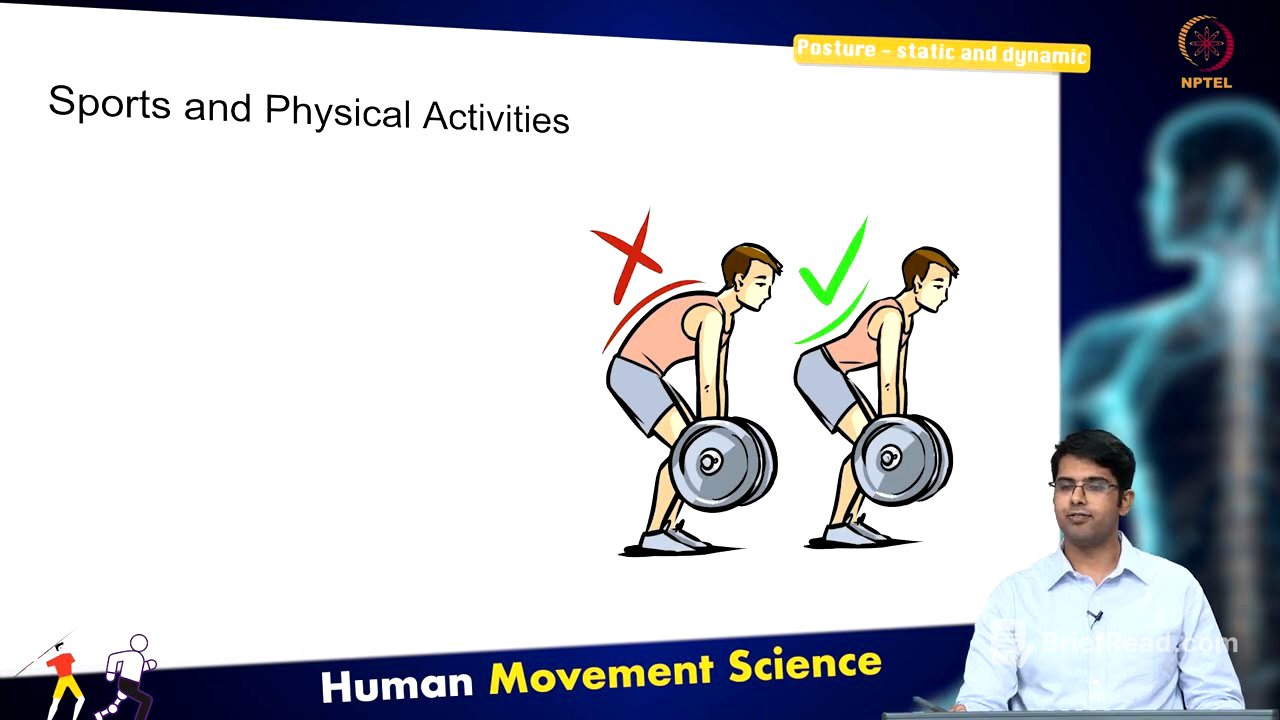
Posture in Sports and Physical Activities [11:02]
Dynamic posture is crucial in sports and physical activities, often referred to as "form." The video uses the example of a deadlift to illustrate how rounding the back indicates bad posture because it prevents the correct muscles from being recruited. Maintaining a neutral spine position allows for proper load transfer and prevents compensatory mechanisms. Correct posture involves recruiting the right muscles and developing ingrained movement patterns through practice and conditioning, which are essential for improving performance and preventing injuries.