TLDR;
This video explores the complex relationship between Hinduism and vegetarianism, challenging the notion that all Hindus are vegetarian. It examines historical texts, regional variations, caste dynamics, and economic factors to understand how vegetarianism became associated with purity and social status. The video also touches upon the political implications of food choices and the double standards exhibited by certain political parties.
- Many Hindus are non-vegetarian, and scriptures offer conflicting views on meat consumption.
- Vegetarianism gained prominence due to the influence of Jainism and Buddhism, as well as economic and social factors.
- Caste and geography play significant roles in determining dietary practices, with lower castes and coastal regions having higher rates of non-vegetarianism.
Introduction [0:00]
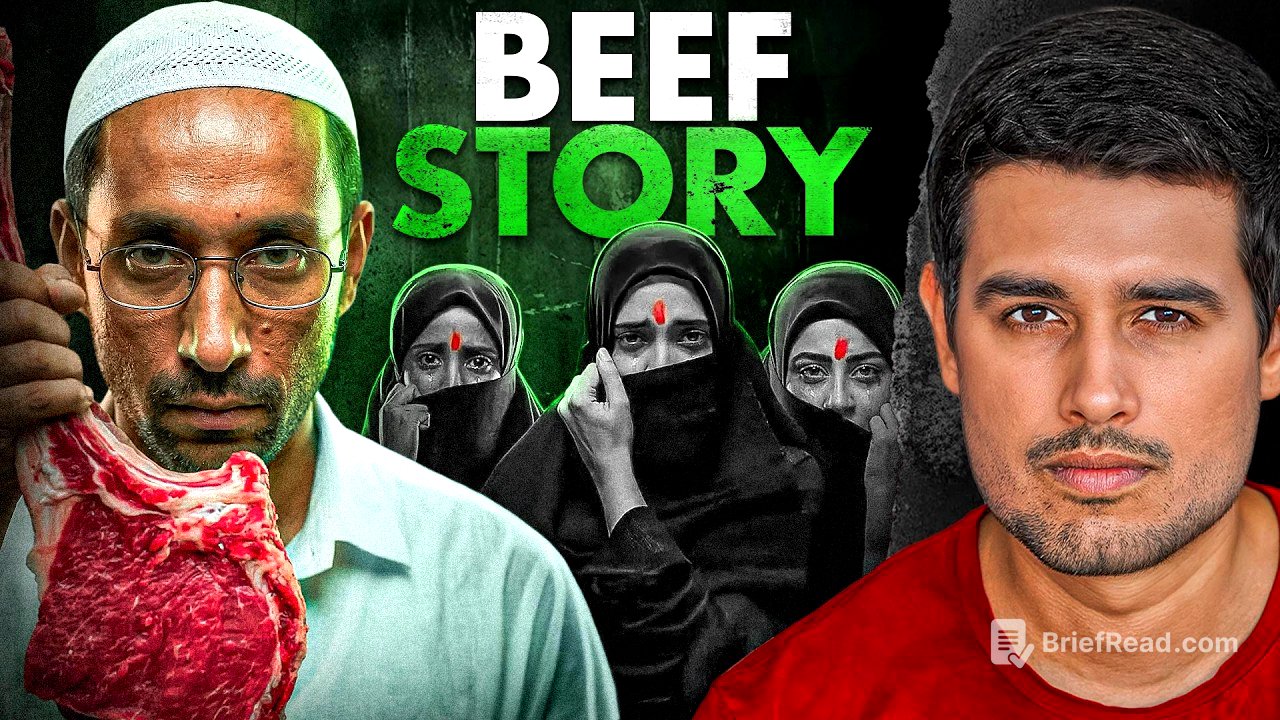
The video starts by addressing the stereotype of Muslims as villains and Hindu girls as naive in propaganda films like "Kerala Story 2". It challenges the idea that true Hindus are solely vegetarian, pointing out that many Indians, including a significant percentage of Brahmins, consume meat. The video questions the origins of the belief that vegetarianism is an essential aspect of Hinduism.
Scriptural Contradictions [1:15]
The video examines Hindu scriptures, highlighting contradictory views on meat consumption. While some texts promote non-violence and discourage eating meat, others, like the Manusmriti, permit the consumption of meat that has been sanctified. This contradiction suggests that the issue of meat consumption is not straightforward within Hinduism.
Regional and Community Practices [3:02]
The video explores various regional and community-specific practices related to meat consumption. It mentions how certain Brahmin communities consume fish, and how meat is offered to deities in temples and served as prasad. These examples demonstrate the diversity of dietary practices within Hinduism and challenge the notion of a uniform vegetarian identity.
Historical References [4:19]
The video explores the question of whether figures like the Pandavas and Lord Rama consumed meat. It references the Ramayana and Mahabharata, suggesting that these figures may have consumed meat and alcohol. The video also cites Swami Vivekananda's interpretation of these texts, further supporting the idea that meat consumption was not uncommon in ancient times.
Vegetarianism Promotion [7:52]
The video addresses the agenda of some vegetarian advocates who misrepresent scriptures to promote vegetarianism. It counters these claims by referencing texts that describe meat consumption in specific contexts, such as the consumption of beef for conceiving a scholarly son. This section highlights the selective interpretation of scriptures to promote a particular dietary ideology.
The Rise of Vegetarianism [8:52]
The video transitions to discussing how and why vegetarianism became associated with purity and superiority. It suggests that the rise of Jainism and Buddhism influenced the adoption of vegetarianism in Hinduism. Additionally, it argues that Brahmins used vegetarianism to establish moral authority, while merchants adopted it as an economic privilege.
Caste and Economic Factors [10:54]
The video highlights the role of caste and economic factors in shaping dietary practices. It cites Dr. Ambedkar's research, which reveals a dividing line between vegetarian and meat-eating communities, with untouchables being largely excluded. The video also presents survey data showing that lower castes and tribes have higher rates of non-vegetarianism, while vegetarianism is more prevalent among upper castes and the Jain community.
Political Implications [14:22]
The video explores the political implications of food choices, referencing instances of politicians openly consuming meat to appeal to certain demographics. It also discusses the BJP's double standards regarding beef consumption, promoting it in states like Kerala and the North East while enforcing bans and inciting violence in North Indian states. This section highlights the manipulation of dietary preferences for political gain.
Geography and Gender [17:21]
The video examines the influence of geography and gender on dietary practices. It presents survey data showing that coastal states have lower rates of vegetarianism compared to landlocked states in the West and North. Additionally, it reveals that men are more likely to consume meat than women across different religions.
Conclusion [18:37]
The video concludes by emphasising that dietary choices are influenced by a complex interplay of factors, including geography, economic well-being, and caste, rather than solely religious or cultural heritage. It acknowledges the validity of choosing vegetarianism for ethical and environmental reasons but cautions against using it as a basis for moral superiority or caste hierarchy.