TLDR;
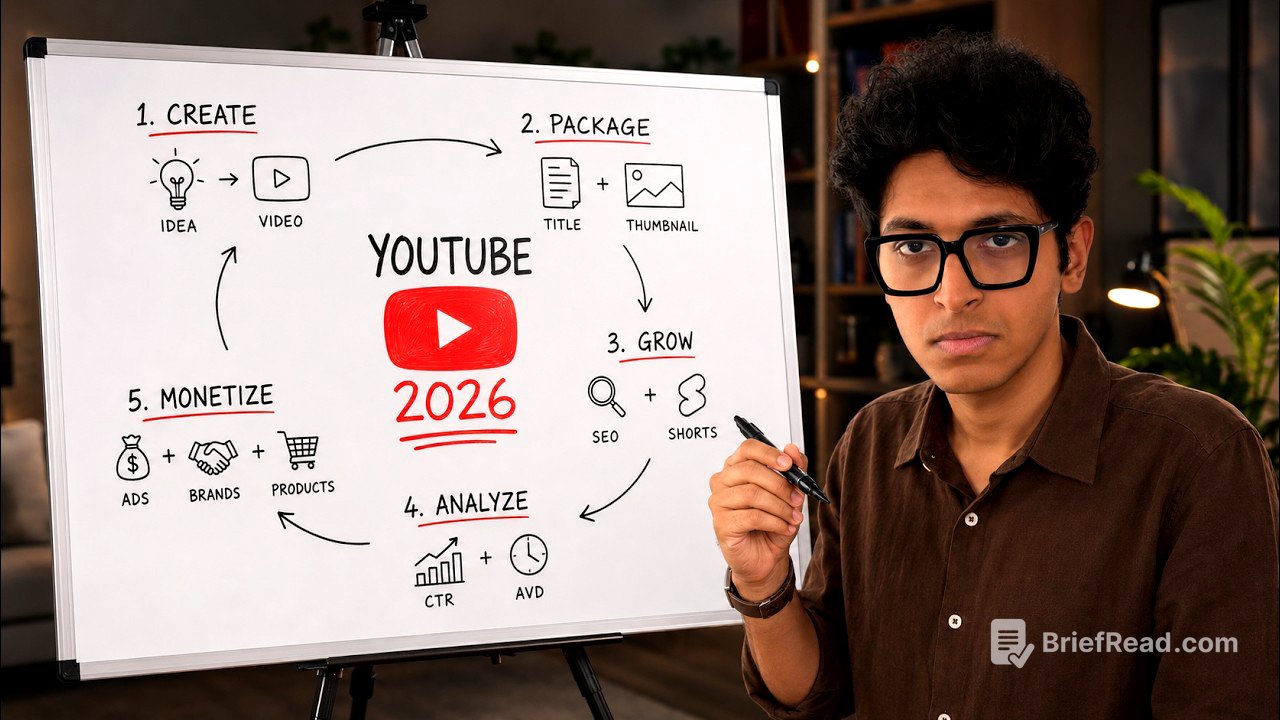
A successful YouTube channel can start with basic equipment and improve through consistent practice. In 2026, YouTube remains valuable for its long-form videos, creator revenue sharing and strong viewer relationships. Growth depends on useful or entertaining content, clear packaging, audience retention, a focused niche and an understanding of analytics. Revenue can come from advertising, brand deals, affiliate links, products and businesses built around a channel.
- Start creating with the equipment you already have, prioritising clear audio and a compelling idea.
- Structure videos around a hook, context, valuable content and a clear call to action.
- Use titles, thumbnails, search optimisation and consistent topics to help viewers discover your videos.
- Track metrics such as CTR, AVD, CPM and RPM, and develop several income streams over time.
How to Start a YouTube Channel in 2026 [0:00]
After six years and more than 2,000 videos, the creator says that YouTube helped him reach over 100,000 and then one million subscribers, as well as build a substantial income. He frames the video as a practical guide to starting a channel, creating videos, finding ideas, growing an audience and earning money. He also notes that making videos can bring significant rewards, but it has its own challenges.
Why YouTube Is Still Worth It in 2026 [1:21]
YouTube shares advertising revenue with creators, and viewers use it to learn skills, follow tutorials and explore topics in depth. In a world full of AI-generated and short-form content, audiences still value authentic human connection and longer videos. Those deeper relationships can make YouTube creators more valuable to brands and can generate more income per view than other platforms. Instagram and Shorts can help with broad reach, but long-form videos are particularly effective for building trust. YouTube also serves as a major visual search platform, while the global creator economy is estimated at $250 billion.
How to Start Creating YouTube Videos [5:14]
The creator began with a laptop camera, little editing experience and no professional equipment. The essential step was simply to begin, then gradually improve the videos and invest in better production. A video needs a reason for people to watch: it can teach something, entertain viewers or tell a compelling story. There is no single correct format, so creators should choose the kind of content they want to make. For a new channel, search-based videos—such as tutorials answering specific questions—can be easier to discover than broad lifestyle videos that rely on recommendations.
The 4 Parts of a Successful YouTube Video [8:02]
Clear audio is more important than high-end picture quality: viewers may tolerate an ordinary image, but poor sound can make them leave. A basic wired microphone connected to a phone can be enough to begin. A video should then have four parts: a hook, context, its main content and a call to action (CTA), which tells viewers what to do next. The hook should quickly explain why the video matters, using a question, striking fact or visual. Context helps viewers relate to the problem, the main section delivers the promised value, and the CTA can invite them to subscribe or visit a link. Avoid lengthy introductions; get to the point and briefly introduce yourself only when needed.
YouTube Titles & Thumbnail Strategy [11:11]
A video’s title and thumbnail are its packaging: they persuade people to click and watch. Titles can use a list, personal experience or contrast—for example, presenting an unexpected alternative to a popular tool. Thumbnails can show a tutorial, a striking scene or a before-and-after contrast that hints at a transformation. Effective designs catch attention rather than simply looking polished: use colours that stand out against the background, clear expressions or imagery, and little or no text. The creator suggests using AI tools such as ChatGPT to generate thumbnail concepts, incorporating a photo of yourself and style references. He also mentions books on persuasion and neuromarketing as resources for understanding what attracts attention.
How to Edit YouTube Videos [14:56]
Editing is not about adding as many effects as possible; it should make the video clearer, more engaging and tighter, which can improve average view duration (AVD). Beginners can start with free software such as DaVinci Resolve or Shotcut, while Final Cut Pro is the creator’s preferred option for Mac users. Focus first on cuts, zooms, J-cuts—where audio from a later shot begins before the picture changes—text, lower thirds and simple transitions. You can edit videos yourself at first, then hire a freelance editor once revenue allows, since editing can take a substantial amount of time. For Shorts, the creator recommends Instagram’s Edits app for simple cuts, captions, zooms and B-roll.
YouTube SEO: How to Rank in Search [17:16]
To improve a video’s chances of appearing in search, first search for the topic on YouTube and identify the words people use. Include relevant keywords in the title, description and tags, and consider using them in the thumbnail. Say the topic clearly in the video, especially during the first 30 seconds, because YouTube transcribes speech and can use it to understand the subject. SEO matters particularly for search-led content; the creator says around 60% of his own views come from YouTube search.
YouTube Shorts & Channel Growth [18:25]
YouTube Shorts can introduce a channel to new viewers and encourage some of them to explore its longer videos. To convert that reach into lasting growth, keep Shorts and long-form videos focused on similar subjects; unrelated Shorts may attract viewers who have little interest in the main channel. Creators can also link a long-form video from a Short, giving interested viewers a direct route to more detailed content.
YouTube Analytics: CTR, AVD, CPM & RPM [19:26]
YouTube Studio shows how videos perform and where viewers come from. CTR, or click-through rate, is the share of people shown a video who click it; AVD, or average view duration, is the average time viewers spend watching. Strong videos need both: an appealing thumbnail and title bring clicks, while engaging content keeps people watching. CPM means cost per mille (per thousand monetised playbacks) and measures what advertisers pay YouTube; RPM, or revenue per mille, estimates what the creator earns per thousand views after YouTube’s share. Studio also reports impressions, audience details and traffic sources. The creator mentions a “hype” feature that lets viewers promote eligible creators’ videos, potentially placing them on a leaderboard and helping more people discover them.
How to Find YouTube Video Ideas & Choose a Niche [22:44]
Tools such as 1of10 can help creators review successful titles, thumbnails and videos in their niche. Choosing a clear topic helps YouTube identify an audience for a channel. If a channel about AI suddenly posts about growing bonsai trees, its existing viewers may not click; without that initial response, YouTube may be less likely to recommend the video more widely. It is usually better to explore a topic deeply or cover adjacent subjects, then broaden gradually as audience expectations develop. Examples include creators who built trust in a focused area before moving into wider podcasts or featuring well-known guests. To stand out in a competitive niche, compare other creators’ subjects, formats and video lengths, then choose a distinctive approach with enough audience interest. When a topic is already popular, adapt it to your own perspective and audience rather than copying it directly. Broad lifestyle vlogging is possible but highly competitive, so a specific perspective and recognisable style can help viewers return.
How to Make Money on YouTube [28:29]
YouTube income can come from advertising, sponsorships, affiliate commissions and products or services. AdSense pays creators a share of advertising revenue, with earnings shaped by the topic and audience. Educational content aimed at working adults in large cities may attract higher CPMs than some gaming or general-vlogging content, though advertising income can still vary greatly by country and audience purchasing power. Evergreen videos can continue to earn over time, while topical videos may attract views mainly in the short term. The creator also recommends A/B testing titles and thumbnails in YouTube Studio, which compares alternatives and favours the better-performing packaging.
Brand Deals & YouTube Sponsorships [31:56]
Brand partnerships can be a major source of creator income. A company may approach a creator whose audience trusts them, or a creator can work with a brand whose product they already use. Paid deliverables can include a dedicated video, an integrated segment, a Short or a community post. Typically, the creator agrees on pricing, receives a brief, writes a script for approval and then records the content. Subscriber count alone does not determine sponsorship value: brands also consider average views and the strength of the relationship with viewers. Some assess CPV, or cost per view, while others pay for brand awareness. Creators can improve their chances by making valuable, brand-friendly content, building consistent viewership and approaching suitable companies. The creator warns against getting stuck accepting products instead of payment in repeated barter deals. Sponsorship opportunities also vary by niche: tech creators can work with many product categories, while audiences in some categories may be less receptive to frequent brand changes.
Affiliate Marketing & Other Revenue Streams [37:54]
Affiliate marketers share tracked links to products, often in video descriptions, and earn a commission when viewers buy. For example, an Amazon affiliate might earn a percentage from a microphone purchase; in some cases, the referral can also earn commission if the viewer buys a different product after clicking the link. Commission rates depend on the platform and product, and the creator says he earns little from affiliate marketing himself, although others make substantial income this way. Creators can also sell courses, digital products, workshops or in-person experiences. YouTube features such as Super Thanks and members-only content provide additional options, though the platform takes a share.
How to Build a Business From YouTube [39:49]
A YouTube channel can become the foundation of a larger company, not just a place to publish videos. The creator points to Indian education companies that began as YouTube teaching channels and later grew into major businesses. A channel provides distribution: creators can reach an existing audience and direct viewers to an app, service or product, potentially generating sales without relying solely on paid advertising. Investors may also be interested in creators who have already established an audience and a reliable route to market.
Outro [41:06]
The creator encourages viewers to start a channel and wishes them success. He invites questions in the comments and directs viewers to the video description for the sponsored editing assets and templates.