TLDR;
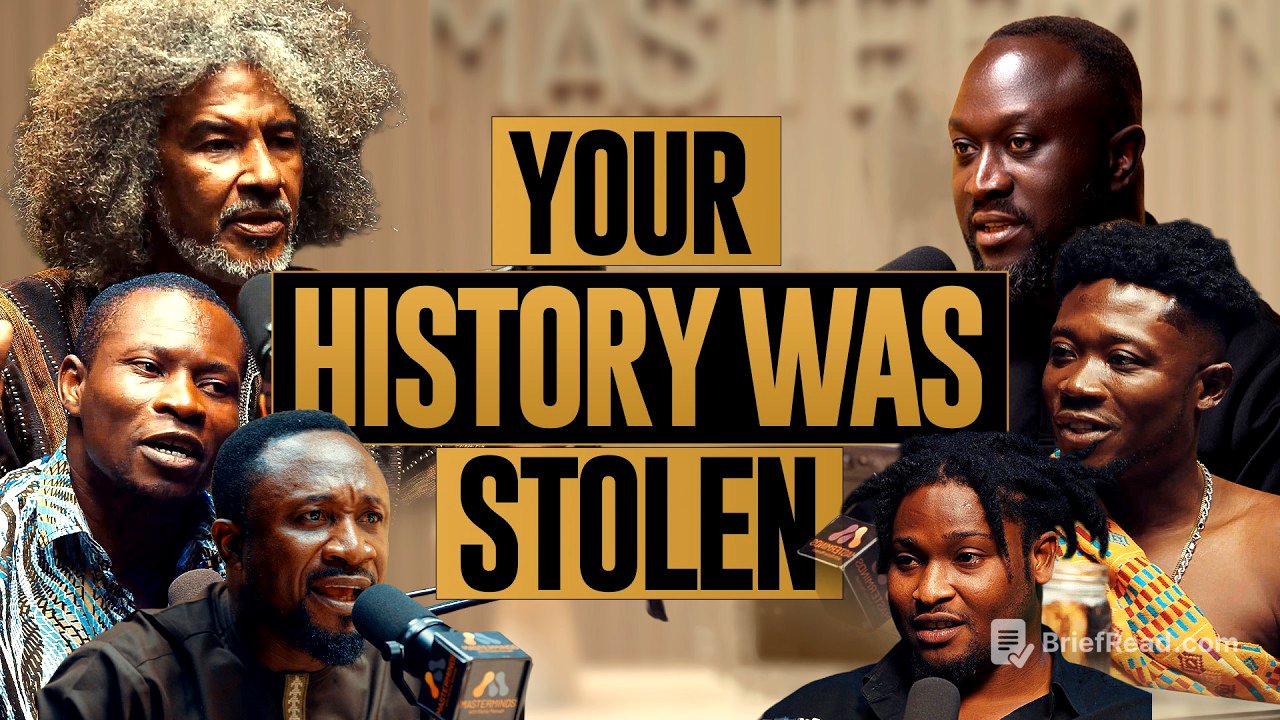
The video examines the misconceptions about African history and civilisation, highlighting the need for a deeper understanding of African heritage beyond colonial narratives. It discusses the achievements of ancient African societies, the significance of historical figures, and the persistent mindset that hinders progress in Africa today.
- African history is often misrepresented, starting only from the 1400s.
- It is crucial to reclaim and understand the rich history and achievements of ancient African civilisations.
Cold Open [0:00]
The video opens with a strong statement about the strength gained from understanding one's history as an African, criticising the conventional teaching that begins with colonisation in the 1400s.
Part 1: The History They Cut Short [1:51]
The discussion focuses on the gaps in African history education, revealing that many significant accomplishments of African civilisations are often omitted. Participants challenge the notion that African history begins with slave trade and colonisation, advocating the recognition of the rich indigenous history, kingdoms, and success stories before foreign encounters.
The Greeks Learned It from Africa [8:35]
This chapter highlights the contributions of African societies to global knowledge, particularly in mathematics and philosophy. The Greeks are depicted as learners from African civilisations, with references to historical figures like Pythagoras who sought knowledge in Egypt, demonstrating that the roots of civilisation are deeply tied to Africa.
Timbuktu, the Moors and Benin [20:39]
The narrative shifts to the historical significance of Timbuktu as a centre of knowledge, and the cultural and academic wealth of the Moors. Additionally, the impressive history of Benin is explored, emphasizing its well-structured society and advancements that rivalled European standards during the same period.
Part 2: Built, Then Broken [37:36]
This chapter discusses how African civilisations had established systems and structures which were compromised through colonisation. The commentary reflects on the deliberate dismantling of these advanced societies by colonial powers, leading to the contemporary struggles African countries face.
Scripture, Slavery and the Church [45:08]
The video critiques the role of religious institutions in perpetuating narratives of oppression. It questions the biblical interpretations that have historically justified the enslavement of Africans and argues that the church’s influence contributed to the disconnection from indigenous cultures and practices.
Nkrumah and the Dream of a United Africa [55:38]
The legacy of Kwame Nkrumah is examined, with a focus on his vision for a united Africa. The discussion highlights Nkrumah’s efforts to promote Pan-Africanism and the challenges that emerged from both intra-African politics and external pressures.
Part 3: The Mindset That Keeps Us Small [1:04:56]
This segment addresses the psychological barriers that inhibit progress in Africa. It discusses the negative mindset that has been cultivated due to colonial influence, which leads to a lack of self-belief and a tendency to rely on external validation.
Praying While Others Build [1:14:18]
The video critiques the excessive focus on prayer and spirituality at the expense of proactive engagement in community and development. It emphasises the need for action over passive faith, urging viewers to take responsibility for their circumstances and be active participants in their development.
Part 4: Reclaiming [1:23:54]
In the concluding segment, the call to reclaim African history and identity is reinforced. The speakers urge a shift in perspective to embrace and celebrate African heritage, encouraging individuals to educate themselves and take pride in their history as a foundation for future growth.