TLDR;
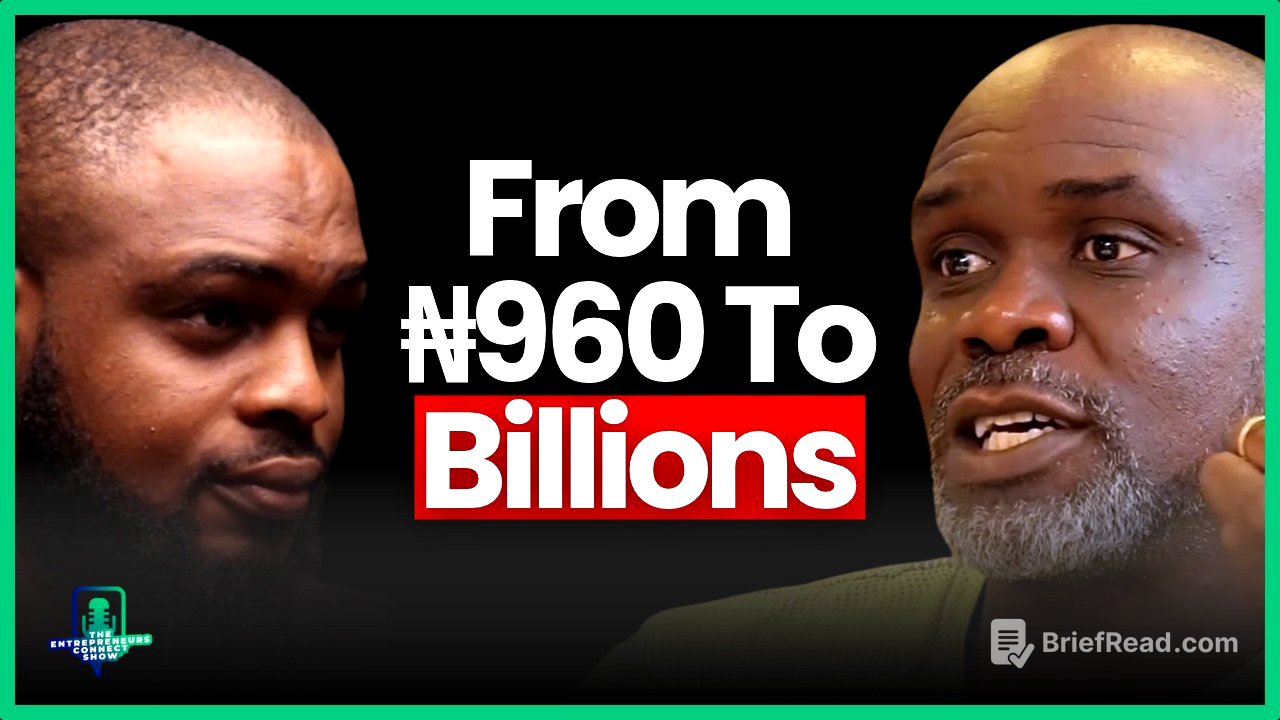
Entrepreneur and marketer Ronald Ikenna Nzimora recounts how childhood loss, family business influences and a near-finished university course shaped his career. Starting with just ₦960, he built income by selling CDs, moved into internet marketing and later made money selling physical products. His main lessons are to offer something that can reach many customers, understand what people truly want, learn to manage and invest money, and stay motivated by meaningful goals and faith.
- He describes how resourcefulness and a willingness to start again helped him recover from poverty and serious illness.
- He explains the early realities of online marketing in Nigeria, from newspaper adverts and bank transfers to digital advertising.
- He argues that distribution, attention, good marketing and financial discipline are central to business growth.
- He shares how faith, family and a desire to build a lasting legacy now guide his ambitions.
Childhood, family and an abandoned path to priesthood [2:51]
Nzimora describes himself as a quiet, serious child who spent much of his time reading. He was born in Zaria and grew up in Gusau, where unrest and riots sometimes occurred. He remembers his mother coming to find him in the middle of a market riot; the experience deepened their bond and strengthened his wish to make life easier for her. She died when he was 19, a loss he says broke him. His father was often away for business, travelling to countries including Ghana, Togo, Côte d’Ivoire, Liberia, Sierra Leone and Cameroon to expand the family’s markets. Seeing both sides of his family involved in trade helped nurture his interest in commerce and, later, e-commerce.
He once intended to become a Catholic priest after attending seminary school. Reading widely and studying religious texts shaped that interest, but he also wanted to achieve things independently. As priesthood became a real prospect, he decided it was not the life he wanted and left without returning after a holiday. His mother responded with support, telling him she wanted him to be happy; her reaction moved him to tears and later influenced the kind of parent he hopes to be. He sometimes regrets leaving university in his final year, but plans to complete an MBA in marketing.
The university printing business and the decision to leave [18:21]
While at university, Nzimora was broke and worked in a friend’s printing shop, typing and printing students’ assignments for about ₦25 per page. During night-time internet sessions in Aba, he discovered Dragon NaturallySpeaking, software that could turn trained speech into typed text. Unable to afford its US$285 price, he asked a former girlfriend in the United States to buy it for him. Once it arrived, he used it secretly after the shop closed, dictating students’ work and cutting his workload by about 80 per cent.
He then realised that printing, not typing, offered the greater opportunity. He advertised printing at lower prices and soon attracted large volumes of student work, sometimes earning ₦10,000–₦20,000 a day in 2004. He also made money transferring songs, images, videos and ringtones to phones and MP3 players. Despite the success, he believed the business could keep him stuck in a path that was too small for his ambitions. He handed it over to a friend and left university, later reflecting that others who continued printing were still running similar shops years afterwards.
Leaving home, surviving on ₦960 and selling CDs [31:58]
After leaving university in his final year, Nzimora moved back to Lagos. His father was angry that he had quit rather than complete his studies and go through Nigeria’s National Youth Service Corps (NYSC), and told him to leave home if he would not return to university. Nzimora moved into an unfinished house in Festac that belonged to his sister. It had no doors or windows; he used a washed paint bucket to drink garri and fetch bath water because he could not afford a plate.
His sister gave him ₦15,000 to attend a Success Digest information-marketing workshop. As the money ran down, he was left with ₦960 and needed to find a way to earn. He downloaded free ebooks that came with master resale rights—permission to resell the books—and burned them onto CDs. He bought blank discs and sleeves, made a simple printed list of titles, and sold each CD for ₦1,000 at seminars. He sold 23 on the first day and around 32 or 33 in two days, making roughly ₦33,000; over the following month, he sold CDs at different seminar venues and made about ₦400,000.
He says he was not embarrassed to sell them: he needed money, believed the work was legitimate and saw the setback as temporary. The earnings helped his family improve the Festac house and move there from Iba. His relationship with his father remained strained for a time, but gradually improved as Nzimora began paying rent and contributing to household expenses. He also recalls that an eight-month hospital stay in 2020 later cost him his savings, but he recovered financially.
How early internet marketing worked in Nigeria [48:50]
Nzimora describes the early internet-marketing scene as a version of today’s creator economy: identify a group with a problem, create a solution in a format they can use, and sell it. Solutions could be ebooks, courses, audio, video, software, apps or in-person teaching. At the time, marketers often wrote ebooks in Microsoft Word, converted them into PDFs with free software and built sales pages using Microsoft FrontPage and HTML.
The payment process was slow and manual. Customers paid into a bank account, emailed a photograph of their deposit slip, and waited while the seller checked the account and forwarded the ebook—often a process of about 24 hours. Before social media advertising became available to Nigerian audiences, marketers relied on newspaper adverts in publications such as Punch, The Guardian, Complete Sports, Success Digest and Financial Standard. Facebook’s advertising platform later opened a new way to reach Nigerians online.
He says people were willing to buy even then if they believed a product solved their problem; the main difference today is greater awareness and a larger audience. He points to Canada immigration products as an example: information about immigration existed long before courses on the topic became widely known, but online marketers helped bring it to people’s attention. The money he made from his early CD sales became starting capital that he reinvested into further ventures.
Motivation, marketing and the power of a strong advert [58:20]
Nzimora says early earnings often felt more motivating than larger sums earned later. After making ₦33,000, he believed he could make a million; reaching a million made him think about earning 100 million, and then a billion. As income grows, however, people become desensitised to amounts that once felt life-changing. He now stays motivated by the achievements of close friends and by his ambition to fund missionary work, support persecuted Christians and help people who cannot afford housing. He hopes eventually to give away half of what he earns to these causes.
His path into teaching began after he attended an information-marketing workshop and published an article suggesting it should teach online promotion as well as newspaper advertising. Success Digest chairman Rhodes Okorie invited him to a meeting, praised the article and asked him to teach online promotion at the next seminar. Nzimora was not daunted by the audience of roughly 600–700 because he had previously practised public speaking through a university group called Talk World Organization, where members taught each other and invited speakers to give lessons.
He also recounts a newspaper-advertising encounter involving Jason Njoku of IrokoTV. Nzimora had submitted an advert for his blogging course when Njoku arrived with a full-page advert for a blogging product. Concerned that his smaller advert would be overshadowed, Nzimora replaced it with the line: “Buy every other ad on blogging you see in this newspaper. When you fail, come back and buy this one.” The advert made more sales than he expected. Years later, Njoku said one of his own adverts that barely broke even had been for blogging; Nzimora realised his unusual headline had helped draw customers away. The example illustrates how marketing uses psychology and attention-grabbing messages to stand out from competing adverts.
Understanding human desires and why products sell [1:15:02]
After more than 20 years in marketing, Nzimora’s view is that people are simple at their core: they want what they want. A business can make money by identifying those desires accurately and offering something that meets them, rather than guessing. He cites Ryanair, a European no-frills airline that offers low fares by using cramped seating and removing extras such as food and water. When the airline added legroom and raised fares after customers complained, bookings fell; when it restored the cramped seating and lower prices, bookings recovered. Customers had preferred the cheaper option despite complaining about comfort.
He says two people selling the same product can earn very different amounts because one may understand the market’s emotions and communicate more effectively. He also believes that faith and spiritual connection can influence a person’s life, while stressing that everyone’s circumstances differ and people should not compare their path with someone else’s. Each person must work out what suits them rather than follow others into choices that may not be right for them.
Selling stretch-mark cream, building a brand and avoiding price wars [1:24:54]
Nzimora entered physical-product sales after selling an ebook about removing stretch marks for ₦2,500. The book mentioned a cream he had found advertised on Nairaland and included the seller’s phone number. When dozens of customers emailed to say the number did not work and asked to buy the cream, he noticed that it was being sold for ₦11,000. He searched Alibaba, found a stretch-mark cream for about 75 US cents per jar, bought 100 jars for roughly US$120–$130 including shipping, and offered it to his ebook customers for ₦19,000.
He sold all 100 jars in about two weeks, earning more than ₦1 million in sales. But he made a mistake by publicly discussing the product and showing others where to source it. Competitors copied his sales letters and began selling the same cream; some Chinese manufacturers also started using the name Pasjel. As more sellers competed, Nzimora cut his prices from ₦19,000 to ₦15,000, then ₦12,000, ₦9,000 and eventually ₦7,500. He stopped when he saw the product being sold for ₦3,500, concluding that price wars destroy value by turning competition into a race to the bottom. He now customises and trademarks his company’s products. The profits from physical-product sales helped him buy his first house, which he describes as a major personal achievement.
Making money, keeping it and investing across markets [1:34:15]
Nzimora learned that earning money and managing it require different skills after going broke several times, including following poor business decisions and his illness. He says he began taking wealth management seriously around 2018–19, which meant he had savings available when he became seriously ill, even though the treatment ultimately wiped him out. He recalls his grandfather’s advice: when you make money, keep some of it. His grandfather had risen from being an orphan in poverty to becoming a wealthy landowner, and Nzimora later understood the importance of that lesson.
He argues that making money is often the easiest part; keeping and growing it require separate knowledge. One financial framework he learned divides income into eight portions: four are allocated locally and the same four categories are repeated internationally. Within each set, money goes towards business, savings, personal development or enjoyment, and investments. The investment portion is split between liquid assets, which can be converted into cash quickly, and illiquid assets, which may take longer to sell but can grow in value. He says international savings and investments can help protect against domestic uncertainty and suggests that dollar-linked options such as Bitcoin or USDT may be accessible alternatives for people without foreign bank accounts.
Advice for building wealth through business and distribution [1:44:11]
For people who want to build wealth, Nzimora’s first recommendation is to find an environment where they can meet others pursuing similar goals and see what is possible. He praises peer groups that work together, comparing them to iron sharpening iron. Being around ambitious people can encourage learning and improve performance without requiring someone to move to a particular neighbourhood.
His second recommendation is to sell something that can be distributed to many people. He says a business should not be treated sentimentally: if a product cannot reach enough customers, entrepreneurs should consider finding something else. He favours physical products in the Nigerian economy because digital products can reach a ceiling, while physical businesses can grow by introducing other products. Distribution and visibility matter, and he describes widespread recognition as “omnipotence”—being present wherever potential customers look. Attention, he argues, is a key currency in online marketing; creators who dislike appearing on camera can still use AI tools to create videos from a photograph and a script.
His third recommendation is to connect to a source of strength, which for him means faith in God. He believes highly successful people have some source—good or evil—and says his Christian faith now shapes his outlook and ambitions. He wants to use success not only to benefit himself but also to help others and serve a wider purpose. He warns against settling below one’s potential or following another person’s path without considering what is right for oneself.
Fatherhood, faith and building a lasting legacy [1:57:07]
Nzimora describes fatherhood as one of the best parts of his life. His daughter, who was approaching her seventh birthday at the time of the conversation, brings him great joy. He prayed for a daughter who looked like his late mother, and says she was born resembling her; he also gave her his mother’s name. He describes his daughter as brilliant and stubborn, and says becoming a father has made him more patient and less outspoken online.
He wants to build a business and legacy his daughter can continue, rather than have everything end with him. He is inspired by businesses that have lasted across generations, including a UK bank he had read about that had existed for 600 years. His daughter lives abroad, but they speak every day, and he hopes to build something that future generations will remember as the beginning of a lasting family enterprise.
Aiming for ₦1 billion and the question for the next guest [2:02:14]
Asked how young people could make ₦1 billion in a year, Nzimora says they should focus on a physical product that can be distributed widely. Reaching that level still requires hard work, but once a business has a product, marketing and distribution system that can serve a large market, growth becomes a matter of scaling the numbers. Physical businesses have more moving parts than digital ones—including manufacturing, customisation, agencies, marketing and logistics—but he says that people who master these areas can achieve significant results. He has taught people who have reached more than ₦1 billion, including some who did so within three years.
For the next guest, he leaves a question about politics: which presidential candidate will they support, and why? He argues that business owners should not ignore politics because public policy affects business and economic growth.