TLDR;
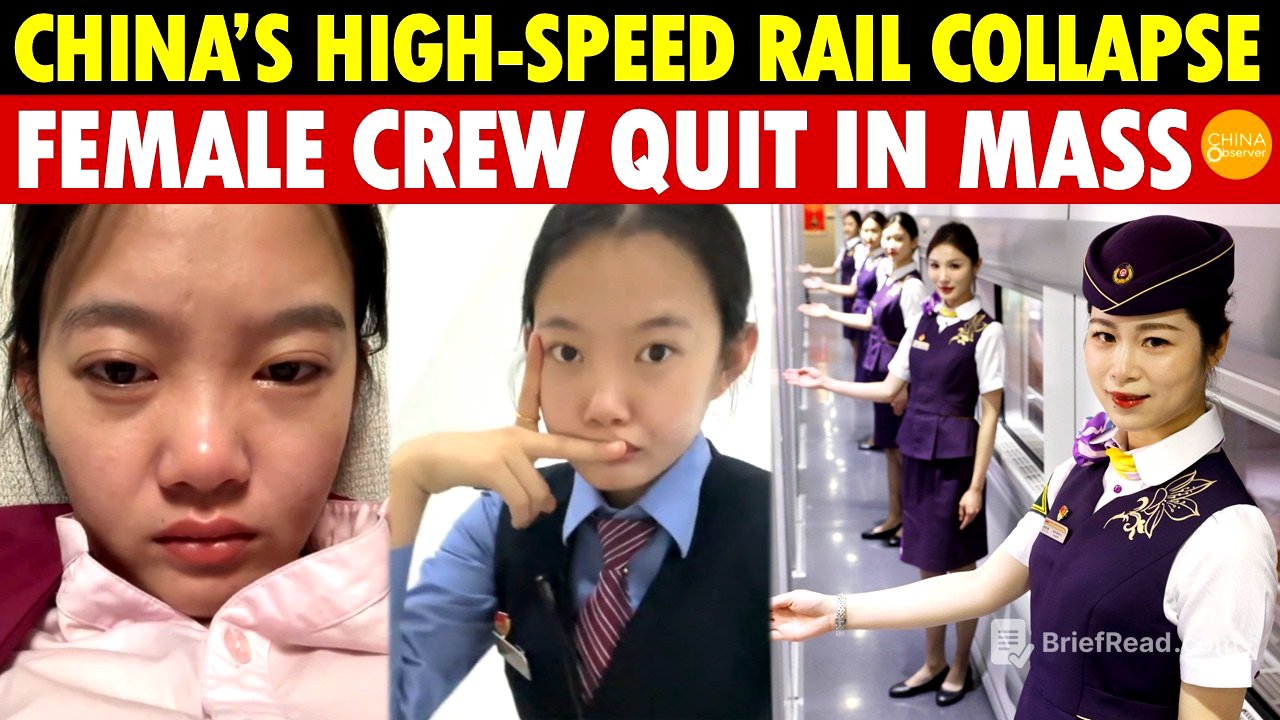
The video discusses the challenges faced by high-speed rail attendants in China, highlighting the high turnover rate in the profession and the financial and working conditions that contribute to this trend. Despite the large coverage of China’s high-speed rail network, which spans over 31,000 miles, the industry is plagued by significant debt and layoffs. Key points include:
- High turnover rates of 35-50% among high-speed rail attendants due to low pay and demanding working conditions.
- Recruitment focuses mainly on young women, but career advancement is limited.
- China State Railway Group faces massive debts, leading to ticket price increases, making high-speed rail less accessible for average citizens.
High Turnover Rates Among High-Speed Rail Attendants [0:00]
China's high-speed rail network is noted as the largest in the world, covering over 31,000 miles. However, the turnover rate among high-speed rail attendants is alarmingly high, ranging from 35-45% on average, with some routes experiencing even greater numbers exceeding 50%. Reports from former employees reveal their experiences and reasons for resigning, suggesting a significant sense of dissatisfaction in what is perceived to be a stable job. Many express a wish to leave due to the toll the job takes on their health and personal lives.
Exhausting Working Conditions and Low Pay [1:11]
Despite the perception of high-speed rail attendant roles as prestigious, many of these workers face tiring and unscrupulous demands. The compensation offered is often 30-50% lower than that of full-time railway employees. Attendants report long hours standing and walking, leading to various health problems including insomnia and chronic pain. The adjustments in work schedules and the physical demands contribute to a challenging work environment, excessively straining the attendants.
Mental Pressure and Lack of Opportunities [2:31]
The mental strain of dealing with difficult customers adds another layer of pressure. Attendants are often punished for complaints, contributing to their decision to resign. The job's demanding nature, combined with limited opportunities for career advancement and the pressure of maintaining family responsibilities, particularly impacts female workers who are predominantly represented in this role.
Financial Challenges and Systemic Issues [4:31]
The China State Railway Group suffers from immense financial burdens, with debts reaching approximately $870 billion and an ongoing need to cut costs. Despite claims of profitability in certain lines, the overall financial viability remains shaky. Analysts point to these economic pressures as a significant reason behind the high turnover rates, stressing the lack of adequate compensation for employees.
Rising Ticket Prices Impacting Accessibility [8:14]
In an attempt to address financial issues, ticket prices for high-speed rail services have been increasing. This has caused a noticeable decline in affordability for many citizens who are also experiencing stagnant wages. The pricing strategies now make high-speed rail more expensive than domestic flights for some routes. The rising costs of tickets have led to a resurgence of long-distance buses, suggesting people are shifting away from high-speed rail due to increased fares.
Infrastructure Waste and Abandoned Stations [11:23]
The video highlights the problem of unused high-speed rail stations, sometimes referred to as "ghost stations," where substantial financial resources have been invested without yielding passenger numbers. Many of these stations are located in areas with very low demand, leading to the closure of unsustainable projects. Critics have pointed out the inefficiency and lack of foresight involved in such developments.
Perception Versus Reality: Technology and Quality Issues [16:42]
Musk's praise of China's high-speed rail contrasts with the criticisms voiced by citizens regarding the actual utility and affordability of the rail services. Issues surrounding technology transfers, quality control, and governmental subsidies affecting production standards are emphasised, with concerns that many components evolve from foreign technology without adequate quality measures being upheld in domestic manufacturing.
Conclusion: Need for Re-evaluation [19:51]
The expansion and increasing investment in China's high-speed rail system raise questions about sustainability and whether the efforts are serving the needs of the population. Misallocated resources to non-viable projects and the subsequent increase in ticket prices has led to a disconnect between the infrastructure development narrative and the realities faced by everyday citizens. Solutions and improvements are needed to align the railway system with public expectations and needs effectively.






![8 Habits From Thomas Shelby That Make People Respect You [ in Hindi ]](https://wm-img.halpindev.com/p-briefread_c-10_b-10/urlb/aHR0cDovL2ltZy55b3V0dWJlLmNvbS92aS9sVHlQVGdZT3Jjay9ocWRlZmF1bHQuanBn.jpg)