TLDR;
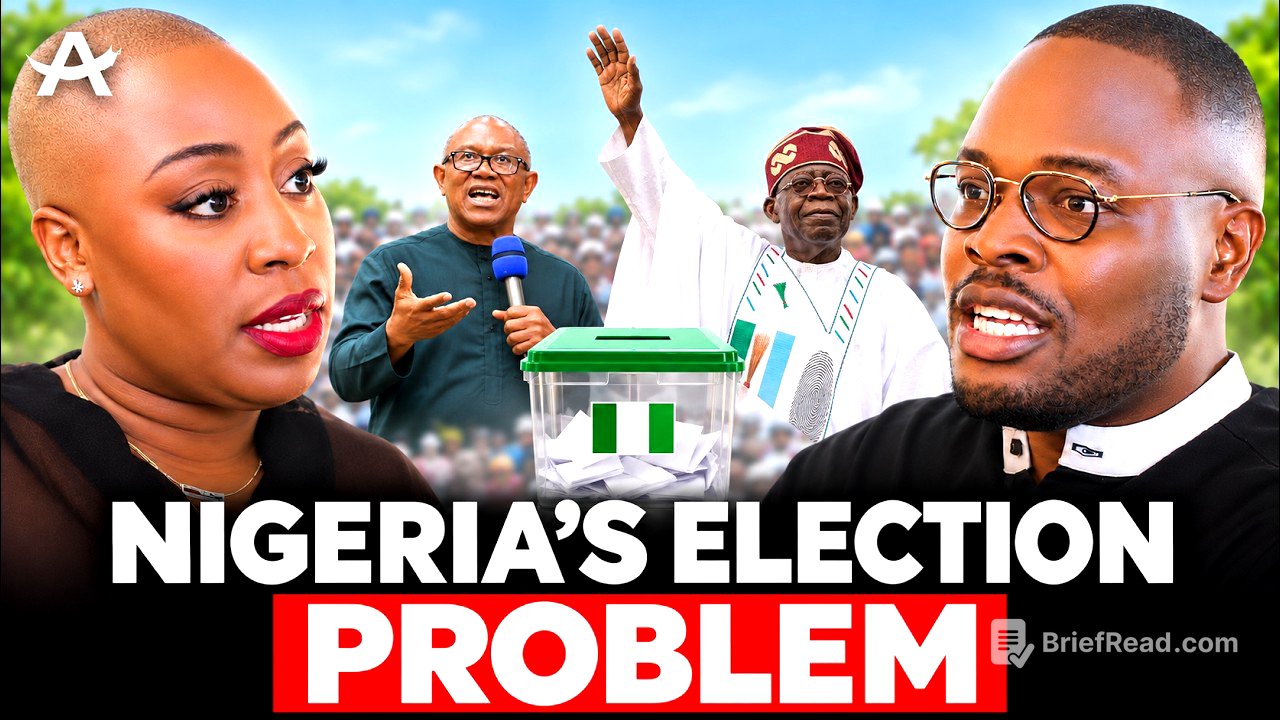
The video discusses the political campaign of Peter Obi, highlighting his unique strategy compared to traditional methods. It focuses on his reliance on personal presence and interviews rather than conventional advertising, revealing insights into the dynamics of political campaigning in Nigeria. Key points encompass his deliberate choice of an unpolished image, his vulnerabilities, the strategies of opposition candidates, and the political landscape shaped by the ruling party.
- Peter Obi relies on personal engagement rather than billboards for his campaign.
- Opposition candidates feel outmatched against the ruling party's advertising budget.
Peter Obi Is the Billboard [0:00]
The discussion opens by pointing out the lack of traditional advertisement for Peter Obi's campaign, suggesting that he embodies the campaign message himself. Unlike traditional candidates who invest significantly in outdoor campaigns, Obi's strategy utilises free airtime and personal engagement through interviews and public appearances. This approach is likened to that of Donald Trump, who garnered substantial media attention through his presence across various platforms.
Join the Afropolitan Family [0:34]
There is a brief call to action encouraging viewers to subscribe to the Afropolitan podcast, highlighting the importance of family and community in the context of their discussions.
Chude Breaks Down Peter Obi’s Campaign [0:50]
Chude provides a critical analysis of Peter Obi's campaign strategy, noting the absence of "gloss" which reflects a polished public image. Instead, Obi's authenticity resonates better with the public, who are fatigued by over-polished political candidates. Chude asserts that this strategic lack of gloss is a deliberate choice by Obi and suits the current socio-political climate, though he suggests that Obi could benefit from more interview discipline.
Why Obi’s Unpolished Image Is Deliberate [1:34]
The video elaborates on Obi’s unrefined public image, explaining it as a strategic advantage against the political backdrop marked by polished candidates. Chude emphasizes that Obi has constructed his brand on authenticity rather than superficial appeal, understanding that voters are seeking genuine representation after years of traditional political discourse.
His Biggest Weapon—and His Vulnerability [3:07]
Chude points out that Peter Obi's greatest asset is his ability to connect with people through interviews and visible presence. However, this strength also exposes him to the risk of making gaffes during unscripted moments, which could be exploited by opponents. Thus, while Obi’s strategy engages the electorate effectively, it also makes him susceptible to criticism for careless speech.
How Obi Gets Attention Without Billboards [4:28]
Obi’s ability to generate attention is discussed, focusing on his skillful use of digital platforms to engage potential voters directly, moving away from traditional advertising methods. His strategy reflects a shift in political campaigning towards personal engagement in a digitally connected age, positioning him distinctively against his opponents.
Peter Obi vs Tinubu: Two Different Approaches [5:26]
The contrast between Peter Obi and Bola Tinubu is highlighted, focusing on their differing political styles. Tinubu represents the traditional establishment candidate with arranged and polished appearances, while Obi's approach is spontaneous and authentic. This divergence signifies broader themes in the political contest between convention and change within Nigeria.
The Interview Discipline Obi Needs [6:08]
Chude advises that Obi must improve his interview discipline to prevent potential pitfalls during interactions with the media. He notes that while Obi’s style of openness is beneficial, maintaining a level of control over messaging is crucial to mitigate risks associated with public-speaking errors.
Why Opposition Candidates Aren’t Buying More Adverts [6:52]
Chude discusses why opposition candidates are hesitant to invest in advertising against the ruling party, suggesting that many perceive it to be a futile effort given the incumbent’s overwhelming financial advantage. The candidates believe that spending on media does not directly translate to votes, prompting a shift in their strategy towards more grassroots engagement and word-of-mouth promotion.
Why the Ruling Party Keeps Advertising [8:48]
The ruling party’s consistent advertising efforts are examined, highlighting their need to legitimise their incumbency and maintain voter engagement. By projecting an image of active campaigning, they aim to bolster public confidence and reinforce their political narrative ahead of the elections.
Convo by Afropolitan [10:03]
This segment introduces "Convo by Afropolitan," a platform aimed at connecting individuals with experts for mentorship and guidance, emphasising the importance of direct interaction in personal and professional development.
The Room: Afropolitan’s Private Community [10:29]
The concept of "The Room" as an exclusive community for ambitious individuals is presented. Members can access valuable resources, share experiences, and engage in industry-specific discussions enhancing their entrepreneurial journeys.
Why the Opposition Seems Quiet [11:55]
The seeming silence from opposition candidates is attributed to strategic decision-making rather than inactivity. It is explained that candidates often conserve their resources and intensify their efforts later in the campaign cycle to ensure maximum impact when it counts most.
Who Really Decides Campaign Strategy? [13:08]
Chude reveals insights into the campaign strategy decision-making process, asserting that crucial decisions are often made by a small group of insiders, while the broader campaign team may not fully understand the overarching strategy. This concentration of power can create a disconnect between the campaign’s public-facing activities and its internal strategic planning.
Why Lagos Doesn’t Tell the Whole Story [14:04]
Chude reflects on how the dynamics of the Lagos political landscape may not be reflective of other regions in Nigeria. He highlights that while Lagos is quieter, other states are active, emphasising the need for candidates to tailor their strategies according to local political climates.
Dangote’s Media Strategy and Legacy [14:42]
The conversation shifts to Aliko Dangote’s recent media engagements, which are described as more strategic and aimed at enhancing his public persona. Chude discusses how Dangote's visibility and involvement in discussions signify an attempt to cement his legacy as not just a business mogul but a cultural figure.
Chude on the Pressure Behind Dangote’s Refinery [17:17]
Chude concludes by touching on the pressures Dangote faced during the establishment of his refinery, indicating a transformative period in his career. This discussion reinforces the broader narrative about resilience, strategy, and the evolving role of figures like Dangote in contemporary society.