TLDR;
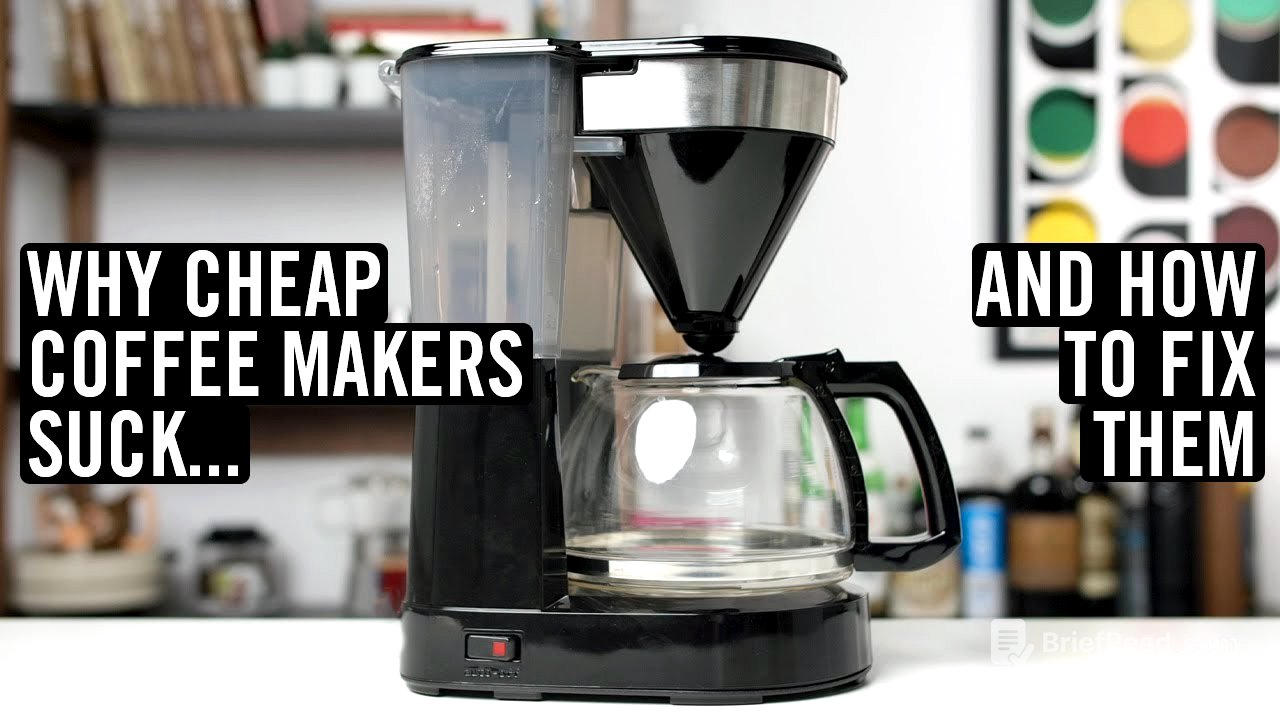
This video explores how to improve the coffee quality from very cheap filter coffee makers. James Hoffmann examines the mechanics of these brewers, identifies their flaws, and experiments with various techniques to enhance the brewing process. The key improvements involve using hot water, implementing a bloom phase, and addressing the uneven water distribution.
- Using hot water in the brew chamber significantly improves cup quality.
- Utilizing the steep and release function enhances evenness and extraction.
- Implementing a bloom phase benefits extraction.
Introduction to Cheap Filter Coffee Makers [0:19]
James Hoffmann introduces two inexpensive filter coffee makers, one costing £30 and the other £39, highlighting their affordability compared to manual brewing setups like the Hario Drip Decanter. The goal is to understand why these machines often produce subpar coffee and to explore methods to overcome their limitations. The focus is on improving coffee quality with accessible tools, rather than advocating for them over higher-quality equipment.
How Cheap Coffee Makers Work [1:32]
The presenter explains the basic mechanics of cheap filter coffee makers. Water is poured into a tank, flows through a one-way valve to a heating element, which heats the hot plate beneath the glass carafe. As water heats, some boils, and the resulting steam pushes the water up a tube and out of an exit hole onto the coffee grounds. A thermostat regulates the temperature to prevent overheating. The design includes a spring and stopper mechanism to prevent dripping when the carafe is removed, acting as a steep and release function.
Initial Brew and Problem Identification [2:32]
Hoffmann brews coffee using a 30g to 500ml ratio, noting the illogical cup size markings on the water tank. He observes that the initial water dispensed is not hot enough, with the temperature increasing throughout the brewing process. The resulting coffee is drinkable but flawed, exhibiting an under-extracted taste due to the low initial brewing temperature. The machine lacks a bloom function, and the water stream creates a crater in the coffee bed, indicating uneven extraction.
Experimenting with Brew Temperature [5:19]
To address the temperature issue, Hoffmann fills the water tank with hot water. This results in a brew that maintains mid to low 90s Celsius at the top of the slurry, improving extraction. He then tries a more experimental approach, using 450 grams of hot water and 50 grams of ice, drip-feeding the ice towards the end of the brew to lower the temperature. The temperature fluctuates, creating a U-shaped curve, with the final temperature dropping before rising again.
Implementing a Bloom Phase [7:43]
Since the coffee maker lacks a bloom function, Hoffmann uses a smart plug controlled via voice commands to create a bloom phase. The plug turns the machine on for 35 seconds to start water delivery, then off for 20 seconds for blooming, and back on to complete the brew. He also utilizes the steep and release function by performing the bloom phase without the carafe in place, allowing the coffee to steep before brewing.
Addressing Water Distribution [12:14]
Hoffmann explores ways to improve water distribution, noting the simple spout design leads to uneven saturation of the coffee bed. He considers using a Melodrip or a paper filter on top of the coffee grounds, inspired by cold brew techniques. He experiments with placing a metal disc on top of the coffee to buffer it from the direct stream of water. However, this method results in a drop in extraction and evenness.
Final Brew and Comparison [14:29]
Hoffmann brews three cups of coffee: one using the unmodified cheap coffee maker, one using the modified technique with hot water, bloom, and steep and release, and one using a V60 pour-over method. He then tastes them blind to compare the results. The unmodified brew tastes empty, while the modified brew shows a significant increase in sweetness and complexity, though it is still not as good as the V60. The V60 has more clarity and evenness.
Key Learnings and Recommendations [17:09]
Hoffmann summarizes the key learnings from his experiments. He recommends starting with hot water in the brew chamber for the most significant improvement. Utilizing the steep and release function is also beneficial for evenness and extraction. Implementing a bloom phase, either manually or with a smart plug, further enhances the brew. Finally, he suggests that adding ice at the end can be interesting, especially for darker roasts, to moderate the brew temperature.



![How to Use Cursor PRO for Free with Claude 4.0 [August 2025]](https://wm-img.halpindev.com/p-briefread_c-10_b-10/urlb/aHR0cDovL2ltZy55b3V0dWJlLmNvbS92aS9WXzJnaFA2aVd1VS9ocWRlZmF1bHQuanBn.jpg)