TLDR;
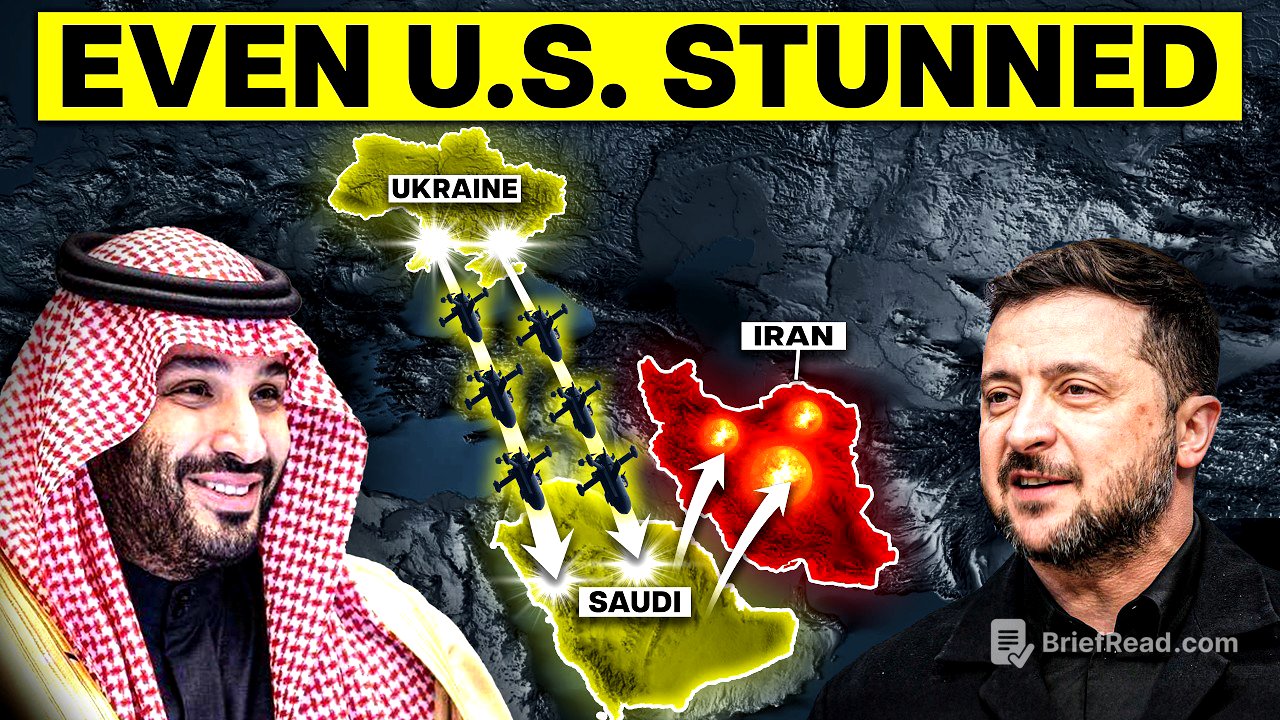
This video discusses how Ukraine has countered the threat of Iranian Shahed drones by developing a low-cost interceptor drone called "the bullet." This has not only defended Ukraine but is also being used to protect critical infrastructure in the Gulf, shifting the economics of drone warfare.
- Iran's strategy of using cheap drone swarms to overwhelm defenses has been countered by Ukraine's development of an even cheaper interceptor drone.
- The "bullet" drone is cost-effective and specifically designed to hunt down and destroy Shahed drones.
- Ukraine is now exporting its experience and technology, helping countries in the Gulf defend against drone attacks and shifting the balance of power in drone warfare.
The Problem Iran Created [0:47]
Iran has been using Shahed drones, which are simple and inexpensive, to create chaos in regions like Ukraine and the Gulf. These drones, costing between $20,000 and $50,000, are deployed in large numbers to overwhelm defenses. In Ukraine, these drones are used almost nightly, forcing defenders to stay alert and expend expensive missiles to intercept them. This strategy extends to the Gulf, where oil facilities, shipping lanes, and choke points like the Strait of Hormuz are targeted, causing significant economic damage. The core of Iran's strategy is not accuracy but overwhelming the enemy with numbers, making defense costly and pressuring the global economy.
The Bullet: Ukraine's Solution [3:38]
Ukraine has developed a low-cost interceptor drone called "the bullet" to counter the threat of Shahed drones. This drone, developed by General Cheshnia, is designed to hunt down and destroy Shahed drones in mid-air using cameras for guidance. It is simple, fast, and can be launched quickly, even at night or in bad weather, without the need for complex systems. The design emphasizes low cost, rapid production, and scalability, utilizing 3D-printed parts and adaptable production lines. The bullet is built to match the flight profile of Shahed drones, with a speed of around 310 km/h, and costs approximately $2,100 per unit.
Shifting the Economics of War [5:42]
Ukraine has flipped the economics of drone warfare by using the "bullet" drone, which costs less than the Shahed drones it targets. This shifts the advantage to the defender, making it financially viable to counter drone attacks. Ukraine has become a testing ground for drone warfare, with real-time adjustments and lessons learned under constant pressure. Interceptor drones like the bullet are responsible for a significant percentage of Shahed kills, leading to continuous refinement of the system, including sharper cameras, more stable guidance, and stronger links between radar and operators. This has made the system more versatile, capable of operating at night, defending cities, and dealing with multiple drones simultaneously.
Ukraine's Experience Exported to the Gulf [7:26]
By March 2026, Iranian drone attacks had spread to the Gulf, targeting critical infrastructure and causing economic disruption. In response, Ukraine has sent over 200 specialists to countries like the UAE, Saudi Arabia, Qatar, and Kuwait to train local forces and assist with live interceptions using low-cost drones. Early results show successful interceptions and the protection of key sites. Production of these interceptor drones is scaling up, aiming for tens of thousands of units. Ukraine is now exporting its experience and providing valuable support to countries facing similar drone threats.
A New Era of Defense [9:36]
Ukraine has transitioned from being a country asking for help to one that provides it, exporting its combat-tested experience in drone defense. This has increased demand for Ukrainian expertise as countries recognize the limitations of traditional air defense systems against drone swarms. The success of the "bullet" drone is shaping how countries think about defense and prepare for future conflicts. Iran's strategy of using cheap drone swarms has been undermined, losing its cost and surprise advantages. While Iran can adapt, any upgrades will likely increase costs and complexity. Ukraine's solution is protecting global energy routes and shifting the balance of power in drone warfare, proving that smarter economics can be more decisive than larger budgets.