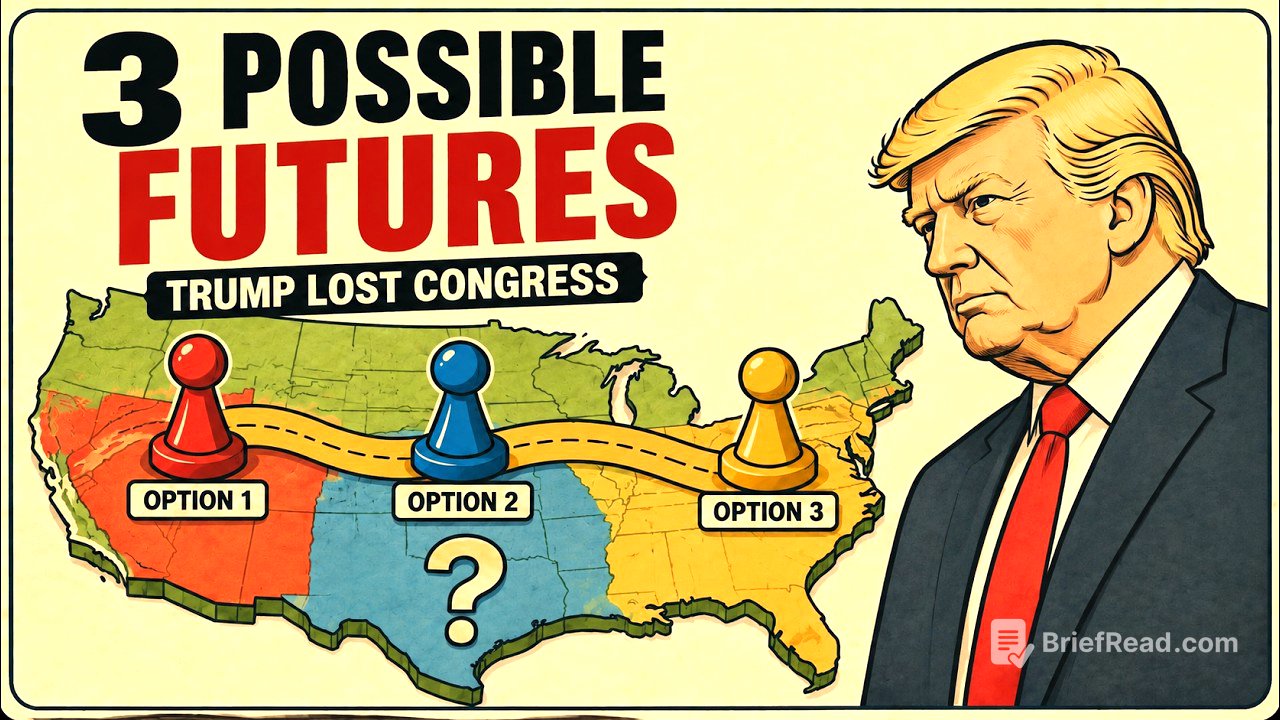
TLDR;
The video discusses the potential paths a president may take after losing control of Congress, using historical examples to illustrate each route. With a focus on the current political landscape following the 2026 midterms, the video outlines three main strategies presidents have historically pursued: the veto war, congressional hearings leading to impeachment, and disputes over war funding.
- Presidents lose essential power with Congress, affecting lawmaking, oversight, and war decisions.
- Trump's previous actions serve as a contemporary example of a president navigating these challenges.
The Advice to Resign [0:00]
In November 1946, after losing control of Congress, Senator Truman received advice to resign, urging him to hand the presidency to the opposing party. Truman's response was simply "No comment," and he ultimately did not resign—winning reelection two years later. Fast forward eighty years to 2026, when Trump's party similarly lost control of both chambers of Congress, leading to a question about the next moves he might make based on historical precedent.
Three Keys Congress Holds [1:12]
The significance of losing Congress relies on three crucial powers it holds: the ability to pass laws and control government spending, oversight through hearings and potential impeachment, and the authority to declare and fund war. Congress’s power to legislate means that no bill can become law without its approval, requiring the president’s cooperation. Historically, the president's party tends to lose seats in midterm elections, and the video's context explains why this impacts presidential power.
Road One: The Veto War [2:29]
The first path involves the veto war, where the president attempts to block legislation that Congress supports. Truman's experience in 1947 highlights this route—he vetoed a significant labor law, but both congressional chambers quickly overrode his veto. Truman then took his fight to the electorate, dubbing Congress as the "do-nothing Congress." This strategy has been revisited by other presidents, including Bill Clinton and Barack Obama, who also faced significant confrontations with Congress over budgets and were forced to navigate government shutdowns, showcasing common outcomes of this approach.
Road Two: Hearings, Then Impeachment [4:40]
The second road consists of congressional hearings and potential impeachment processes. The video references Andrew Johnson and Bill Clinton as examples of how Congress investigated their actions. Impeachment involves the House charging a president, while the Senate conducts the trial, needing a two-thirds majority for conviction. No president has been removed from office through this process, which includes significant public scrutiny and the potential for political fallout, as seen with Reagan and Clinton during their respective challenges.
Road Three: Congress and the War [6:53]
This road centers around congressional opposition to a president's military actions. Historical examples include Abraham Lincoln's calls for accountability during the Mexican-American War and the conflicts during Woodrow Wilson's presidency. The most notable legislative act was in 1973 when Congress attempted to limit presidential war powers, highlighting Congress’s ability to challenge military commitments. Current tensions over U.S. military actions reflect a continued struggle in this area, with Congress occasionally asserting its influence over war funding.
He Has Walked All Three [9:09]
The focus shifts to Trump, who experienced all three roads of conflict within a short period. After Democrats gained control of the House in 2018, there were government shutdowns and calls for the end of military engagements. Additionally, Trump's impeachment marked his confrontation with Congress. These instances reflect the cyclical nature of presidential challenges after losing congressional support.
Which Road Comes Next [10:21]
Looking ahead, the video discusses the uncertain future for Trump as a new Congress takes over in 2027, with hints at potential shifts in leadership. The takeaway is that Trump may face continued veto challenges, congressional hearings, and debates on military funding. Importantly, the path a president takes after losing Congress is often pivotal, as shown by historical precedents. The video concludes by inviting viewers to consider which path might emerge next for Trump.