TLDR;
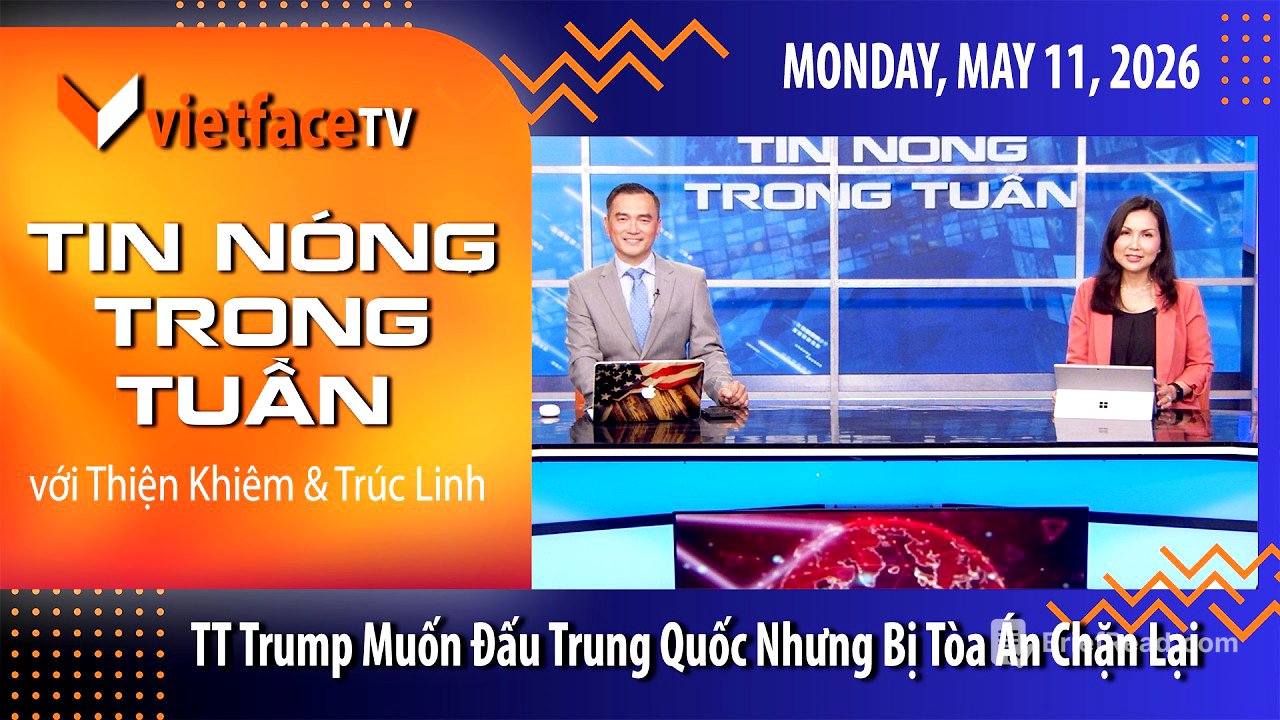
This YouTube video by officialVietFaceTV presents a news program covering significant events of the week, focusing on US politics and economics. The hosts discuss the Virginia Supreme Court's redistricting decision, its potential impact on the Democratic Party, and the broader implications for electoral fairness. They also examine the Trump administration's efforts to curb student loan debt and the potential consequences for universities and students. Additionally, they analyze the legal challenges to Trump's tariffs, the power struggle between the President and Congress over trade policy, and the complex economic relationship between the US and China.
- Virginia Supreme Court's redistricting decision favors Republicans and sparks debate over electoral fairness.
- Trump administration's student loan reforms aim to control rising tuition costs but may burden students.
- Legal challenges to Trump's tariffs highlight the power struggle between the President and Congress over trade policy.
Introduction [0:11]
The hosts, Truc Linh and Thinh Khiem, open the show by greeting the audience and discussing current events. They jokingly discuss Mother's Day gifts, highlighting the rising cost of gasoline and how filling up a gas tank could be a way to impress women. The conversation transitions to the main news topics, starting with a significant political issue in Virginia.
Virginia Supreme Court Redistricting Decision [2:41]
The Virginia Supreme Court's decision to uphold the 2021 electoral map is discussed, which is seen as a major victory for the Republican Party. Democratic figures like Ted Lill and Hakeem Jeffries have criticized the ruling, with Jeffries announcing a strong response, including a meeting to discuss efforts to protect voting rights. The Democratic Party plans a multi-faceted counter-attack, including redistricting efforts in blue states and lawsuits against Republican-drawn maps in red states, along with a media campaign blaming Trump for rising costs. The hosts discuss the potential impact of this decision on the upcoming elections and the balance of power in the House of Representatives.
Analysis of the Court's Decision [4:20]
The hosts analyze why the Virginia Supreme Court's decision is so impactful. The ruling reaffirms that redistricting must follow legislative and constitutional processes, not partisan goals. It is seen as a strategic setback for Democrats, exposing their reliance on structural advantages rather than persuading voters with policies. The strong political reactions from states like California highlight concerns about the politicization of the judiciary. The hosts debate whether the decision will significantly affect the Democratic Party's chances in the upcoming elections, considering the current narrow margin in the House of Representatives and factors like the economy and voter dissatisfaction.
Redistricting and Political Strategy [7:34]
The hosts discuss the broader implications of redistricting, noting that it can lead to politicians choosing voters rather than the other way around, undermining public trust in the political system. They debate whether the Democrats have a chance to win a majority in the House of Representatives in the upcoming election, with Truc Linh favoring the Democrats due to economic factors and voter dissatisfaction. They also discuss how both parties have used redistricting to their advantage, citing Republican successes in Florida. The conversation emphasizes that the core issue is the fairness of the rules in a democracy, where the same actions can be considered legal in one state but illegal in another.
US Curbs Student Loan Lending [12:11]
The program shifts to economic news, focusing on the US government's decision to tighten student loan lending to address rising tuition costs. The Trump administration is implementing measures to end unrestricted borrowing, particularly through the GRAD Plus program, which has contributed to a student debt crisis of nearly $1.7 trillion. The changes, effective July 1, 2026, include eliminating the Vaykrat program, setting specific borrowing limits, and capping the total amount students and parents can borrow. The goal is to force universities to lower tuition fees and prevent students from accumulating unsustainable debt.
Potential Effects of Loan Restrictions [14:32]
The hosts discuss the potential benefits of the new loan restrictions, such as forcing universities to be more realistic about tuition fees and preventing students from falling into debt traps. However, they also consider whether universities will actually lower tuition or find ways to circumvent the restrictions, such as creating new fees or shifting students to private loans. They note that universities operate as businesses and may resist reducing their revenue. The hosts explore various strategies universities might use to maintain their income, such as increasing fees, partnering with private lenders, offering "phantom" scholarships, and reducing the quality of services.
University Finances and Loopholes [17:29]
The hosts discuss the financial structure of universities, noting that tuition fees are only one source of income, with significant revenue also coming from government funding, research grants, investments, and hospitals. They suggest that universities may exploit legal loopholes to maintain their revenue streams, such as separating tuition into "fees" that are not subject to the same restrictions. They also discuss the potential for universities to partner with private lenders, offering scholarships in exchange for students taking out private loans. The hosts emphasize that the changes may primarily affect out-of-state and international students, who often pay higher tuition fees.
Legal Challenges to Trump's Tariffs [23:17]
The program transitions to a discussion of international trade, focusing on the US Court of International Trade's ruling that President Trump's 10% global import tariffs exceeded his constitutional authority. The court argued that the power to levy taxes belongs to Congress, and the President cannot use a state of economic emergency to impose broad tariffs. The Trump administration immediately appealed the decision, arguing that the tariffs are necessary to protect the US economy and that the President has the authority to act under trade law. The hosts discuss the potential financial risks to the US government if the ruling is upheld, including the need to refund approximately $175 billion in import taxes.
Power Struggle Over Trade Policy [25:36]
The hosts analyze the broader implications of the tariff dispute, framing it as a power struggle between the President and Congress over trade policy. They discuss the concept of "governmental lobbying," where special interest groups influence government decisions. The hosts suggest that President Trump's actions are aimed at breaking this cycle and reasserting presidential authority. They note that the dispute highlights a rift in the balance of power, with Congress traditionally controlling the purse strings but the President using national security concerns to justify tariffs. The hosts also discuss how the tariff issue has become politicized, with both parties using it for their own strategic advantage.
Economic Impact and Political Maneuvering [28:46]
The hosts discuss the impact of the tariff dispute on ordinary citizens, who are caught in the middle of the power struggle. They note that politicians often make promises during election campaigns but are ultimately influenced by the large corporations that fund their campaigns. The hosts question whether the $175 billion in taxes will ever be returned to the people, given that the money has already been incorporated into the government's budget. They also discuss the limited scope of the court ruling, which only affects certain businesses in Washington state. The hosts suggest that the government may use the tariff refunds as a political tool, rewarding companies that align with its policies.
Trade Policies and "Made in USA" [33:18]
The hosts discuss President Trump's executive order requiring federal agencies to purchase goods made in the USA, which they see as a form of protectionism. They note that while US-made products may be more expensive, supporting domestic industries is beneficial. The hosts debate whether President Trump's tariff policies ultimately benefit or harm the US economy, acknowledging that there are differing viewpoints. They discuss the potential for China to retaliate and the importance of maintaining a balance between protecting domestic industries and promoting free trade.
US-China Economic Relationship [42:17]
The hosts discuss the complex and interdependent relationship between the US and China, noting that the US relies on cheap goods from China to keep inflation stable, while China needs the US market to maintain its economic growth. They discuss the challenges of decoupling the two economies, which could cause significant shocks to both the US and global economies. The hosts also discuss China's history of intellectual property theft and unfair trade practices, arguing that the US needs to take a firm stance to protect its interests. They emphasize the importance of adhering to international trade laws and preventing China from exploiting its relationship with the US.
Balancing Trade and Economic Independence [49:20]
The hosts discuss the challenges of bringing manufacturing back to the US, which would likely increase the cost of goods and make it harder for US companies to compete with imports. They emphasize the importance of striking a balance between protecting domestic industries and providing affordable goods for consumers. The hosts conclude by encouraging viewers to share their opinions on the issues discussed and to participate in the ongoing debate about the future of US trade policy. They also remind viewers to subscribe to the channel and to leave comments about their predictions for the upcoming elections.
Conclusion [51:10]
The hosts wrap up the show, thanking the audience for watching and encouraging them to support the program. They remind viewers of the broadcast schedule and the various platforms where the show can be viewed. They reiterate the invitation for viewers to share their thoughts and opinions on the topics discussed, particularly the upcoming elections and the potential for the Democratic Party to gain a majority in the House of Representatives.