TLDR;
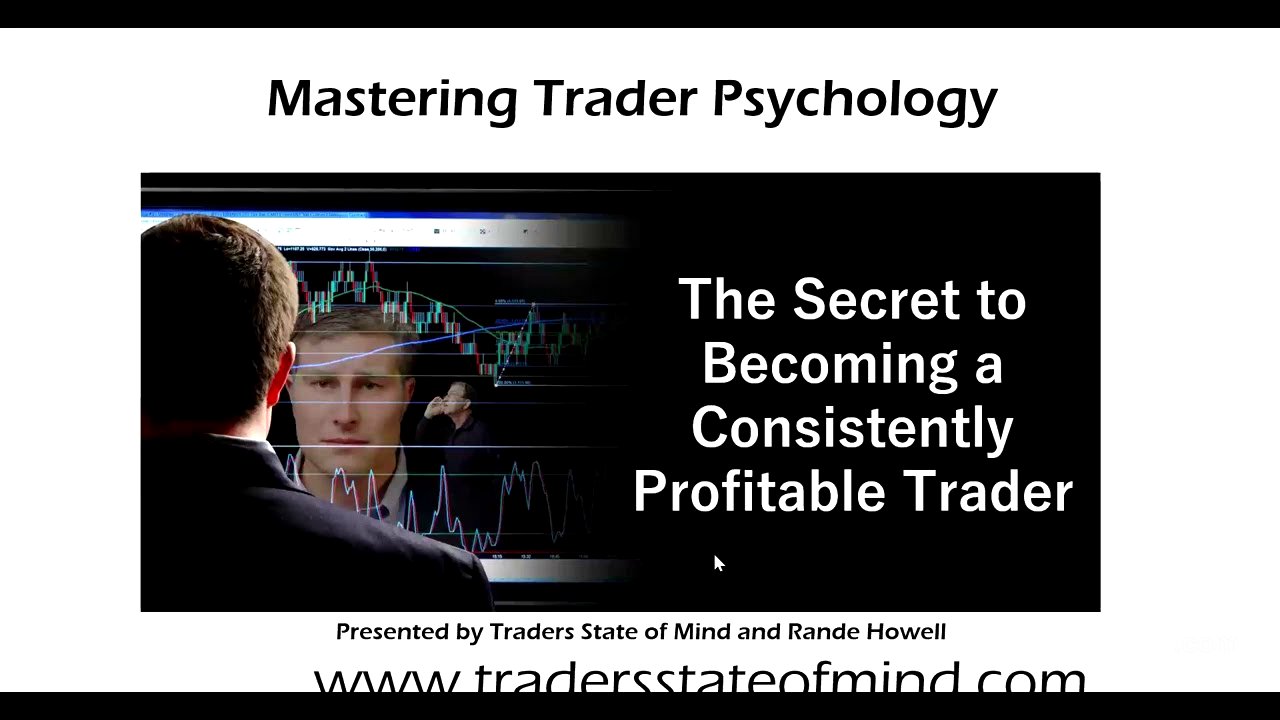
This video discusses the secret to becoming a consistently profitable trader, which lies in understanding and managing one's own emotions and beliefs. It challenges the conventional wisdom of positive thinking and hard work, arguing that these alone are insufficient for success in trading. The video emphasizes the importance of recognizing the influence of the "caveman brain," or emotional brain, which is wired for survival and threat avoidance, and how it often hijacks rational decision-making in trading scenarios.
- The key to consistent profitability in trading is understanding and managing one's emotions and beliefs.
- The "caveman brain," or emotional brain, often hijacks rational decision-making in trading scenarios.
- Winning and losing in trading should be viewed as probabilities, not as reflections of personal worth.
- Developing mindfulness and emotional regulation skills is essential for building a mind that can engage uncertainty with discipline and impartiality.
Introduction [0:00]
The presenter welcomes the audience to the webinar, which aims to reveal the secret to becoming a consistently profitable trader. He emphasizes that the secret is not about finding another belief or strategy but about recognizing a truth that is often hidden in plain sight. The presenter outlines the format of the webinar, which includes a lecture followed by a Q&A session. He encourages participants to submit questions throughout the presentation to address them at the end.
The Realization That You Are The Problem [1:09]
Many traders invest heavily in knowledge but struggle to apply it when real money is at stake. The core issue is often a failure to acknowledge that they themselves are the primary obstacle. While hard work is important, emotional work and rebuilding the mind for trading are frequently resisted. Many traders experience trauma from repeatedly pushing through challenges without addressing underlying emotional patterns, as emotions often overpower rational thinking.
The Difference Between Winning in Life and Trading [4:39]
The presenter contrasts the traditional view of success as "conquering" with the reality of trading, where control and the need to win can be detrimental. Many individuals from competitive backgrounds bring a winning-focused mindset to trading, which proves ineffective. The trading account serves as an unbiased indicator of one's beliefs projected onto the markets. Effective beliefs lead to profitability, while forcing one's will and determination, which may have worked elsewhere, do not guarantee success in trading.
The Caveman Brain and Trading [10:19]
The brain brought to trading is designed to avoid threat, a trait that can hinder success. The brain is wired by evolution to control outcomes, even through illusion or deception. The emotional brain, or "caveman brain," prioritizes avoiding loss, which it perceives as a threat to survival. This instinct is far more dominant when capital is at risk, leading to emotional hijacking and poor decision-making.
Probability vs. the Caveman Brain [12:00]
In trading, winning and losing should be viewed as landing on the right or wrong side of probability, respectively. However, the "caveman brain" equates winning with survival and struggles to accept losses. This evolutionary psychology, combined with learned behaviors from family and culture, creates a battle within the trader's mind. The brain's negativity bias further complicates matters, leading to excessive negative predictions and a desire for more confirmation before entering trades.
The Emotional Brain as the Locomotive [16:42]
Emotion is the primary driver of trading decisions, while rational thinking plays a secondary role. Beliefs about one's ability to manage uncertainty dictate trading behavior, as reflected in the trading account's performance. Scarcity thinking, driven by fear of missing out (FOMO), can lead to emotional hijacking and impulsive decisions. The presenter emphasizes that the brain brought to trading needs to be transformed to produce a mind capable of achieving success.
The Certainty-Based Brain vs. the Probability-Based Mind [20:32]
The presenter asserts that the brain we bring to trading is often not suited for success. This is because our brains are wired for certainty, a trait inherited from our ancestors. However, trading requires a probability-based mind. Magical thinking, visualization, and affirmations are insufficient to address the core beliefs about managing uncertainty. Instead, traders must cultivate a new mindset.
Where to Start: Understanding Emotions [23:43]
The first step is to understand one's notions about winning and losing, recognizing that they are about probability, not personal worth. Emotions are not what we think they are; they are biological action potentials that coordinate action between the trader and the markets. Emotions trigger automatically in response to market events and are geared toward short-term survival. The presenter references the movie "Inside Out" to illustrate primary emotional programs such as sadness, anxiety, joy, disdain, and anger.
The Five P's Process: Understanding and Managing Emotions [30:26]
The presenter introduces a five-step process for managing emotions, beginning with understanding one's emotional nature. He uses the example of resisting the temptation to eat an unhealthy snack to illustrate the power of primitive survival instincts. Bellows breathing, or diaphragmatic breathing, is presented as a technique to calm the emotional brain and increase oxygen intake. Mindfulness is essential for catching oneself before urgency takes over and impairs critical thinking.
Mindfulness and the Trading Committee [34:46]
Mindfulness allows traders to recognize that their thoughts and beliefs are not inherently "them" but rather beliefs they hold. The presenter likens the mind to a trading committee composed of rival emotional programs that compete for control. He emphasizes that thinking is emotional state-dependent and that the key is to learn how to combine certain emotions to create a mindset conducive to probability-based thinking.
Reorganizing the Governing Committee [38:23]
The presenter discusses the possibility of reorganizing the "governing committee" of the mind, taking power away from destructive elements such as fear and cultivating courage, discipline, and self-compassion. He shares an anecdote about a trader who consistently lost profits when his account approached a million dollars due to a limiting belief instilled in his childhood. The presenter introduces the concept of the "inner critic" and the importance of recognizing and managing its influence.
Healing Self-Limiting Beliefs [42:40]
The presenter addresses "alphas" who have achieved success in business but struggle in trading due to their need to prove themselves. He emphasizes that winning and losing in trading should not be tied to one's identity or worth. The presenter advocates for discovering and accessing heroic elements within the self to engage uncertainty from a constructed self that works with probability, rather than from a historical organization of the self.
Summoning Hidden Strengths [45:20]
The presenter uses the archetypes from "The Lord of the Rings" to illustrate the hidden strengths within each individual. He emphasizes the importance of summoning the discipline of a ruler, the courage of a warrior, the self-soothing of a caregiver, and the impartiality of a sage. By learning emotional state management, traders can change the mind that engages uncertainty.
The Psychological Edge [46:54]
The presenter concludes by emphasizing that the challenge of engaging uncertainty is constant, but traders can control the mind they bring to the challenge. He highlights the importance of viewing failure as an opportunity for learning. The presenter stresses that while traders cannot control outcomes, they can control their mindset. This psychological edge is the secret to success in trading.
Resources and Q&A [50:30]
The presenter provides resources for further learning, including a free ebook, a YouTube channel, and articles on the website traderstateofmind.com. He invites viewers to join a group course starting on August 31st, which focuses on reconstructing the mind for engaging uncertainty. Participants who sign up before August 24th will receive an emotional regulation workshop. The presenter also mentions an individual course for those who prefer a mentor. The presenter answers questions from the audience, including how to manage being taken over by emotions and how to reframe the concept of losing. He also discusses the use of heart rate as an indicator of emotional arousal.