TLDR;
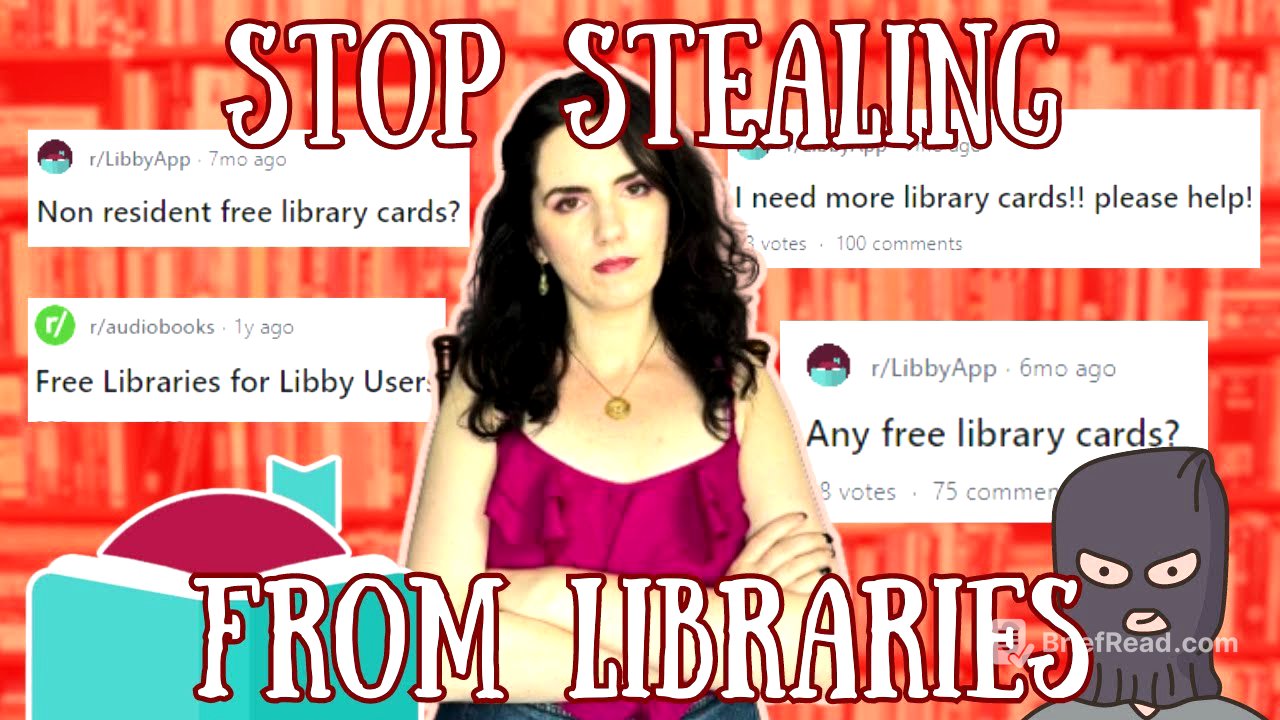
This video explores the ethical concerns surrounding the use of library cards, particularly focusing on non-resident patrons exploiting free digital library accounts. It highlights the consequences of overconsumption in the reading community, the funding issues faced by libraries, and proposes ethical alternatives to accessing library resources.
- Usage of non-resident library cards has increased, leading to inflated wait times for local patrons.
- E-book licensing creates financial strain on libraries, funded by taxpayer dollars, which non-residents benefit from without contributing.
- Ethical alternatives for accessing library resources include paid non-resident cards and state-wide access programs.
The Problem [1:31]
The video discusses issues arising from the widespread use of free digital library cards by non-residents. With the pandemic prompting many libraries to offer free memberships to individuals outside their service areas, a surge of non-resident users flooded library systems, leading to longer wait times for local borrowers. Many users exploited these free cards under misleading claims about their residency status, prompting libraries to impose restrictions and limitations on access.
Money Matters [3:55]
It is explained that libraries do not purchase e-books directly from publishers but buy digital distribution rights through vendors like OverDrive. This system incurs significant costs for libraries since each e-book license can be marked up substantially and needs to be renewed regularly, leading to a heavy financial burden on libraries that are funded by taxpayer dollars. This highlights the impact of non-resident borrowers who do not contribute to the funding of their accessed resources.
Overconsumption [11:26]
The video connects the misuse of free library cards to the broader theme of overconsumption in the reading community. While it’s true that books can be recycled and are not as wasteful as other industries, the mindset of seeking more resources than needed is prevalent. Readers commonly turn to libraries that offer free cards instead of waiting for their local establishments to provide what they need. This reflects a culture of immediate satisfaction rather than patience and ethical use of resources.
Ethical Ways [20:38]
The video suggests ethical alternatives for accessing library resources, such as obtaining paid non-resident cards that allow for access to richer collections. Many libraries offer these cards at a reasonable fee, which contributes to their continued operation. It also mentions the availability of library systems within one’s state that may offer free access to residents, highlighting the importance of contributing to any library system one uses.
The Solution [23:47]
To support libraries effectively, the video calls for advocacy and financial support. Viewers are encouraged to volunteer, vote for officials who prioritize library funding, and participate in fundraising efforts. It emphasizes that supporting local libraries can lead to better resources for everyone and stresses the importance of maintaining the ethical use of library systems as a communal resource.