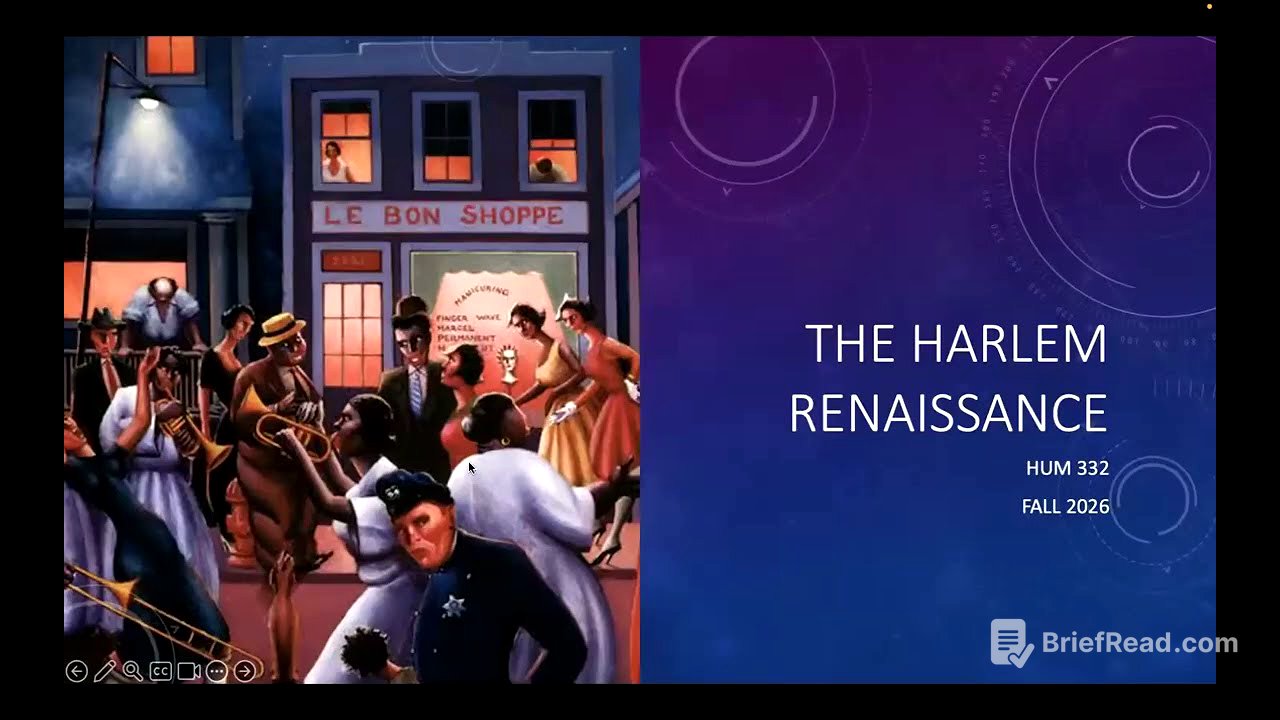
TLDR;
This video explores the Harlem Renaissance, a significant cultural movement for African Americans in the 1920s and 1930s, which marked a rebirth of black artistic expression following years of oppression. It covers the historical context of Jim Crow laws, the Great Migration, and the emergence of Harlem as a cultural hub. Key themes include the transformation of black identity, the importance of art as a form of propaganda, and significant artistic achievements, including visual arts, poetry, and music during this era.
- The Harlem Renaissance was characterized by a flourishing of black culture and artistic identity.
- Historical context includes the impact of Jim Crow laws and the Great Migration.
- Highlighted artists include Langston Hughes and Zora Neale Hurston.
Introduction to the Harlem Renaissance [0:00]
The instructor introduces the Harlem Renaissance, describing it as a powerful display of American creativity amid oppressive circumstances. The term "Renaissance" indicates a cultural rebirth akin to the European Renaissance, representing a renewal of African American artistic talent following the challenges of slavery.
Historical Context of the Harlem Renaissance [1:48]
The chapter outlines life in the Jim Crow South, characterized by segregation, economic disparity, and racial violence. African Americans faced severe limitations on job opportunities and were subjected to intimidation and lynchings. The Great Migration saw millions leave the rural South for cities like New York and Chicago in search of better opportunities, but this migration often led to further challenges, including overcrowding and racial violence, resulting in the establishment of the NAACP in 1909.
Why Harlem? [3:44]
The chapter discusses how Harlem became a focal point for African American culture. In the late 1800s, Harlem transitioned from a white middle-class neighborhood to a vibrant black community, thanks to African-American real estate developments. This transformation allowed black culture to flourish, fostering creativity in music, literature, and business.
The New Negro Manifesto [4:32]
Alan Locke's ideas are spotlighted, as he introduced the concept of the "New Negro" to signify a vibrant, self-aware black identity. This new generation of African Americans sought to break free from past oppressions and expressed a renewed determination to showcase their artistic talents.
The Role of Photography in Documenting the Renaissance [5:56]
James Van Der Zee is highlighted for his impactful photographic work that documented life during the Harlem Renaissance, capturing important events and dispelling racist stereotypes through images of everyday black life.
Criteria of Negro Art [6:42]
W.E.B. Du Bois’ view that all art carries a political message is discussed, emphasizing the role of African-American art as a tool for advocating rights and recognition. He argues that art must resonate with the struggles and identity of black Americans.
Visual Art of the Harlem Renaissance [7:40]
This chapter covers significant visual artworks from the Harlem Renaissance, beginning with Archibald Motley’s "Blues," representing the cultural vibrancy of black nightlife in Paris. Aaron Douglas's mural series depicts African-American history through a modern lens, while Palmer Hayden’s works showcase the daily life and struggles of African Americans in Harlem.
Harlem Renaissance Artists [11:33]
The contributions of female artist Augusta Savage are showcased. Her sculptures emphasize both the struggles and dignity of African Americans. The discussion highlights how her works addressed themes of vulnerability and resilience in the face of oppression.
Literary Contributions of the Harlem Renaissance [13:04]
The video shifts focus to literary giants like Langston Hughes and Zora Neale Hurston. Hughes critiques the idea that African-Americans must conform to white artistic standards, while his poem "The Negro Speaks of Rivers" connects ancient histories to modern black identity. Hurston’s essay expands on her personal experiences with race, emphasizing her refusal to see herself as a victim and celebrating her strength and individuality.
Music of the Jazz Age [20:40]
The emergence of jazz as an influential African-American art form is explored. The chapter discusses how jazz, rooted in African American traditions, became popular across racial lines despite segregation in the recording industry. It contrasts the commercialized "sweet jazz" aimed at white audiences with the authentic improvisational spirit of "hot jazz."
Clubs and Performance Spaces [22:34]
The Cotton Club and the Seavoy Ballroom represent contrasting establishments in Harlem. The Cotton Club, a whites-only establishment featuring black performers, illustrates the racial paradox of black entertainment and segregation, while the Seavoy Ballroom served as a fully integrated dance hall, showcasing a more equitable social environment.
Conclusion and Upcoming Assignments [24:46]
The instructor wraps up the discussion, encouraging students to engage with jazz and dance videos to understand how these art forms embody modernization and cultural exchange during the Harlem Renaissance. Students are reminded of an upcoming quiz and essay assignment related to the materials covered.