TLDR;
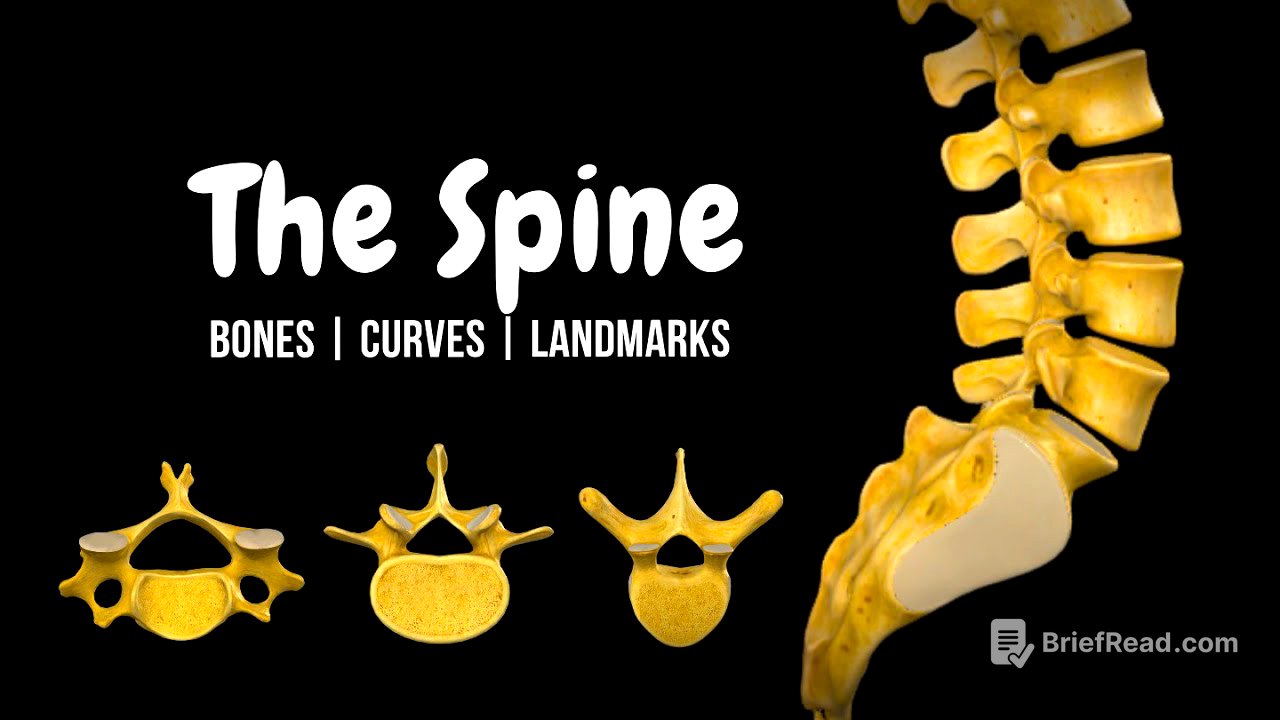
This video discusses the anatomy of the vertebral column, which consists of vertebrae categorized into regions due to their varying shapes and functions. The major points covered include how the spine is divided into specific vertebral regions, the significance of spinal curves, the basic structures of vertebrae, and detailed examinations of the cervical, thoracic, lumbar vertebrae, the sacrum, and the coccyx.
- The vertebral column is composed of 33 vertebrae divided into cervical, thoracic, lumbar, sacral, and coccygeal regions.
- Understanding spinal curves is crucial as they can lead to issues like scoliosis when abnormal.
- Each section of the vertebrae has distinct structural characteristics that facilitate their specific functions.
Introduction & Content [0:00]
The video introduces the vertebral column, outlining its composition of vertebrae and how they vary in shape and function based on their location in the spine. The presenter, Dr. Taim, mentions the focus areas for the video, including the division of the spine into regions, the reason for spinal curves, and a detailed look at specific vertebrae in the cervical, thoracic, lumbar, sacral, and coccyx areas.
Dividing the Spine [0:53]
The spine is divided into five sections: 7 cervical vertebrae, 12 thoracic vertebrae, 5 lumbar vertebrae, 5 fused sacral vertebrae, and an average of 4 coccygeal vertebrae. This division reflects the different functions the spine serves, from supporting the head to bearing the body’s weight and enabling movement.
Why Does the Spine have Curves? [2:08]
The spine has both primary and secondary curves. Primary curves, seen in fetuses, include thoracic and sacral kyphosis. Secondary curves develop as a child matures and are known as cervical and lumbar lordosis. Abnormal curvatures, such as excessive kyphosis or lordosis, can result from postural issues or other conditions, leading to discomfort or pain.
Basic Structures of Vertebra [3:57]
Despite the differences across vertebrae in various spine regions, they share basic structures, including a vertebral body, arch, and processes. Key components such as the vertebral foramen, intervertebral disks, and the surrounding structures are highlighted, explaining their roles in providing stability and flexibility to the spine.
Cervical Vertebrae [7:27]
The cervical spine consists of 7 vertebrae, with unique features such as the atlas (C1) and axis (C2). The atlas lacks a vertebral body and instead features anterior and posterior arches. The cervical vertebrae are designed for greater mobility and accommodate important structures like the vertebral artery.
Thoracic Vertebrae [11:17]
The thoracic region includes 12 vertebrae that connect to the rib cage, limiting their movement compared to other spinal regions. Typical thoracic vertebrae possess facets for rib attachment, distinguishing them from atypical vertebrae, which have slight morphological variations that affect their joint and muscle attachments.
Lumbar Vertebrae [12:57]
The lumbar vertebrae consist of 5 large bones designed to support significant body weight and stress. They showcase specific features like tall and kidney-shaped bodies, and flat spinous processes. They also contain costal processes, remnants of lumbar ribs, and are characterized by less developed transverse processes.
Immovable Joints (Synarthroses) [9:57]
Immovable joints, known as synarthroses, play an essential role in stabilizing the vertebral column. While not discussed in detail in this video, they contribute to the overall immobility and stability required in certain vertebral regions.
Sacrum [13:44]
The sacrum is formed by the fusion of 5 sacral vertebrae and connects to the coccyx via an intervertebral disk. Key features include the base and apex, sacral wings, and foramina facilitating nerve transmission. The posterior and anterior views provide insights into how the sacrum integrates into the pelvic region.
Coccyx [15:52]
The coccyx, or tailbone, is composed of 3-5 fused rudimentary vertebrae that serves as the end of the vertebral column. The structure includes coccygeal cornua, which are remnants of the articular processes, highlighting its evolutionary significance.
Outro [16:17]
The video concludes by emphasizing the vertebral column's importance in movement and stability, acknowledging that many back issues originate from the ligaments and membranes surrounding it. Viewers are invited to explore additional resources for a deeper understanding of spinal health.