TLDR;
This video serves as a comprehensive guide on using snaps and swivels in fishing. It explains the purposes, advantages, and disadvantages of both, detailing appropriate situations for their use and when to avoid them. Key points include recommendations for choosing quality hardware and minimizing unnecessary equipment on fishing rigs.
- Snaps and swivels serve important roles but can hinder lure action if misused.
- Key considerations include when to use them, how to choose the right size and type, and the importance of quality gear.
Swivels Overview [0:06]
Swivels are essential for preventing line twist during fishing. They help in line-to-line connections and act as a stop for components on certain rigs. When using swivels, they are particularly beneficial when trolling or when attaching spin lures, which could twist the line. Swivels should be used more frequently with monofilament lines due to their susceptibility to twisting, while braided lines handle twists better. Proper use of swivels can enhance fishing effectiveness and minimize line issues.
Snaps Overview [5:30]
Snaps enable quick connections between line and lures, saving time when changing lures throughout the day. They are beneficial for reducing line wear on lures with sharp edges and can enhance lure action by allowing free movement. Snaps should be avoided when using live bait or in slow-moving presentations, as they can disrupt the natural look and movement desired in these scenarios. Generally, snaps are more suitable for fast-moving lures and trolling.
Snap Swivels Explained [10:26]
Snap swivels combine the functions of snaps and swivels. They are useful when casting spinners or spoons rapidly, particularly when line twists are likely. However, snap swivels can be bulky, which may affect lure action negatively. Therefore, they are recommended for specific applications where quick changes are necessary without compromising the visual appeal of the bait.
Types of Snaps [14:24]
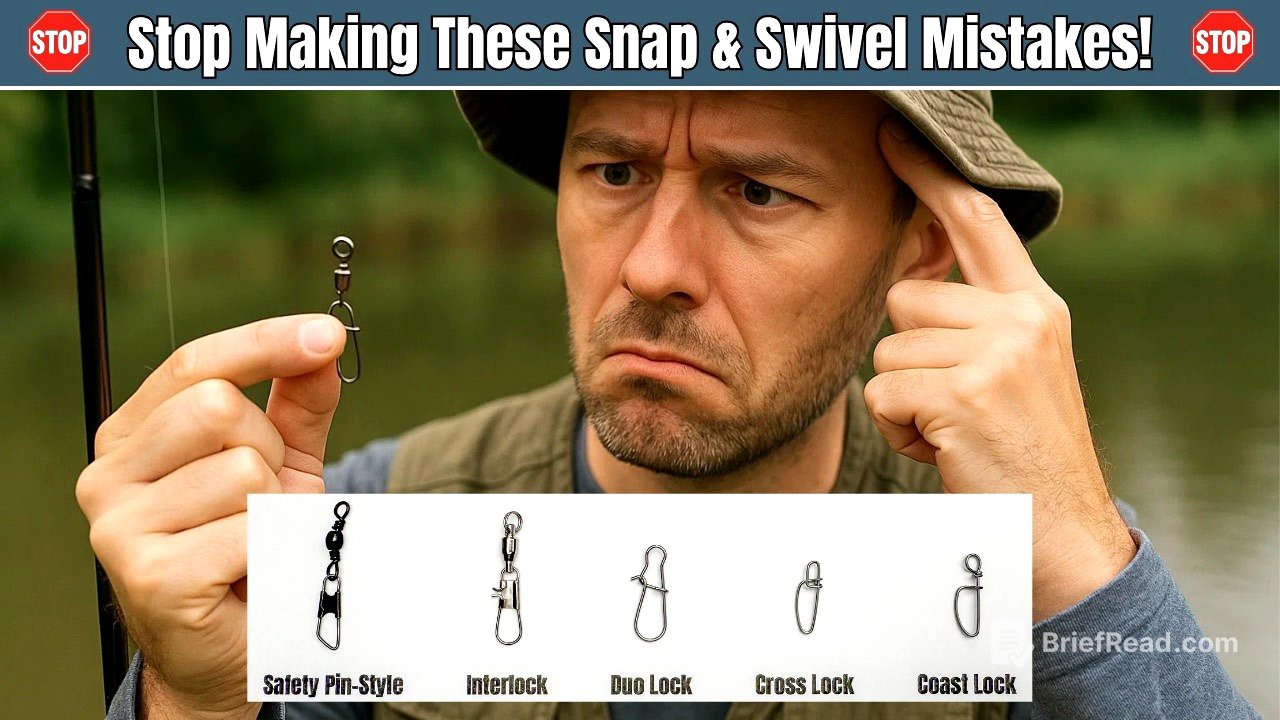
Different types of snaps are discussed, including the original snap, interlock snap, dual lock snap, cross lock snap, and coast lock snap. The original snap is discouraged due to its potential failure under pressure. The interlock snap is easier to use but still not very strong. Dual lock snaps are stronger but may fail with large fish. Cross lock and coast lock snaps are the preferred options for larger fish due to their strength and reliability, albeit they can be slightly less user-friendly.
Types of Swivels [19:13]
The video describes barrel swivels and ball bearing swivels. Barrel swivels are effective for general use, but ball bearing swivels are more efficient in high-twist situations as they have less friction. While barrel swivels are cheaper and suitable for various applications, ball bearing swivels are recommended when more line twist control is required.
Choosing the Right Size and Strength [26:59]
The sizing and strength of snaps and swivels can vary greatly by brand, with no standardization. It’s crucial to check for pound test ratings to ensure reliability. The video advises against using cheap, no-name brands, as their quality and strength may be questionable. Proper sizing is essential not to overshadow the lure itself while ensuring it is strong enough to handle the fish.
Key Takeaways [32:26]
In summary, the critical takeaways include using snaps and swivels purposefully, favoring minimalism, matching hardware to the fishing situation, investing in quality brands, and tying directly when in doubt. Adhering to these points can enhance fishing success and ensure better performance of the fishing setup.