TLDR;
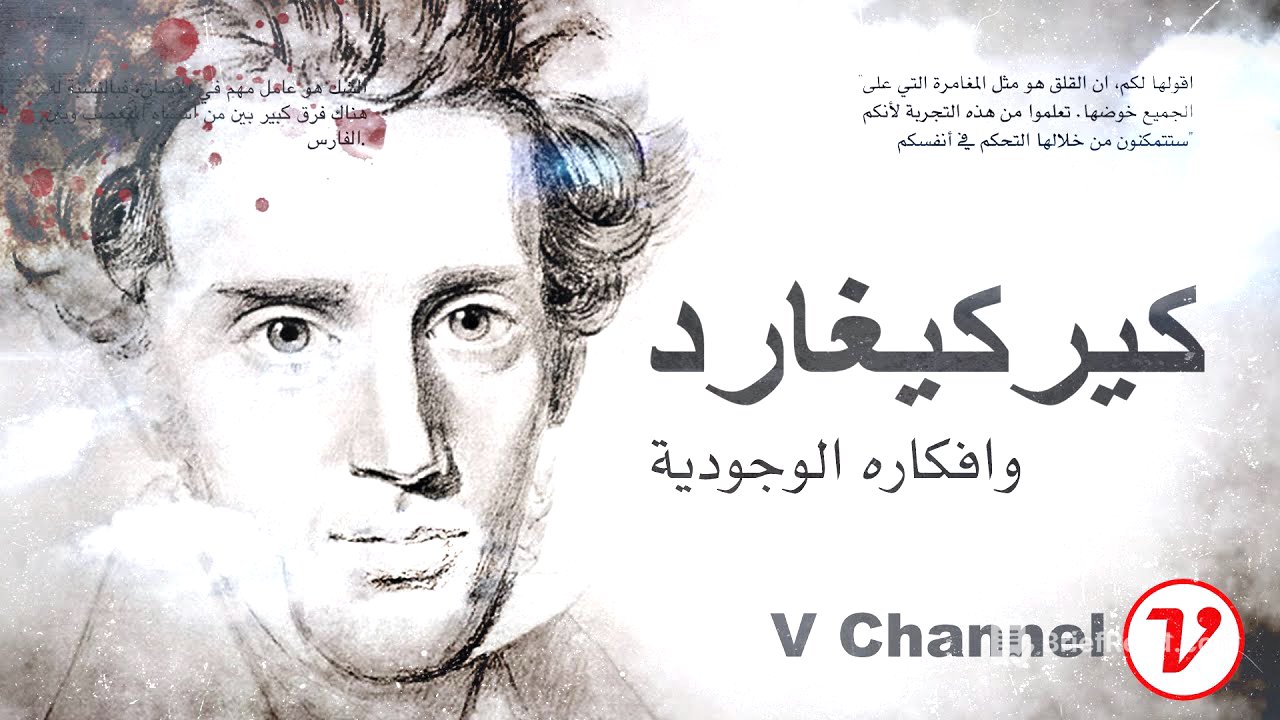
This video introduces Søren Kierkegaard, a Danish philosopher considered the father of existentialism and a precursor to postmodernism. It explores his key concepts, including subjective vs. objective truth, the balance between the finite and infinite, the three stages of life (aesthetic, ethical, and religious), the importance of anxiety, and his critique of Hegelian philosophy. The video also discusses Kierkegaard's unique writing style, characterized by irony, pseudonyms, and indirect communication, aimed at prompting individual reflection and existential engagement.
- Kierkegaard distinguished between objective and subjective truth, emphasizing the importance of personal experience and faith.
- He explored the tension between the finite and infinite aspects of human existence, advocating for balance.
- Kierkegaard outlined three stages of life: the aesthetic, the ethical, and the religious, with the religious stage representing the highest form of human development.
- He viewed anxiety as a fundamental aspect of human existence and a response to freedom.
- Kierkegaard criticized Hegelian philosophy's attempt to create a comprehensive system of knowledge, arguing for the limitations of human reason and the importance of individual experience.
Introduction to Søren Kierkegaard [0:08]
Søren Kierkegaard, often called the Socrates of Denmark, is introduced as a philosopher whose work extends beyond philosophy into areas like theology, psychology, literary criticism, and fiction. He sought to differentiate between truth and illusion, employing revolutionary methods in his writings to critique the materialism of his time and remind religious individuals of the original essence of their faith. Kierkegaard emphasized the significance of the individual and the necessity of self-improvement, reinterpreting biblical stories to offer new perspectives. He is recognized as the father of existentialism and a pioneer of postmodernism, whose work provides insights into the human psyche and critiques modern ideas, influencing philosophers and scholars to this day.
Objective vs. Subjective Truth [1:56]
Kierkegaard posits two types of truth: objective and subjective. Objective truth, like that found in empirical sciences such as physics and chemistry, or abstract sciences like logic and mathematics, is universally agreed upon. Subjective truth, however, arises from personal experience, encompassing emotions that cannot be explained by mathematical equations or lab experiments. These truths are relative; for instance, friendship can only be understood through lived experience. While applied sciences can serve humanity, they cannot describe the human condition or solve psychological problems. Kierkegaard believes most human experience involves relative truths, understood through individual and communal perspectives. Considering death, he contrasts the objective understanding of mortality with the personal realization of one's own impending death, which shapes our perception of life and others, leading to different responses, from preparing for the afterlife to indulging in sensory pleasures.
The Finite and the Infinite [5:03]
Kierkegaard views humans as complex beings composed of contradictions, notably the finite and the infinite. He describes the human psyche as a product of the internal conflict between the limiting finite and the expansive infinite. Both have advantages and disadvantages. The infinite produces ideas and inventions and drives self-improvement, while the finite relates to daily needs and grounds us in reality. Imbalance occurs when one dominates, leading to loss of self. Overemphasis on the finite results in entrapment, dependence, and depression, causing individuals to seek anonymity within a group. Conversely, immersion in the infinite leads to a series of unfulfilled experiments and a lack of commitment, resulting in an abstract existence. Achieving true selfhood requires balancing reality with dreams, and integration with isolation, while avoiding blind acceptance of external dictates. Kierkegaard, influenced by Kant, found Kant's method of imposing ethics based on natural laws unrealistic. Kierkegaard sought a relative absolute truth, which became the basis for existentialism.
The Personal Nature of Religious Faith [7:55]
According to Kierkegaard, religious faith is personal, not necessarily requiring empirical evidence or logical debate. It involves a personal relationship between an individual and God, an experience one must undergo to understand its truth. Faith may stem from the limitations of the mind, as we realize the impossibility of knowing everything. The conflict between religious and secular societies often hinges on the primary reference point: belief in applied sciences versus personal experience. Both are valid anthropologically, but each side is often dogmatic. Kierkegaard values doubt as part of faith, distinguishing between zealots and knights of faith. Zealots claim absolute truth based on societal norms, often contradicting their religion's teachings. Knights of faith accept doubt, strengthening their connection with God. This doubt varies across religions but motivates believers to adhere to their faith more rationally.
The Three Stages of Life [10:25]
Kierkegaard identifies three main stages of life: the aesthetic, the ethical, and the religious. Some people move between these stages, while others remain in one. The aesthetic stage involves seeking pleasure and avoiding pain, but Kierkegaard notes that pleasure is fleeting. Repetition leads to boredom, and the pursuit of sensory gratification is ultimately unfulfilling, like a hamster on a wheel. The ethical stage involves doing what is right for its own sake, shifting focus from self-interest to the well-being of others. This stage emphasizes respect, duty, and adherence to societal laws. However, Kierkegaard argues that ethics should not be the ultimate goal. The religious stage, the highest form of human development, involves following God's commands willingly, not merely adhering to moral whims. This stage, achieved after navigating previous stages, is challenging and requires obedience. Kierkegaard illustrates this with the biblical story of Abraham, who was asked to sacrifice his son, testing his faith and highlighting the conflict between ethical and religious duties.
Anxiety and Freedom [15:56]
Kierkegaard explores the concept of anxiety, defining it as an inherent aspect of existence, not a result of weakness. He explains it through the idea of "sympathetic antipathy and antipathetic sympathy," suggesting we fear what we desire and desire what we fear. For example, standing on a cliff edge evokes a mix of dizziness and fear, not from a lack of physical ability to maintain balance, but from the realization of the freedom to jump. This freedom to end one's life is daunting, making freedom itself frightening. The ability to make choices and abandon everything is inherent in humanity, and the anxiety it produces is a form of this freedom. Kierkegaard sees anxiety as the consciousness's response to freedom, acknowledging the unease of knowing one's fate is in their own hands. He distinguishes this from pathological anxiety. He also notes that some are drawn to the idea of falling, representing the dark side of human nature. Kierkegaard was among the first to address this, arguing that sin stems from freedom and free will. Humans possess both constructive and destructive tendencies, balancing good and evil. Kierkegaard boldly revealed the darker aspects of humanity, recognizing that life's inherent danger gives us a sense of being alive. He encourages experiencing anxiety to learn from the emotions it evokes, enabling self-control.
Kierkegaard's Legacy and Critique of Hegelianism [20:53]
Kierkegaard remained obscure for much of his life, largely unknown outside Denmark due to his writing in Danish and the dominance of other languages in philosophical discourse. Recognition came a century after his death, with philosophers like Heidegger and Wittgenstein acknowledging his importance. Wittgenstein considered Kierkegaard the most important 19th-century philosopher, surpassing even Nietzsche and Dostoevsky. Kierkegaard is regarded as a founder of both existentialism and postmodernism, challenging Hegelian philosophy. While Heidegger is seen as the culmination of modernism, Kierkegaard marks the beginning of postmodernism. Kierkegaard's objection to Hegelianism, following Schopenhauer, stemmed from the belief that all knowledge could be unified into a single system and that absolute truth, beginning with God, was attainable. Kierkegaard argued that this claim, while appealing, was not rooted in piety or faith but served the interests of the system, potentially legitimizing authority figures as representatives of God. He pointed out that thinkers like Kant had demonstrated the limitations of human knowledge, questioning how one could know the absolute without understanding all dimensions. Kierkegaard contributed to the contemporary understanding that a unified system of knowledge is unattainable.
Kierkegaard's Method of Communication [24:03]
Kierkegaard employed irony and satire to demonstrate the limits of human knowledge, a method reminiscent of Socrates. He believed irony was the best way to convince readers that absolute truths are illusions. He used dialectics to expose the weaknesses of ideas, ultimately making them seem absurd. Kierkegaard did not offer alternative ideas or solutions, but aimed to highlight the limitations of human reason. He believed that even those with answers base them on personal experience, not absolute truth. Therefore, individuals must find their own way rather than blindly following others. Kierkegaard is considered an individualistic thinker. Besides satire, he used pseudonyms, creating fictional authors for each of his "three stages of life" to align with those perspectives. This approach prevented readers from attributing ideas directly to Kierkegaard, encouraging them to engage with the concepts on their own terms. Each character has different psychological states, beliefs, and conflicts, illustrating the personal and limited nature of knowledge. Kierkegaard's genius lies in this contradiction of characters, which may have been the only way to convey his ideas.
Conclusion: Key Takeaways [26:49]
In summary, Kierkegaard was deeply religious, considered by some a theologian more than a philosopher, yet he criticized the Danish Lutheran Church for straying from Christian teachings. He saw himself as a modern Socrates, critiquing society's behaviors. Individualistic in his thinking, he focused on individual reform and psychological experiences, viewing those who blindly followed the group as sheep in a flock. Influenced by figures like Socrates, Plato, Descartes, and Kant, he emphasized individual improvement and criticized collective thinking. Kierkegaard used indirect communication methods like irony, contradiction, pseudonyms, and metaphors, making his work challenging to understand. His writing often implies the opposite of what is stated, aiming to make the reader undergo an existential experience rather than simply absorbing information.


![[WARNING!] After This Rampage, They’ll Chase You Like Never Before!](https://wm-img.halpindev.com/p-briefread_c-10_b-10/urlb/aHR0cDovL2ltZy55b3V0dWJlLmNvbS92aS9NWlhWS0VDdEpGSS9ocWRlZmF1bHQuanBn.jpg)