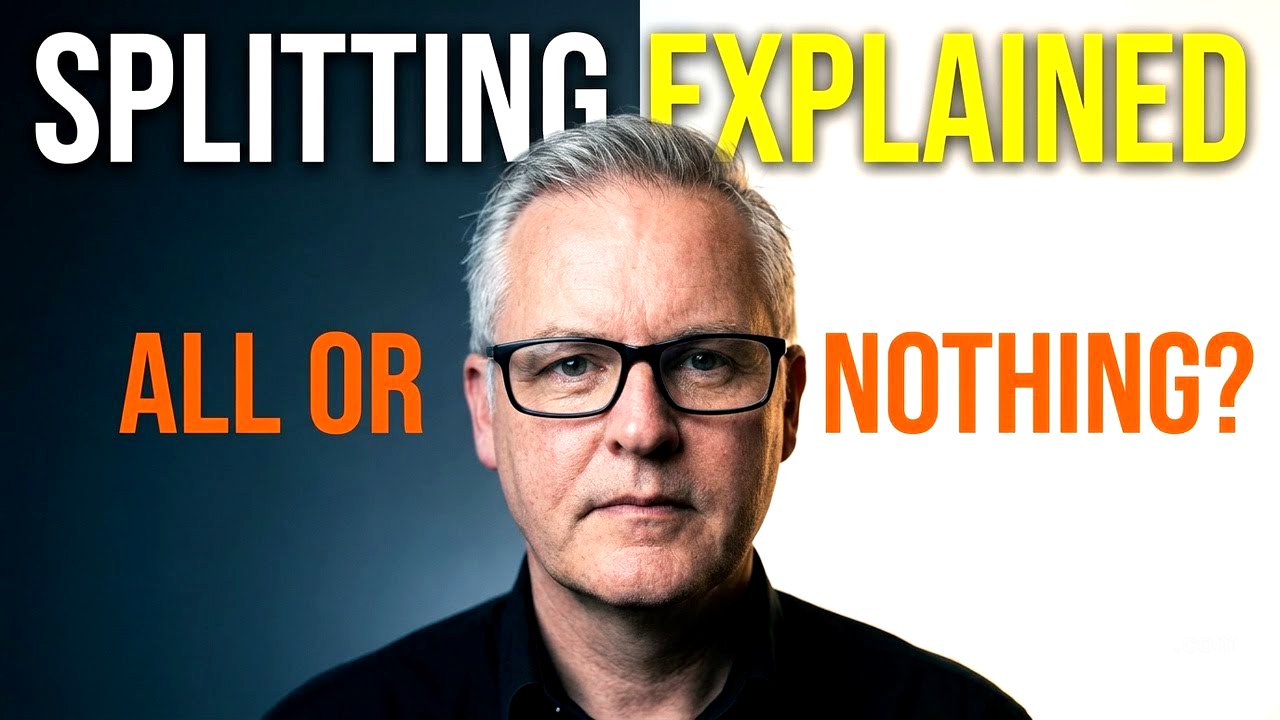
TLDR;
This video explains splitting, a primitive defense mechanism where things are seen as either all good or all bad, with no shades of gray. It explores how splitting manifests in narcissistic relationships, leading to idealization, devaluation, and discard cycles. The video also offers strategies for managing oneself and setting boundaries when dealing with individuals who use splitting as a defense mechanism.
- Splitting is a primitive defense mechanism.
- In narcissistic relationships, splitting leads to idealization and devaluation.
- Managing your reactions and setting boundaries are key strategies.
Introduction to Splitting [0:01]
The video introduces the concept of splitting, a primitive defense mechanism where things are viewed as either entirely good or entirely bad. This mechanism is often associated with narcissistic relationships, where individuals categorize everything into extreme categories without any middle ground. Splitting can be a way to protect oneself from cognitive dissonance, the discomfort of holding conflicting beliefs.
Understanding Splitting with an Example [1:20]
The author shares a personal anecdote about disliking the band Oasis, except for one song he genuinely enjoyed. This illustrates how splitting makes it difficult to accept that someone disliked can produce something of value. Over time, people usually reconcile these conflicting views, recognizing that even those they dislike have good qualities. However, in narcissism, this reconciliation doesn't occur.
Splitting in Narcissistic Relationships [3:45]
In narcissistic relationships, splitting is a rigid defense mechanism with no spectrum or shades of gray. Everything is either all good or all bad. This leads to extreme statements and an inability to hold conflicting thoughts or feelings. For example, a colleague might be described as "hated" rather than simply disliked. This all-or-nothing thinking extends beyond people to situations, where something cannot be both difficult and rewarding.
The Origins of Splitting [5:32]
Splitting is a primitive defense mechanism rooted in early childhood. A baby views a parent as good when their needs are met and bad when they are not. As children grow, they typically merge these views, recognizing that a parent can be both loving and unreliable. However, individuals with strong narcissistic traits often get stuck at this stage, unable to integrate the good and bad aspects of a person.
Idealization and Devaluation [7:21]
The video discusses how splitting relates to idealization and devaluation in relationships. When people fall for someone, they tend to idealize them. Over time, they recognize flaws and reconcile them with their positive feelings. However, narcissistic individuals struggle to accept flaws in someone they have idealized, leading to internal chaos and devaluation. They cannot integrate the idealized version with the reality of the person's imperfections.
The Cycle of Idealization, Devaluation, and Discard [10:04]
The discussion moves to the cycle of idealization, devaluation, and discard. In the idealization phase, the narcissistic person puts their partner on a pedestal, showering them with attention and mirroring their values. This is often referred to as love bombing. However, this idealized version is a fantasy and is fragile.
The Devaluation Stage [15:10]
The devaluation stage begins when reality creeps in, and the partner does something that disappoints the narcissistic person. This triggers a narcissistic injury, where the partner is quickly shifted from all good to all bad. The narcissistic person is highly sensitive and resistant to criticism, perceiving it as a personal attack. This shatters their perfect image of both themselves and their partner, leading to a split in their mind.
Consequences of Splitting [17:36]
The consequences of splitting include gaslighting, blame-shifting, and toxic amnesia. The narcissistic person rewrites history, dumping their negative traits onto the partner to solidify the bad version of them. The partner is punished for failing to be the idealized version the narcissistic person needs. This can manifest as rage, silent treatment, and accusations of malicious intent for simple oversights.
Splitting and Amnesia [25:03]
Splitting can also explain the amnesia narcissistic individuals exhibit regarding their own behavior. They may genuinely not remember lying or treating someone badly, engaging in denial to maintain their self-image as a good person. This denial isn't always a conscious lie but can be an automatic response to protect their idealized self-perception.
Splitting and Ignoring Bad Behavior [27:50]
When a narcissistic person does something hurtful, they might try to undo it with a gift or promise, expecting the other person to forget the bad behavior. They become frustrated when the other person remembers the hurt, as they are supposed to split as well and ignore the negative actions. This can also manifest when the partner decides to leave, and the narcissistic person blames external influences for the decision.
Understanding the Lack of Empathy [30:52]
The video addresses why narcissistic individuals don't see the pain they cause or think they can fix it with a small gesture. This is due to a lack of self-awareness and empathy. Splitting is an automatic survival mechanism to protect their version of themselves, their sense of entitlement, and their grandiosity. Truth, reality, and consequences are rejected to avoid threatening their fragile self-image.
The Purpose of Splitting [33:21]
Splitting is always about the narcissistic person. Idealization makes them feel special, while devaluation expels their internal pain. They don't want to own their pain or adjust their expectations, so they project it onto others. Recognizing this can help depersonalize the behavior, understanding that the partner was cast in a role in their internal drama and recast as the villain when they went off script.
Managing Splitting and Setting Boundaries [35:38]
The goal is not to fix the splitting, as only the narcissistic person can do that through self-work. Instead, focus on managing your reactions and setting boundaries. Clarity is key, recognizing that vilification is about them and their splitting, not about you. Use the gray rock method with minimal, neutral responses to starve them of the emotional reaction they crave.
Enforcing Boundaries and Seeking Support [39:09]
Enforce boundaries consistently, following through with consequences if they are crossed. Long-term exposure to all-or-nothing thinking can be destabilizing and contagious. Therapy and surrounding oneself with decent people can help rebuild one's internal world. Remember, it's possible to hold two conflicting thoughts at the same time and acknowledge pain without getting lost in overanalyzing.
Summary of Splitting [42:38]
Splitting is a primitive defense mechanism that prevents people from seeing others as whole, with both good and bad qualities. It powers the idealization and devaluation cycle. It's crucial to recognize that you cannot fix their thinking; it's up to them. Understanding this dynamic can help disengage from the chaos and protect your peace of mind.
Q&A - Confusing Love with Materialism [45:48]
The Q&A section begins with a question about confusing love with materialism, where narcissistic individuals use gifts and promises to ignore other issues.
Q&A - Splitting as Hot and Cold Behavior [47:24]
A question about whether splitting is a fancy term for hot and cold behavior is addressed. Sometimes hot and cold behavior is a tactic, but other times it is a result of splitting.
Q&A - Regulating Mood by Tearing Down Others [49:25]
The discussion covers how narcissistic individuals regulate their mood by tearing down others, which is linked to envy and the need to feel superior.
Q&A - Rage as a Manifestation of Splitting [51:30]
Rage is identified as one way splitting can manifest, along with ignoring or ostracizing the other person.
Q&A - Psychological Development Beyond Splitting [53:23]
The possibility of psychological development beyond splitting is explored, noting that while it depends on the person, self-awareness and effort can lead to change.
Q&A - Narcissistic Parents and Disagreement [55:52]
The discussion covers how narcissistic parents react when their children disagree with them, viewing it as a challenge to their control and the idealized version of the family.
Q&A - New Supply and the Monster [57:19]
A question about why a narcissistic person appears to be working with a new supply after being a monster is addressed, suggesting that the new relationship likely mirrors the initial stages of previous ones.
Q&A - Interacting with People Kindly [59:15]
The importance of interacting with people kindly as part of the healing journey is highlighted, with a reminder that being decent doesn't mean being a doormat.
Q&A - Narcissists and Anger [1:01:26]
The reasons why narcissistic individuals don't like it when others get angry are explored, suggesting it may be because they see themselves as the source of the anger or because it challenges their emotional armor.
Q&A - Paranoid Behavior in Narcissists [1:04:49]
The discussion covers paranoid behavior in narcissistic individuals, noting that it depends on the type of narcissism and the importance they place on others' opinions.
Q&A - Covert Splitting [1:07:02]
Covert splitting is confirmed to be the same as overt splitting, regardless of how it manifests.
Q&A - Obedience and Respect [1:07:54]
The discussion covers why narcissistic individuals see others as bad if they don't obey them, linking it to a skewed version of respect that equates to obedience and compliance.
Q&A - Loving Only When Agreeing [1:09:02]
The question of whether people who only love you when you agree with them are narcissists is addressed, suggesting that it's not necessarily the case, and sometimes constant compliance can lead to contempt.
Q&A - Caring About What Others Think [1:10:30]
The discussion covers how much narcissistic individuals care about what others think of them, noting that it's often ramped up through the ceiling and involves a need for collusion rather than just validation.
Q&A - Zero-Sum Game and Splitting [1:12:15]
The zero-sum game is linked to splitting, where winning isn't enough; the other person must be annihilated to feel good.
Q&A - Autodubbing [1:13:10]
A comment about YouTube's autodubbing feature leads to a discussion about translating videos into different languages.
Q&A - Admitting Wrongdoings and Accepting Help [1:13:59]
The importance of admitting wrongdoings and accepting help is highlighted, linking it to humility.
Q&A - Hating Men Who Like Cryptocurrencies [1:14:33]
A humorous question about hating men who like cryptocurrencies is addressed, with the disclaimer that the speaker knows nothing about the topic.
Q&A - Selective Memory [1:15:48]
The discussion covers selective memory, where everything good is wiped out when someone does something bad.
Q&A - Change in Narcissists [1:16:24]
The difference between a change in a person and a change in tactic is explored, noting that genuine change involves struggle and humility.
Q&A - BPD and Personas [1:17:46]
A question about BPD and personas is addressed, recommending therapy and distinguishing between personas and different aspects of oneself.
Q&A - Making a Covert Narc Realize Splitting [1:19:58]
The discussion covers how to make a covert narcissist realize their pattern of splitting, emphasizing that it's about managing yourself, not changing them.
Q&A - Sarah Coming Back on the Show [1:22:09]
A question about when Sarah will be back on the show is addressed, noting her popularity and the possibility of a joint live stream.

![How Doctor Who's Missing Episodes Came Back [Part 1]](https://wm-img.halpindev.com/p-briefread_c-10_b-10/urlb/aHR0cDovL2ltZy55b3V0dWJlLmNvbS92aS9TdzhqRmo1dTVDcy9ocWRlZmF1bHQuanBn.jpg)