TLDR;
This video discusses the potential implications of the Bank of Japan (BOJ) raising interest rates and its impact on global financial markets. It examines the reasons behind Japan's shift towards higher interest rates, the mechanics of the Yen carry trade, and the possible consequences of unwinding these trades. The video also touches on the overall market outlook for 2026 and provides investment advice for average investors.
- The Bank of Japan (BOJ) is signaling a potential interest rate hike, which could have significant implications for global financial markets.
- The Yen carry trade, where investors borrow Yen at low rates to invest in higher-yielding assets, could be disrupted.
- Despite potential market volatility, the overall outlook for 2026 remains positive, with expected growth in corporate earnings and the economy.
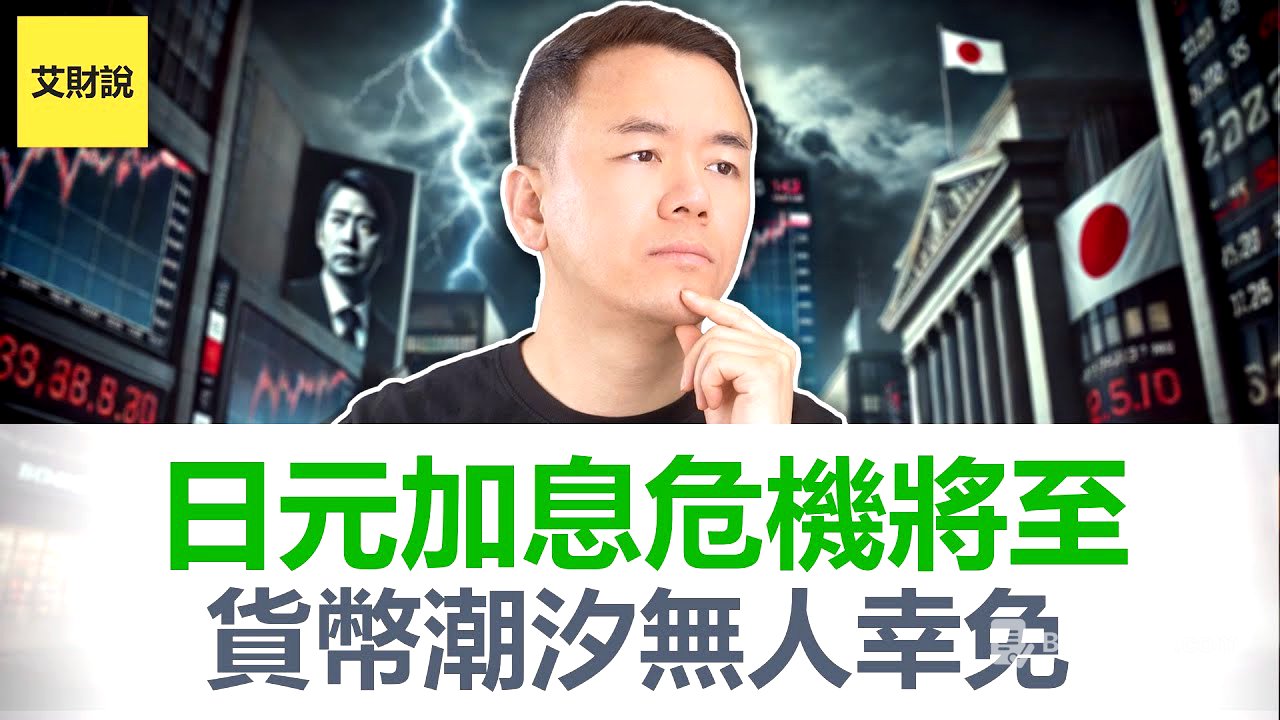
日元加息危机将至 [0:00]
The Bank of Japan (BOJ) is considering raising interest rates, which has sparked concerns among global investors. This decision could lead to a significant shift in the financial landscape, potentially triggering a repeat of the "Black Monday" event in 2024 when the Nikkei 225 index experienced a sharp decline due to similar rate hike concerns. The video aims to analyze the reasons behind the potential rate hike, the mechanics of carry trades, and the possible risks involved, while also providing guidance for average investors on how to protect their investments.
日本央行释放最强加息信号 [1:47]
Japan's economy has been stagnant for the past 30 years, but there are signs of a turnaround. The Bank of Japan (BOJ) is considering raising interest rates due to rising inflation, with the core CPI consistently above 2% and reaching 3% by October 2025. Wage increases have also played a role, with average wages rising by 5.1% in 2024 and 5.42% in 2025, surpassing the rate of inflation. The BOJ is also concerned about the weakening Yen, which has led to higher import costs and increased inflationary pressures.
隐形的金融机器 [5:17]
The global financial market's prosperity over the past 30 years has been supported by the Yen carry trade, where investors borrow Yen at near-zero interest rates to invest in higher-yielding assets like U.S. Treasury bonds and stocks. This practice has been profitable due to the interest rate differential, but it relies on the assumption that the BOJ will not raise interest rates. If the BOJ increases rates, the carry trade becomes less attractive, potentially leading to a reversal of capital flows and market instability.
全球资产的连锁反应 [7:22]
If the Yen carry trade unwinds on a large scale, it could have several consequences for global markets. It could lead to a tightening of global liquidity as the cheap Yen funding that has been flowing into markets dries up. Assets that rely on low interest rates and high liquidity, such as growth stocks and technology stocks, would be most affected. The bond, foreign exchange, cryptocurrency, and commodity markets could also experience a chain reaction. Additionally, there is a risk of a debt crisis in emerging markets, where many companies and governments have borrowed Yen to finance their operations.
媒体的末日预言 [10:13]
While some media outlets predict a market crash due to the unwinding of Yen carry trades, the speaker disagrees with the severity of the expected impact. The speaker argues that correlation does not equal causation, and attributing all market fluctuations to carry trades is inaccurate. The speaker also points out that the Federal Reserve's (FED) actions, such as interest rate cuts, can offset the liquidity tightening caused by the BOJ's rate hikes. The speaker notes that the market has already partially priced in the expected rate hikes, and the actual impact may be less dramatic than anticipated.
2026年的整体市场前景 [13:47]
The speaker believes that the Yen's exchange rate against the dollar may continue to fluctuate in the short term, but within a manageable range. High-risk assets, such as emerging market stocks and highly leveraged cryptocurrencies, may face pressure, but this is considered a normal market adjustment. The speaker predicts that the S&P 500 will reach 7,700 points by the end of 2026, supported by factors such as continued growth in corporate earnings, a growing economy, and increased productivity from artificial intelligence.
普通投资者2026年怎么投 [15:10]
For average investors, the speaker recommends a strategy of continuous investment and diversification. The speaker advises against investing in individual stocks, especially for those who lack a deep understanding of company operations and industry trends, and suggests investing in broad market ETFs instead. The speaker also cautions against relying on stock-picking courses offered by self-proclaimed experts, as the vast majority of professional fund managers fail to outperform the market over the long term. The speaker emphasizes the importance of focusing on one's career or business to generate income and gradually building wealth through consistent investment and asset allocation.