TLDR;
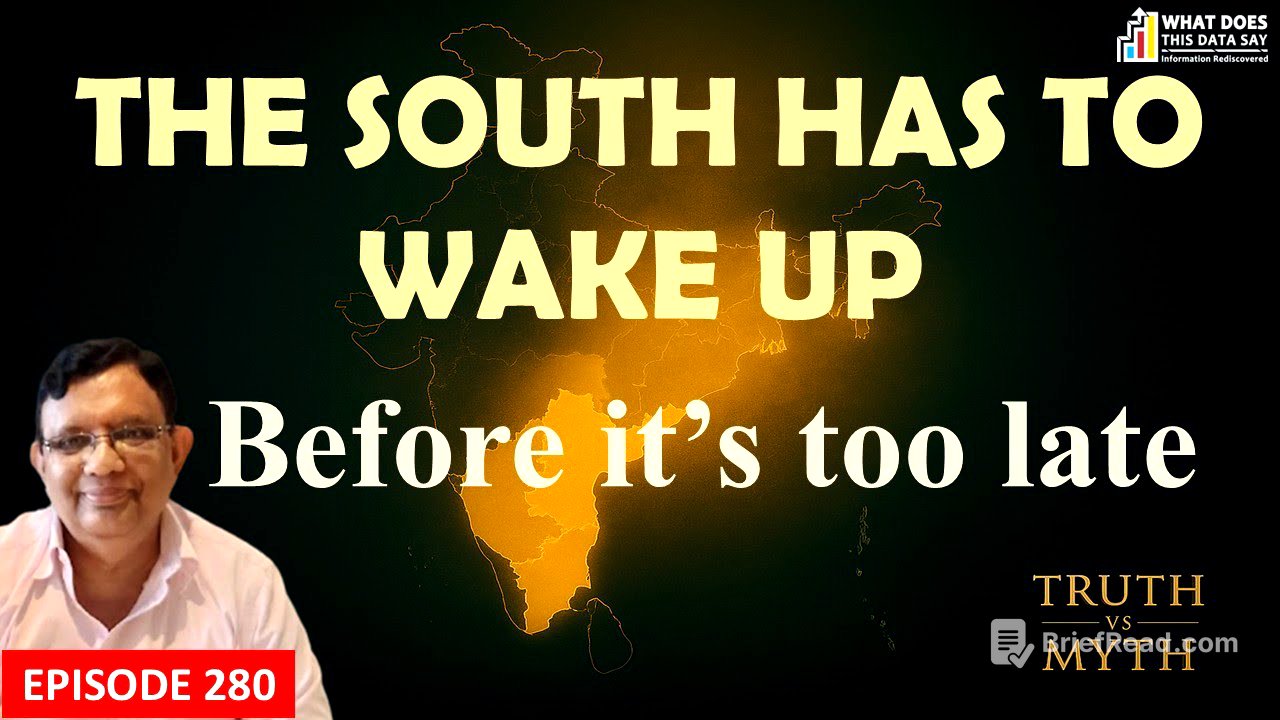
This video discusses the potential impact of the delayed 2021 census and subsequent delimitation on the political power of the southern Indian states. It argues that the delay is a strategic move that could lead to a significant increase in Lok Sabha seats for northern states at the expense of the south, which has shown better performance in population control and economic growth. The video urges southern leaders to unite and form a joint action committee to advocate for fair representation based on both population and performance.
- Delay of the 2021 census is a strategic move to shift political power.
- Delimitation after 2026 could significantly increase Lok Sabha seats for northern states.
- Southern states may lose political influence despite economic contributions and good governance.
- Call for southern leaders to unite and advocate for fair representation based on population and performance.
Introduction: The Looming Political Shift [0:08]
The video opens with a warning to the southern states of India—Tamil Nadu, Kerala, Telangana, Karnataka, and Andhra Pradesh—stating that they are at a critical juncture. The BJP is portrayed as a formidable political adversary that has mastered the mathematics of power. The central argument is that the Modi government's delay of the 2021 census is a strategic move to secure a decade-long advantage in the delimitation of Lok Sabha seats, which will shift the balance of power in India northwards after 2026. The message is directed towards the leaders of the southern states, urging them to unite beyond language and legacy differences to avoid being politically marginalized.
Understanding Delimitation and the Census Delay [1:44]
The video explains the process of delimitation, which is intended to ensure equal representation based on population. It highlights that the number of Lok Sabha seats can only be changed after the first census conducted after 2026. Indira Gandhi's 1976 freeze on seat numbers, aimed to protect states that controlled population, was extended until 2026. The 2021 census was delayed despite preparations being complete, leading to the possibility of delimitation occurring in 2027 or 2028, much earlier than anticipated. This delay is viewed as a deliberate strategy by the BJP, especially given doubts about their prospects in the 2029 general election.
Economic Disparities and Political Consequences [3:32]
The video contrasts the per capita GDP growth of southern states with that of the Hindi belt, noting the south's superior economic performance. It argues that these states are being penalized for their good governance by the BJP at the center. Despite contributing significantly to India's economic growth, the southern states face the prospect of reduced political representation due to the impending delimitation.
The Numbers Game: Seat Distribution and Regional Representation [4:22]
The video highlights the disparity in representation, noting that 1 MP in Uttar Pradesh represents over 3 million people, while in Tamil Nadu, it's under 2 million. Estimates suggest that the Lok Sabha could expand to 846 seats, with the majority of new seats going to states like Uttar Pradesh, Bihar, Maharashtra, West Bengal, Madhya Pradesh, and Rajasthan. The northern Hindi belt states could see seat increases ranging from 75% to 100%, while southern states may only see increases between 26% to 46%, with Kerala potentially seeing no increase at all. This shift could result in the north commanding nearly 60% of the parliament, reshaping budget allocations, coalitions, and national policies.
The Shrinking Voice of the South [7:19]
The video critiques Union Home Minister Amit Shah's assurance that no southern state will lose a seat as a "mockery," emphasizing that the issue is the shrinking percentage share of southern representation. The south's share of Lok Sabha seats could drop from 24% to less than 20% after delimitation. The video underscores the irony that the south, which has excelled in education, health, and family planning, is now being penalized, creating a situation where good governance leads to a loss of influence, and poor governance leads to a gain in power.
Economic Contributions and Taxation Without Representation [8:37]
The video emphasizes the economic contributions of the southern states, which contribute 35% of India's GDP and 40% of tax revenue, yet hold only 25% of Lok Sabha seats, a figure that is set to decrease to 20% after delimitation. This situation is described as "taxation without representation," where the region that funds India's growth will have a diminished political voice. The expansion of parliament to 846 seats, with most new seats from the north, could further marginalize the south, impacting cabinet posts, policy control, and federal balance.
A Call to Action: Unity and Strategy [9:07]
The video urges the southern states to unite, transcending party lines, to address this issue. It references a joint action committee meeting in March where chief ministers from southern states demanded a 25-year extension on the freeze for Lok Sabha seat delimitation. The video proposes the formation of a united southern working committee, including leaders and experts, to frame a legal strategy for weighted representation based on population and performance. It also suggests publishing a white paper, engaging the media, and submitting a joint memorandum to the president and the delimitation commission. The video concludes by asserting that a united southern voice cannot be ignored and that the census delay was a deliberate move to reshape India's political landscape. The video stresses that the South must stand united politically and intellectually to protect federal balance and ensure fair democracy.