TLDR;
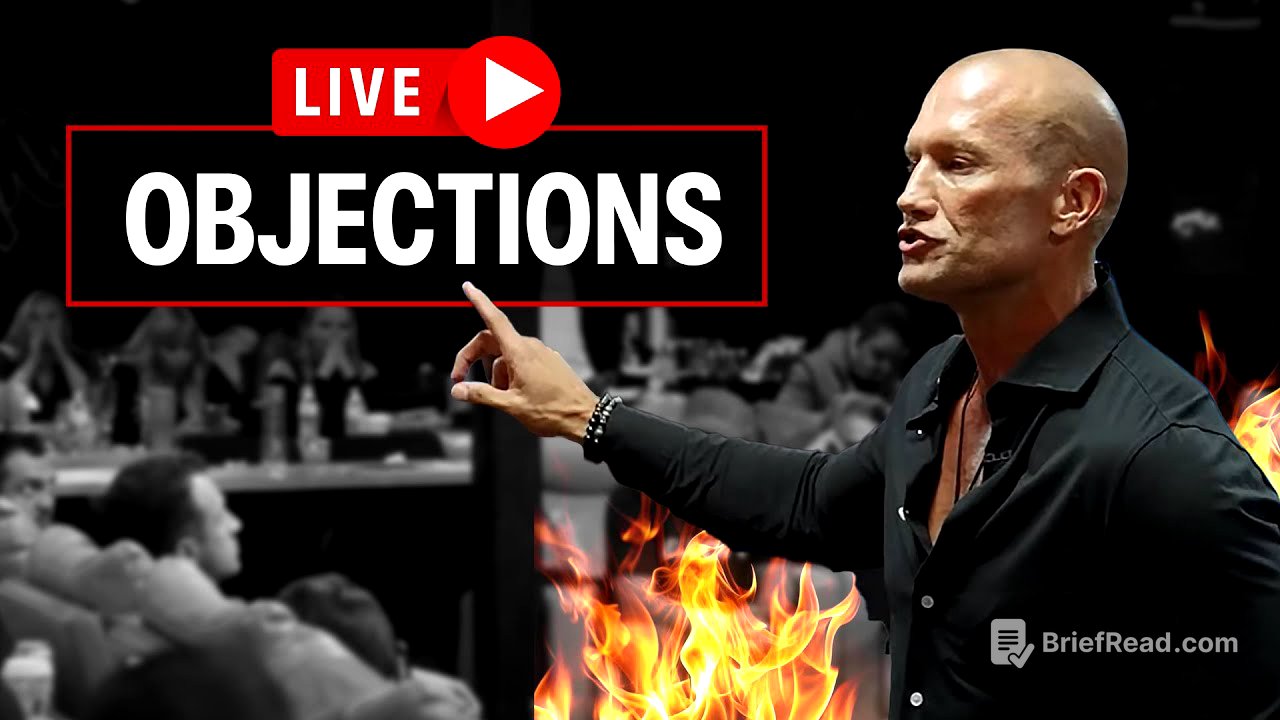
This video features Andy Elliott providing coaching and feedback to a solar salesman named Brandon on his door-to-door sales techniques. Andy emphasizes the importance of clear, simple communication, a scalable sales approach, and a strong handoff between the setter and the closer. He also discusses strategies for overcoming common objections and closing deals, such as addressing concerns about moving and highlighting the benefits of solar in terms of home value and faster sales.
- Clear and simple communication is key to sales.
- A scalable sales approach is essential for building a successful team.
- A strong handoff between the setter and the closer is crucial for closing deals.
Introduction [0:00]
Andy Elliott introduces a coaching session with Brandon, a solar salesman, to refine his door-to-door sales approach. The goal is to battle test Brandon's current pitch and provide feedback to improve his effectiveness. Andy emphasizes that sales success depends on the delivery of information and the ability to communicate clearly, even to someone with a limited understanding of solar energy.
Brandon's Door-to-Door Sales Pitch [1:10]
Brandon initiates his sales pitch by stating he's there to drop off a report regarding rising energy rates due to infrastructure updates. He explains that the power company is investing in grid hardening, which increases costs for consumers. Brandon mentions that families are finding the budget billing plan most economical. He highlights that rates are expected to increase again and suggests that distributed generation, like solar power, can shield homeowners from these rising costs. Brandon offers to provide a blueprint showing how solar panels can reduce the customer's bill, aiming to schedule a follow-up to discuss the report.
Critique of Brandon's Pitch and Communication [4:09]
Andy praises Brandon's effort but emphasizes the need for clarity in communication. He points out that many people don't understand solar energy, so the pitch should be easily understandable. Andy suggests that while dropping off a report is a good approach, it shouldn't overshadow the ultimate goal of selling solar. He distinguishes between a setter, who sets appointments, and a closer, who finalizes the deal, noting that Brandon is currently handling both roles.
The Setter-Closer System and Avoiding "Smoke" [7:36]
Andy presents an alternative opening: "My name is Andy Elliott with ABC solar. My company has been allocated to this area because research shows in the next 12 to 18 months utility bills are going to double or triple. I got two quick questions." He stresses the importance of a clear handoff between the setter and the closer. The setter's role is to gauge interest in a secondary energy option, ensuring the closer only visits promising leads. This prevents closers from wasting time on uninterested customers and avoids "smoke," where the initial contact doesn't accurately represent the sales opportunity.
Scalability and Consistency in Sales [9:40]
Andy emphasizes the importance of scalability in a sales team. He argues that a company's sales approach must be easily replicable by all team members. The "Elliot Army" uses a consistent approach, ensuring everyone delivers the same core message. He advises that setters should clearly communicate the purpose of the visit, which is to explore secondary energy options, so that closers arrive at appointments where customers are prepared to discuss potential upgrades.
Refining the Initial Approach and Key Phrases [12:18]
Andy suggests using phrases like "My company's been allocated to this area" or "We've been brought in to this ZIP code" to convey importance. He also highlights the effectiveness of asking two quick questions to engage the customer. Andy stresses that solar salespeople are primarily educators, making it easy for people to understand the benefits of solar energy. He notes that consistency in messaging across the sales team is crucial for success.
Handling Objections: "It's Not Saving Me Money" [13:26]
Andy addresses a common objection: "It's not saving me any money." Brandon responds by explaining that solar isn't just about saving a few dollars; it's about implementing new technology like Tesla batteries to remain inflation-proof. When faced with the objection that the customer is moving in a year, Brandon points out that solar systems add value to the home. Andy adds that highlighting how solar can help the home sell faster and for a premium price can be a persuasive argument.
The "Push Through" Close and Hypothetical Scenarios [15:30]
Andy introduces the concept of a "push through" close, emphasizing the need to sometimes push through objections to close the deal. He clarifies that the scenarios discussed are hypothetical and meant to prepare salespeople to think on their feet in various situations. The goal is to equip them with different strategies they can adapt to real-world interactions.
Call to Action [16:06]
Andy encourages viewers to connect with him for one-on-one coaching. He invites those who have watched the entire video to click the link in the description box, enter their information, and share their goals. Andy offers to provide guidance and support to help individuals reach the next level in their lives.