TLDR;
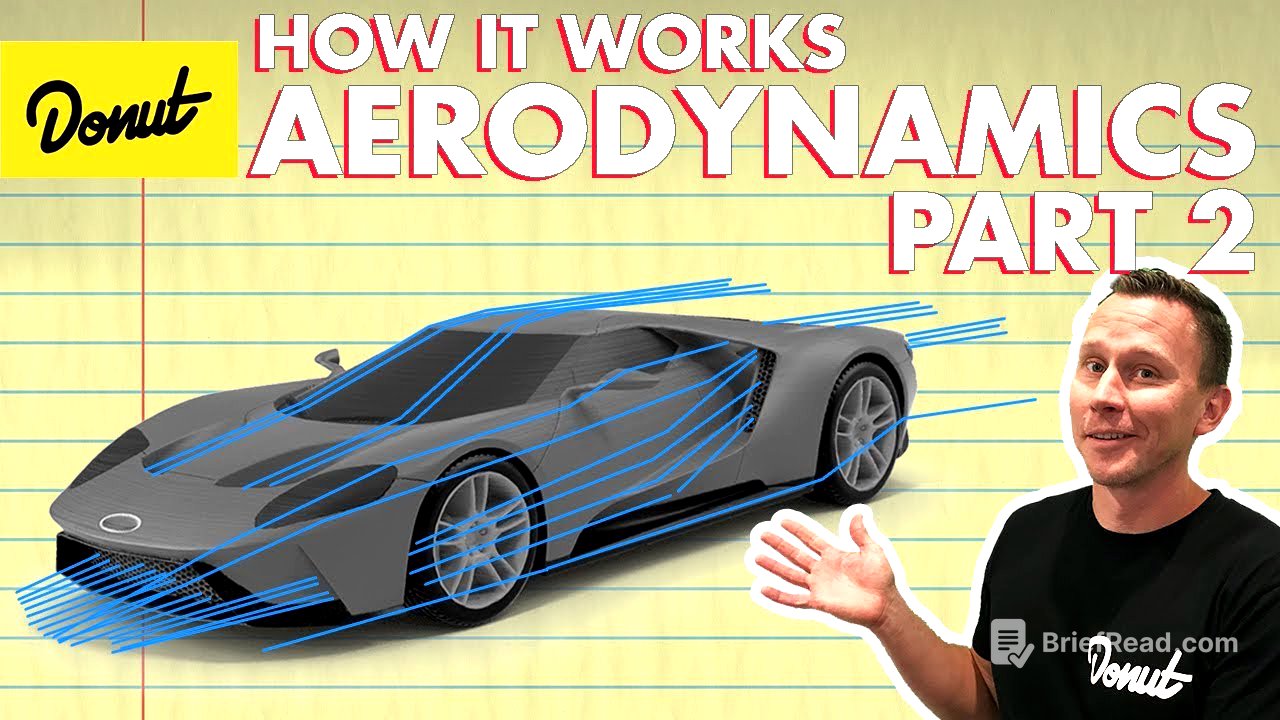
The video discusses advanced automotive aerodynamics, focusing on components that help manage airflow around and under cars to improve downforce and reduce drag. Key points include the functions of various aerodynamic parts like air dams, canards, diffusers, side skirts, and vortex generators.
- Aerodynamics improves car handling and performance through components that control airflow.
- Understanding how these parts work together is crucial for optimizing downforce and minimizing drag.
Aerodynamics Overview [0:00]
The video introduces key concepts of aerodynamics, especially focusing on lift and downforce. A brief recap mentions drag as the force opposing the car's movement and lift as the perpendicular force exerted by the air. Various components that enhance aerodynamics, including splitters, spoilers, and wings are highlighted.
Air Dampers and Their Functions [0:24]
Air dams serve multiple roles, directing air over the car to reduce lift while providing cooling to critical components like the radiator and brakes. They also decrease overall drag by smoothing airflow around the car's front end. Additionally, canards, or dive planes, are introduced as small components that contribute to creating downforce by redirecting airflow around the front of the car, balancing tire load.
Smooth Undertrays and Diffusers [2:26]
A smooth undertray is essential for minimizing turbulence and drag caused by irregular underbody components. Adding a diffuser at the rear enhances the Venturi effect, where airflows rapidly through a constricted space, reducing pressure underneath the car and increasing downforce. This alignment helps maintain streamlined airflow, which further benefits overall aerodynamic efficiency.
The Role of Side Skirts [5:03]
Side skirts help manage airflow by stopping high-pressure air from re-entering beneath the car, which would counteract downforce. A notable example from racing history is Jim Hall's Chaparral 2J, which utilized fans to create a vacuum effect, achieving significant downforce independent of speed, although this led to the car being eventually banned from competition due to its advantages.
Vortex Generators Explained [6:53]
Vortex generators are small, strategically placed elements that help manage airflow over the rear wing of cars like the Mitsubishi Evo and Honda Civic Type-R. They generate vortices that maintain the airflow attachment to the wing, increasing downforce by preventing air separation. This helps ensure that air moves efficiently over the rear wing to maximize aerodynamic performance.