TLDR;
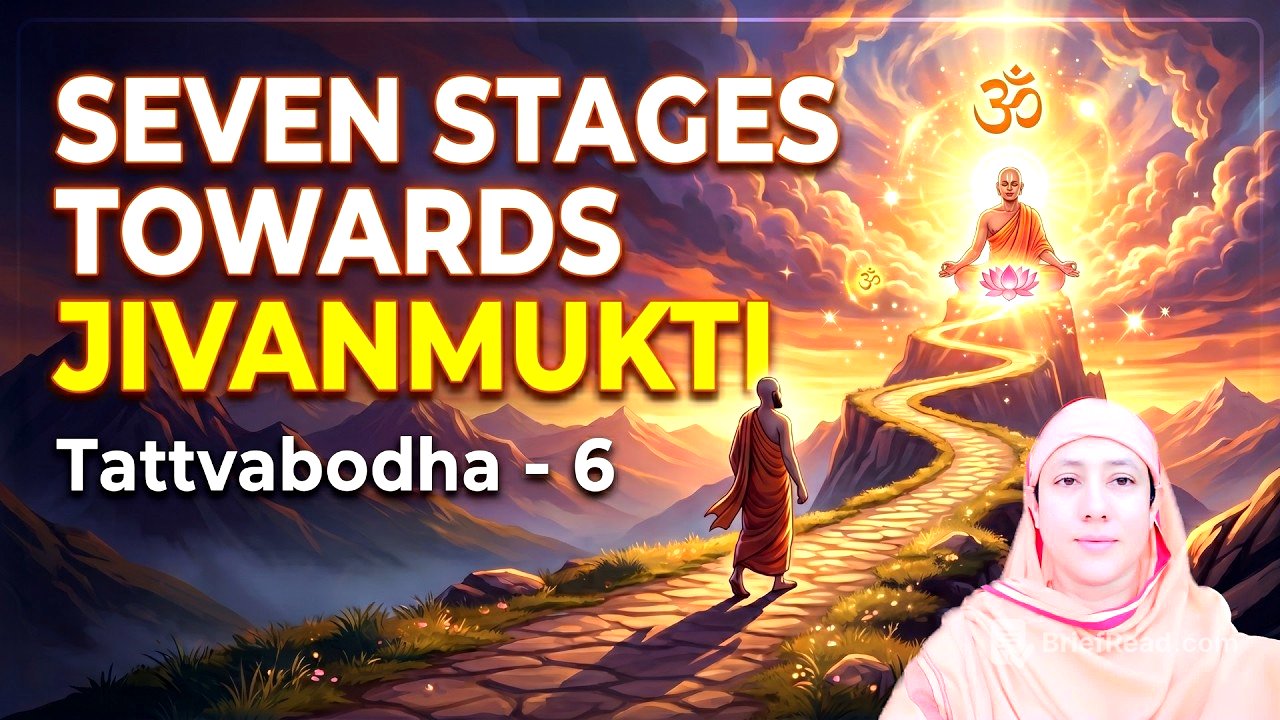
This video discusses the concept of Jivan Mukti, or liberation while living, as explained in Vedanta philosophy. It emphasizes that human life aims for this liberation in the current life, not after death. The speaker outlines the stages of spiritual knowledge (Jnana Bhumikas) necessary for attaining Jivan Mukti. The narrative also shares the story of Vishwamitra to illustrate the purification journey toward self-realization and highlights the importance of devotion and understanding of karma in achieving liberation.
- Jivan Mukti is liberation achieved in one's current life.
- The stages of purification and knowledge are crucial for attaining Jivan Mukti.
Jivan Mukti Explained [0:27]
The discussion begins with the introduction of Jivan Mukti as a significant concept within Vedanta, distinct from postmortem forms of liberation such as Krama Mukti or Videha Mukti. The ultimate goal is to liberate oneself while still alive, emphasizing immediate knowledge rather than experience after death. The speaker highlights that Jivan Mukti can be immediate, but it generally requires the mind to be well-prepared and purified, mentioning that great sages may still struggle with anger due to their varying stages of realization.
Stages of Knowledge - Jnana Bhumikas [4:51]
The speaker elaborates on Jnana Bhumikas, or stages of knowledge, leading to Jivan Mukti. There are seven stages:
- Shubheccha - Firm will and determination.
- Vicharana - Inquiry as a powerful tool for understanding.
- Tanu Manasa - A purified and refined mind.
- Satvapatti - Self-realization, where knowledge is deeply imbued with pure qualities.
- Asamsakti - Achieving complete non-attachment.
- Padarthabhavana - The absence of object perception.
- Turiya - The realization of supreme consciousness.
The speaker mentions that these stages involve extensive mental purification, and the attainment of Jivan Mukti manifests differently depending on the ripeness and clarity of one's mind.
The Story of Vishwamitra [10:57]
The narrative of Vishwamitra, a king seeking Brahmavidya, is shared to illustrate the path of purification. Vishwamitra's ambition leads him to clash with sage Vashistha due to pride over a divine cow. His subsequent journey reveals how even great sages face challenges and temptations, such as anger and lust, that impede their spiritual progress. Over periods of intense tapasya, he faces various trials that lead him to an eventual realization of humility and respect for Vashistha, after which he gains the knowledge of the sacred Gayatri mantra.
Characteristics of a Jivan Mukta [29:05]
A Jivan Mukta possesses a deep sense of equality and compassion, able to recognize their connection with all beings. This state is characterized by unconditional love and service, aligning with the essence of a realized being. Real examples of this state of being are drawn from Mother Sharada’s life, showcasing how her actions reflected the highest spiritual values through everyday service and compassion toward others.
The Role of Karma [47:23]
Karma and its intricate effects on life are discussed, emphasizing how life experiences and circumstances are largely shaped by past actions (karma). The speaker notes that while karma can bind one to this world, it can also lead to liberation if approached correctly. Divine attachment and devotion can help transcend the effects of negative karma. The video stresses the importance of seeking knowledge and purity of heart in navigating the complexities of karma to achieve a liberated state.