TLDR;
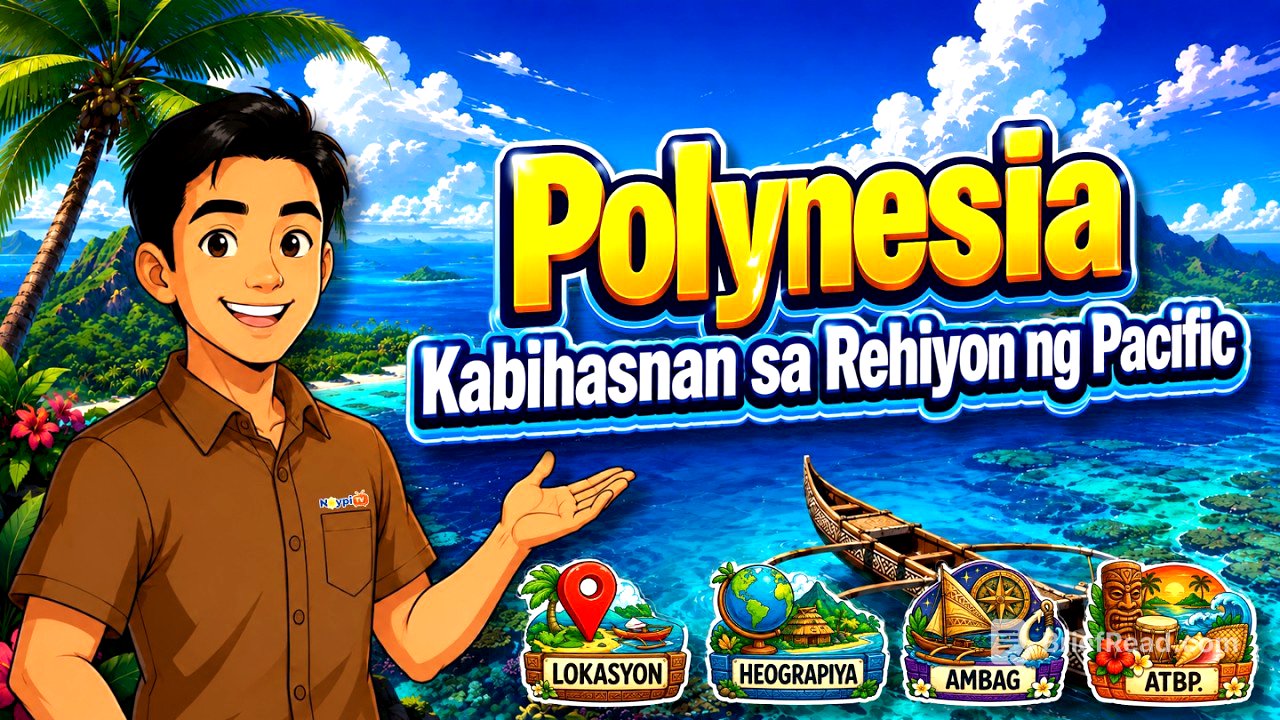
This video discusses the civilization of the Pacific Region, focusing specifically on Polynesia, known for its numerous islands and rich culture. Key points include:
- The Pacific Islands Oceania consists of 20,000 to 30,000 islands with diverse ecosystems.
- The geography of Polynesia, its culture, traditions, and seafaring skills were developed out of necessity due to the islands' isolation.
Introduction to Pacific Civilization [0:03]
The video begins with an introduction to the civilization in the Pacific region, specifically emphasizing Polynesia. Polynesia is characterized by its abundance of islands, vast oceans, maritime skills, and rich culture. Oceania, which includes Polynesia, comprises 20,000 to 30,000 islands scattered across the Pacific Ocean, many of which have rich biodiversity and specific climatic conditions varying from lush rainforests in regions like New Guinea to more arid areas.
Overview of Polynesia [1:34]
Polynesia, which means "many islands" from the Greek words poly (many) and nesos (island), is located centrally in the Pacific Ocean and often described as a Polynesian triangle, with Hawaii to the north, New Zealand to the southwest, and Easter Island to the east. Major islands in Polynesia include Hawaii, Samoa, Tonga, Tuvalu, Tokelau, the Cook Islands, French Polynesia, and Easter Island. The islands vary widely in size and are often separated by vast expanses of sea.
Origins of the Polynesians [3:52]
The Polynesians are believed to be descendants of Austronesian people who traveled from Asia to the Pacific. Their culture is connected to the Lapita Culture, notable for its significance in the expansion of communities in Oceania, particularly in Fiji, Tonga, and Samoa. Research has also suggested possible interactions with South American natives; however, the dominant narrative supports their migration from Asia and the Pacific.
Polynesian Lifestyle and Civilization [5:01]
Polynesian civilization flourished across the vast ocean. The isolation of the islands led them to develop advanced seafaring skills, using outriggers and double-hulled canoes for long-distance travel. Without modern navigation tools, they relied on celestial navigation, wave patterns, winds, bird flight, and ocean currents for navigation. The ocean was crucial not only for fishing but also for trade and establishing new communities. Their agriculture included taro, breadfruit, bananas, and coconuts, with inter-island exchange of food, tools, and resources.
Impact of Geography on Polynesian Development [7:59]
Geography significantly shaped Polynesian sailing skills due to the distance between islands. They adapted their boat-building techniques and sailing methods, utilizing their keen understanding of nature for navigation. Different islands possessed various resources, leading to trade networks among them. Fishing was a primary livelihood due to the surrounding ocean, while fertile islands enhanced agricultural practices.
Cultural Contributions of Polynesians [11:41]
Polynesians exhibited high levels of knowledge in navigation and shipbuilding techniques, employing their skills to travel vast distances across the ocean. Their cultural contributions include unique forms of music, dance, and oral literature passed down through generations. They adapted ingeniously to their environment, highlighting the importance of sustainability and the maintenance of a relationship between humans and nature. Their historical knowledge still informs current studies in navigation, culture, and environmental stewardship.