TLDR;
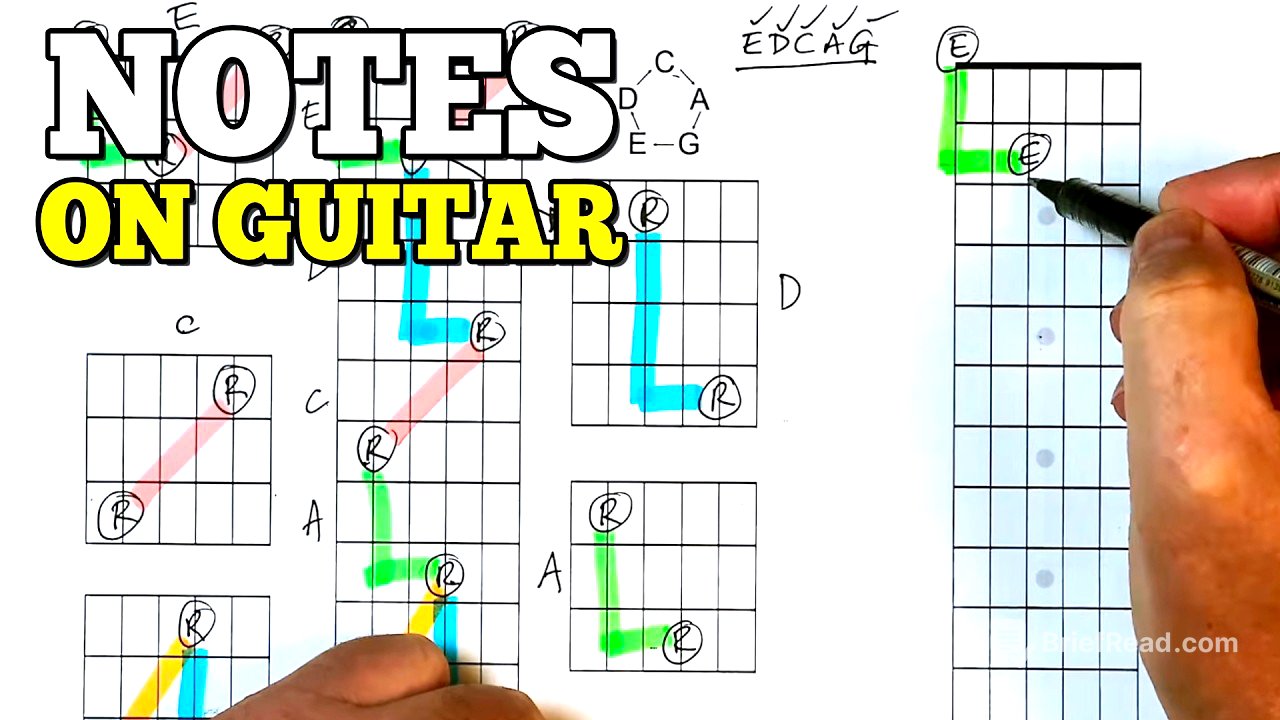
The video provides a thorough breakdown of the CAGED octave map system used for understanding guitar notes in different shapes and positions on the fretboard. It starts with a recap of connecting notes using the CAGED framework, emphasizing the importance of familiarizing oneself with the E shape. The chapters cover a progression from the E shape through the D, C, A, and G shapes while connecting these to build a cohesive understanding of the fretboard and how to efficiently navigate it.
- Introduces the CAGED system starting from the E shape.
- Explains how to use various shapes (E, D, C, A, G) to locate notes across the fretboard.
- Builds a 6-string guitar octave scaffold for efficient playing.
CAGED Octave Map Recap [0:00]
The video begins with an explanation of the CAGED system, describing how the patterns form octaves on the guitar. It discusses starting on the E string, which serves as a foundational reference point for building chords and scales. The session highlights the importance of memorization and understanding how the root notes are consistently spaced on the fretboard, making it easier for guitarists to navigate.
Starting CAGED from E: The E-D-C-A-G Sequence [0:25]
In this chapter, the focus shifts to the sequence of shapes starting with the E shape, followed by D, C, A, and G. The sequence is illustrated using diagrams that showcase how each shape is derived from the previous one. It emphasizes that this progression is vital, as it aids players in visualizing how chords and scales form together while strengthening their fretboard knowledge through repetition.
Mapping the E-Shape Octave [1:14]
Here, the E-shaped octave is mapped out clearly on the fretboard. The chapter explains the structural relationship of notes when applying the E shape. It underlines that irrespective of whether one is playing E major or minor chords, the structure remains constant, allowing guitarists to identify essential notes more efficiently.
Connecting the D-Shape Octave [2:10]
This section connects the D-shaped octave, providing practical insights on its application. The video meticulously details how to transition from the E shape to the D shape and builds on this by showing how these connections can help identify notes across different strings while maintaining awareness of the pattern's structure.
Using the C-Shape to Find Notes on the B String [3:00]
The focus here shifts to using the C shape specifically for locating notes on the B string. The tutorial underscores the common difficulties guitarists experience with the B string and instructs on how to effectively utilize the C shape to enhance note recognition. By relating the C shape with the previous D shape, players can better navigate the fretboard and improve their overall understanding of string interactions.
Completing the CAGED Cycle with A and G Shapes [4:21]
This chapter wraps up the cycle by connecting the A and G shapes to the overall understanding of the CAGED system. It illustrates how these shapes can seamlessly fit into the flow established by the previous shapes and highlights the intervals and distances necessary for each transition. This reinforces the concept of memorization through patterns, providing solid examples for practical usage.
Building a 6-String Guitar Octave Scaffold [5:45]
In this section, an octave scaffold is constructed using the previously discussed shapes. The chapter emphasizes connecting these shapes across six strings, illustrating how they work together. The goal is to cover all strings efficiently, allowing guitarists to create a framework that supports faster navigation through the fretboard.
Moving the Octave Scaffold Across the Fretboard [7:48]
The final segment discusses how to shift the octave scaffold around the fretboard. This chapter stresses the importance of recognizing patterns and applying this knowledge in different positions. It encourages guitarists to practice outside of their comfort zones, ensuring a well-rounded skill set and the ability to adapt to various musical contexts.